


How to Cook Frozen Cauliflower Rice Without Sogginess
Jan 13, 2023

Cook frozen cauliflower rice straight from the freezer unless the package or your recipe specifically requires thawing. For the driest, most rice-like texture, use a wide uncovered skillet, keep the layer shallow, and let released water evaporate before you add wet seasonings. For a 340 g plain pack, one current manufacturer instruction uses about 5 minutes in a medium skillet, while its microwave chart gives 5 minutes in a covered dish at 1,000 watts plus a 1-minute stand. Those figures are useful starting points, not universal times: the actual label, pack weight, microwave wattage, granule size, and added ingredients decide the safe endpoint.
A microwave is fastest and produces a softer, steamed result. A skillet gives you more control over moisture and light browning. An oven spreads a larger quantity across a tray and suits meal preparation when you can allow more time. In every method, separate frozen clumps, avoid unnecessary water, cook the product thoroughly according to its label, and stop once it is hot and tender with some structure. Extending the cook after the pan is dry is the common route from separate granules to cauliflower mash.
The short answer: Start frozen, cook uncovered when texture matters, match the quantity to the pan, and treat the package directions as the safety baseline. Drive off visible moisture before seasoning or combining the cauliflower with a sauce.

First Identify the Frozen Product You Have
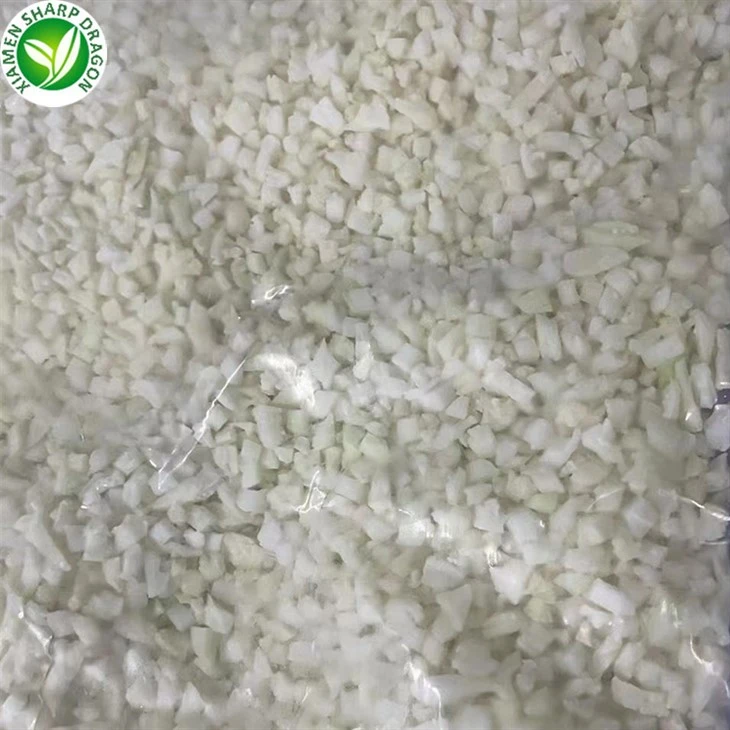
Frozen riced cauliflower and frozen cauliflower florets need different preparation. A bag labeled "riced cauliflower" already contains small chopped particles and can normally go directly into a skillet or microwave dish. Frozen florets must first be cooked or softened enough for the intended recipe; putting hard frozen florets into a food processor can give an uneven mix of powder and large pieces. The retained image above shows florets, so we describe it as an ingredient format rather than calling it finished cauliflower rice.
Next, read the ingredient list and cooking panel. Plain cauliflower behaves differently from a prepared product containing sauce, cheese, oil, salt, or other vegetables. A steam-in-bag pack is designed around a particular bag position, venting pattern, product weight, and microwave wattage. Do not pierce, open, or reuse that bag unless its instructions tell you to. A bulk foodservice bag usually has no consumer steam function, so transfer the required quantity to suitable equipment and use the operating procedure established for that product.
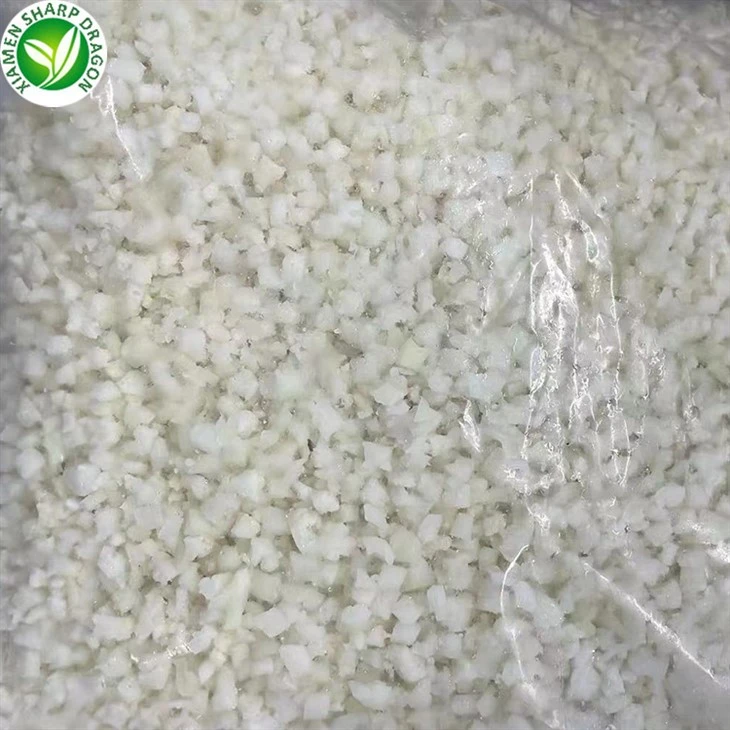
Check the frozen condition before cooking. Loose granules are easy to portion and expose evenly to heat. A few breakable clumps can be separated while the bag is closed. A solid block with heavy internal ice may indicate that the product partially thawed, picked up moisture, or experienced temperature fluctuation. Cooking can remove water, but it cannot restore the original particle structure. If the package is damaged, the seal is open, or storage history is uncertain, make the safety decision before trying to rescue the texture.
Practical example: You have one 340 g retail bag of plain, loose frozen cauliflower rice and one 340 g block that has frozen into a single mass. Cook the loose bag from frozen in an uncovered skillet. For the block, follow its label to loosen it safely, then assess the amount of surface ice. If water pools heavily as the block breaks apart, use a wider pan or divide it into two batches. The action is based on frozen condition, not on the identical net weight printed on both bags.
The Best Stovetop Method for Separate Granules
For a plain product, we prefer an uncovered skillet when the goal is a dry side dish, fried-rice base, bowl component, or meal filling. The pan supplies heat from below while its open surface lets steam escape. A saucepan with high sides and a lid holds more steam around the cauliflower; that can be useful for a soft result, but it works against separation.
- Break up loose clumps while the bag is closed. Do not crush the granules into powder. You only need a layer that can spread across the pan.
- Preheat a wide nonstick or well-seasoned skillet. Begin around medium to medium-high heat. Use enough oil to limit sticking, not enough to make the finished vegetable greasy.
- Add the frozen rice and spread it promptly. Keep it uncovered. If the pan surface disappears under a deep mound, reduce the quantity or use a second pan.
- Let the first release of steam escape. Stir often enough to expose cold areas and prevent scorching, but do not continuously sweep the pan before any moisture can evaporate.
- Season after free water has mostly disappeared. Add salt, soy sauce, lemon juice, or another wet ingredient near the end unless the recipe needs that liquid for a deliberate steamed texture.
- Stop at the intended texture. The cauliflower should be heated through and tender, while the particles still hold their outline. Follow the pack's safety instruction if it specifies a time, temperature, stirring pattern, or standing period.
Green Giant's current SmartLabel directions illustrate why weight must accompany time. For its plain riced cauliflower, the stovetop chart lists 1.5–2 minutes for 85 g, 3–3.5 minutes for 170 g, 5 minutes for 340 g, and 7.5–8.5 minutes for 510 g over medium heat. That is one manufacturer's validated instruction for its product. Use it as evidence that a larger mass takes longer, not as permission to replace the label on a different brand or a commercial bulk pack.
If the pan is visibly wet after the label time, judge whether the product is already tender. When it still has structure, another short uncovered dry-down may improve texture. When it is soft and beginning to smear under the spatula, longer heating will remove water but will not recover the granules. Use that batch in soup, mash, sauce, or a bound filling, and reduce the next pan load.
Worked example: A kitchen needs to cook a 2 kg bag in equipment that gives a good result with about 340 g per skillet. Divide 2,000 g by 340 g: the answer is 5.88, so plan 6 batches rather than overfilling 5 pans. At a 5–8 minute working cycle, one skillet needs roughly 30–48 minutes of active cooking. Two identical skillets can process two batches at once, reducing the six-batch sequence to three cycles. Test the first cycle, record actual cooked yield and texture, and then lock the operating load for that kitchen.
Microwave, Oven, and Steam Methods
No single method is best for every end use. Choose by the texture you need, the amount you are cooking, and the equipment available. A microwave is efficient for a small pack and creates a soft, evenly steamed result. A skillet is stronger when you need evaporation and light browning. An oven can spread a larger quantity across a tray, but the longer exposure can dry thin particles if you leave them unattended. Covered steaming produces the softest texture and is better for mash, purée, soup, or a filling that will be squeezed or drained.
| Method | Best fit | Main control |
|---|---|---|
| Uncovered skillet | Dry side dish, bowl base, fried-rice style dishes | Shallow load and visible evaporation |
| Covered microwave | Fast retail-pack preparation and soft texture | Pack weight, wattage, stirring, and standing time |
| Sheet-pan oven | Meal preparation and a broad, lightly browned batch | Thin layer, hot oven, and mid-cook turning |
| Covered steam or saucepan | Mash, soup, purée, soft filling, or later draining | Minimal added water and a defined drain step |
Microwave a Non-Steamable Pack
Transfer the frozen portion to a microwave-safe dish, cover it as the product directions specify, and leave the required vent. Stir when instructed so cold centers move toward the edge and hot areas move inward. The SmartLabel chart cited above gives 5 minutes for 340 g at 1,000 watts and 9 minutes at 700 watts, followed by a 1-minute stand. The large difference shows why "microwave for five minutes" is incomplete advice when wattage is missing. Use the time and power printed for your product, then check the result after the standing period.
Use a Steam-in-Bag Pack Only as Designed
Lay or stand the unopened bag exactly as directed, cook one package at a time if the label says so, and handle the venting steam carefully. Do not transfer instructions between bags merely because both contain cauliflower. Film construction, vent placement, pack weight, and microwave wattage are part of the cooking system. If you want a drier finish, complete the labeled microwave step first, then move the hot cauliflower to a wide skillet for a brief uncovered dry-down.
Roast a Thin Layer for Meal Preparation
Preheat the oven fully, spread the frozen rice in a thin layer on a rimmed tray, add a light coating of oil, and turn it during cooking. Current recipe pages commonly use about 200°C/400°F and roughly 15–20 minutes, but tray material, layer depth, convection, and the starting product change the result. Begin checking before the end of the range. The useful endpoint is not a dark color across every particle; it is an even hot batch with no water pooling and enough structure for the next recipe step.
If the cauliflower will enter soup, curry, or a sauced ready meal, it does not need the same dry finish as a side dish. Add it late enough to avoid prolonged simmering, and account for the water it contributes. A sauce that already has the correct viscosity can become thin after frozen vegetable addition. In that case, pre-cooking and draining the rice may protect the formula better than simply extending the final simmer.

Why Cauliflower Rice Turns Soggy
Sogginess is usually a moisture-management problem. Frozen cauliflower releases water as ice melts and plant cells soften. If the pan has enough open hot surface, that water becomes steam and leaves. If the pan is crowded, covered, or cooled by a very large frozen load, the water remains around the particles and steams them. The same product can therefore look loose in a 340 g test and soft in a 1 kg pan.
Granule size changes the margin for error. Fine particles heat quickly and lose structure sooner; coarse particles take longer but may keep more bite. A high level of fines creates a pasty layer before the larger pieces finish. This is why "cauliflower rice" is not a complete commercial specification. When texture consistency matters, define or approve the particle distribution, not only the product name.
Added ingredients can either protect or weaken the result. Oil helps spread heat and limits sticking, but it does not remove water by itself. Salt and liquid seasonings added early increase the wet phase in the pan. Egg, cheese, starch, or sauce can bind some moisture, which is useful in a crust or filling but does not make the cauliflower itself drier. Decide whether you want separate vegetable grains or a bound mixture before choosing the sequence.
Thawing is the exception, not the default. It makes sense when the next operation requires deliberate squeezing or draining, such as a pizza crust, dumpling filling, baked casserole, or moisture-sensitive formed product. It is usually counterproductive for an ordinary skillet side because the thawed particles sit in released liquid and soften before the pan is hot. Our separate guide explains when and how to thaw frozen cauliflower rice without competing with the cooking methods here.
Practical example: A ready-meal filling needs 5 kg of cooked cauliflower rice with little free water. Test 500 g from frozen in an uncovered pan and another 500 g after controlled thawing and draining. Weigh each cooked batch, collect any drainable liquid for a fixed 2-minute period, and score granule integrity after cooling. Choose the route that meets the filling's moisture and texture limit; do not select by raw bag appearance alone.
Season for the Dish, Not for the Search Phrase
Plain cauliflower rice has a mild brassica flavor, so it takes seasoning easily. The most reliable sequence is to build dry aromatics or fat in the pan, cook the frozen cauliflower until free water is nearly gone, and then add concentrated seasoning. Garlic, ginger, black pepper, cumin, smoked paprika, curry powder, dried herbs, citrus zest, and toasted seeds add flavor without introducing much liquid. Soy sauce, lemon juice, salsa, stock, and coconut milk are useful too, but add them with a plan for the moisture they bring.
For a rice-like side, season lightly after evaporation and serve promptly. For fried-rice style dishes, cook wet vegetables or protein separately when they release substantial liquid, then combine near the end. For soup, add the frozen rice late and let it heat through without simmering it into fragments. For a crust or patty, cook, cool enough to handle safely, squeeze or press out water, then mix with the binder. These are different texture targets, so one "perfect" cooking method would be misleading.
Sauce compatibility matters in commercial formulas. A tomato sauce can tolerate some vegetable water if its solids are adjusted. A delicate cream sauce may split or become thin when a frozen ingredient is added directly. A dry seasoning blend for a retail pouch needs even distribution without collecting in ice pockets. Test the complete recipe at the intended pack weight and reheating method, because a good plain-pan result does not automatically predict performance after sauce, cooling, freezing, and reheating.
Example: You are building a 300 g frozen meal bowl with 120 g cauliflower rice, 100 g cooked protein, and 80 g sauce. If the rice releases 12 g more water after reheating than your approved sample, that water becomes 4% of the entire bowl weight. The sauce may look noticeably thinner even though the ingredient list did not change. Set a cooked water-release or sauce-viscosity check during development, then use the same reheating cycle for sample approval and production verification.
Food Safety: Follow the Label, Not Appearance Alone
Frozen vegetables may be blanched during processing, but blanching is not permission to treat every pack as ready to eat. Freezing also does not reliably kill all microorganisms. The U.S. FDA advises following the cooking instructions on commercially frozen foods, and its ready-to-cook guidance explains that microwave power, covering, stirring, standing time, and the temperature at the center all affect whether food is cooked thoroughly.
Use the temperature printed on the actual product when it provides one. Some current U.S. riced-cauliflower labels require cooking to 165°F/74°C, but that label instruction should not be presented as a universal global rule for every plain vegetable pack or every foodservice procedure. Destination requirements, product status, and the validated cooking system may differ. For a retail label, the responsible action is to validate the instruction for the product weight, package, appliance range, and intended market before printing it.
Handle steam carefully, especially when opening a microwave pouch. Use clean utensils and prevent contact with raw meat or its juices. Refrigerate cooked leftovers promptly according to the product label and your local food-safety procedure. If a frozen bag has damaged seals, leakage, obvious contamination, or an unknown period above safe frozen storage conditions, cooking quality is no longer the only question. Separate the lot and make a documented safety decision rather than relying on color or smell.

Commercial Kitchens Need a Repeatable Cooking Standard
A household recipe can say "cook until tender," but a restaurant chain, central kitchen, school meal program, or prepared-food factory needs a method another shift can reproduce. Begin with frozen input weight, pan or kettle model, surface area, heat setting, cooking time, stirring frequency, endpoint temperature when required, cooked weight, visible free water, and texture after the actual holding period. Record enough information to explain a failed batch instead of only marking it pass or fail.
The USDA's 2024 standardized school recipe offers a useful large-batch reference with clearly defined conditions. It uses 5 lb of thawed, drained frozen riced cauliflower for 50 servings, adds it to a medium-high tilt skillet, cooks it for 3 minutes with frequent stirring after the aromatics, and specifies a critical control point of at least 135°F for 15 seconds plus hot holding at 135°F or higher. That is a complete institutional recipe, not a universal instruction for an unopened retail bag. Its value is the discipline: product state, weight, equipment, time, endpoint, holding condition, and portion are all stated together.
For foodservice, we would test the maximum pan load that still releases steam fast enough. For retail, we would validate the printed microwave directions across the intended wattage range and pack orientation. For a ready-meal line, we would test water release after the complete freeze–reheat cycle, not only after the first cook. These perspectives change the method because the failure appears at a different point: during service, in the consumer's microwave, or after a second thermal process.
Holding can undo a good cook. A shallow batch that leaves the skillet dry may release more moisture under a covered hot-hold lid. If immediate service is impossible, compare a vented hold, smaller replenishment batches, and a sauce-bound application. Measure the texture at the end of the real hold time. Accepting a sample straight from the pan while serving it 30 minutes later tests the wrong condition.
Yield should also be measured, not assumed. Record frozen input weight, cooked output weight, drained liquid when the process includes draining, and discarded material. Cooked yield equals cooked usable weight divided by frozen input weight, multiplied by 100. A lower yield may reflect desirable moisture removal, excessive overcooking, product ice, or an inconsistent drain step. Interpret it with texture and application results rather than choosing the highest percentage automatically.
How to Evaluate Frozen Cauliflower Rice for Commercial Use
Start with the final dish. A dry side needs separate granules and low visible water. A soup can accept a softer texture but still needs controlled particle size. A crust or formed filling values drainability and binding performance. A microwave retail pouch needs directions that work for its pack weight and film system. Write the acceptance method around that use rather than copying a generic cauliflower specification.
Review the product frozen, during cooking, and after the intended hold or reheat. In frozen condition, note free-flowing behavior, clumps, ice, color, particle distribution, and fines. During cooking, record time to separate, water pooling, aroma, sticking, and heating uniformity. After cooking, assess granule integrity, bite, visible liquid, cooked yield, and how the product behaves with the actual sauce or seasoning. Photos are helpful, but a side-by-side timed cook reveals far more than a bag photo.
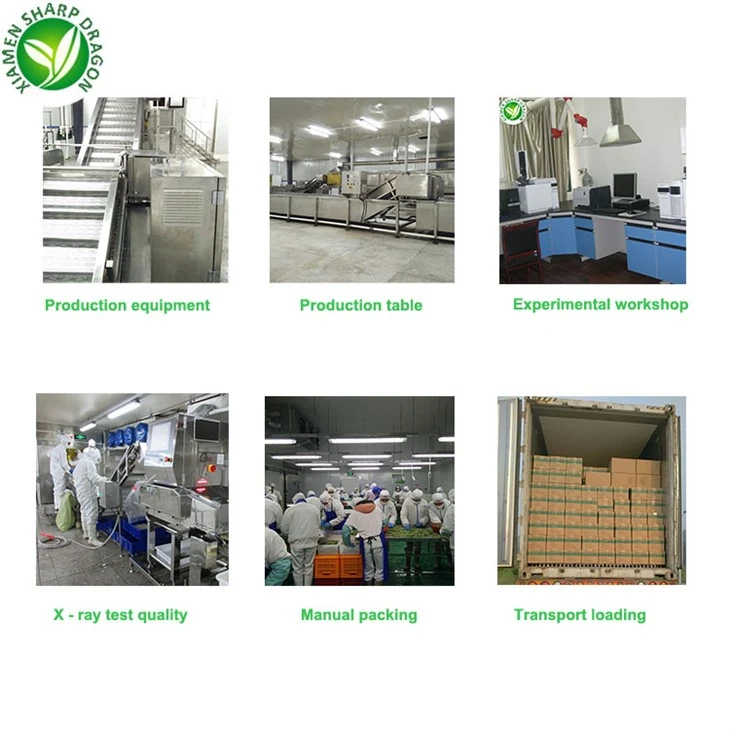
Packaging is part of cooking performance. A retail steam pouch requires validated venting and legible appliance directions. A foodservice pack must let you portion frozen product without thawing the entire bag. Seal damage or moisture entry can increase clumping and surface ice. Our overview of frozen-food packaging options explains how pack size, channel, labeling, and transport protection connect to handling decisions.
For sample comparison, use the same frozen weight, equipment, pan load, heat setting, cook endpoint, seasoning, and hold time. Random changes hide the source of a difference. If sample A is drier but has more fines, while sample B holds larger granules but releases more water, the correct choice comes from the intended dish. A bound patty may favor drainable sample B; a loose bowl base may favor sample A if its fines remain within the visual limit.
The current XMSD bulk frozen cauliflower rice reference shows the commercial format and the operational review points we use for chopped uniformity, IQF separation, water release, cooking behavior, packing, and cold-chain planning. Treat listed product values as page-specific references, then define the sample test and destination requirements for your project.

XMSD sourcing note: If you are comparing frozen cauliflower rice for foodservice, retail, or prepared meals, send us the required particle direction, pack format, destination, and cooking application. We can discuss a sample test around water release, texture, and your real heating method.
Final Cooking Decision
For most plain frozen cauliflower rice, begin from frozen in a wide uncovered skillet and use the package time as your safety baseline. Keep the batch shallow, allow released water to leave, and add wet seasoning after the pan is nearly dry. Choose the microwave when speed and a softer result matter, the oven when you need a broad tray and light browning, and a thaw–drain route only when a bound or moisture-sensitive recipe benefits from it.
At commercial scale, the cooking method is not complete until it states product weight, equipment, load depth, time, endpoint, hold condition, and acceptance result. Test the cauliflower in the final application, record cooked yield and water release, and keep the validated instruction tied to the actual pack. That turns a simple vegetable into a repeatable ingredient instead of a different texture on every shift.
References
- U.S. Food and Drug Administration: Are You Storing Food Safely?
- U.S. Food and Drug Administration: Test Your Safety Knowledge About Ready-to-Cook Foods
- Green Giant SmartLabel: Riced Veggies Cauliflower Cooking Instructions
- USDA Standardized Recipes Project: Cauliflower Rice, 50–100 Servings
- Whole Food Bellies: How to Cook Frozen Cauliflower Rice
- Through the Fibro Fog: How to Cook Frozen Cauliflower Rice
- XMSD operational experience in frozen-food sourcing, IQF product evaluation, cooking tests, packaging, and B2B export coordination.