


How Long Do You Boil Frozen Broccoli?
Aug 14, 2024

For plain, pre-blanched frozen broccoli florets, 2–4 minutes in boiling water is a practical starting range. Add the broccoli straight from the freezer to a large pot of fully boiling water and begin timing as soon as it goes in. Keep the heat high so the water returns to a boil quickly. Start checking small or medium florets at 2 minutes; many are tender enough by 3 minutes, while large or stem-heavy pieces may need about 4 minutes or a little longer. Drain promptly when the thickest stem is hot and fork-tender but still holds its shape.
Treat 2–4 minutes as a texture guide, not a universal food-safety rule. Frozen vegetable products can differ in floret size, prior processing, surface ice, and ready-to-eat status. If the package gives cooking directions, those directions take priority. A product labeled not ready to eat must be cooked through as instructed; a bright green color alone does not prove that its center has reached the required temperature.
Quick answer: Boil frozen broccoli for about 2–4 minutes, check the thickest stem rather than relying only on the clock, and drain immediately. Do not thaw first unless the package specifically tells you to.

The 2–4 Minute Rule-and When It Changes
Current cooking guidance from Good Food and Martha Stewart places frozen broccoli in boiling water for roughly 2–4 minutes. That range works because most commercial frozen broccoli has already been blanched before freezing. The final boil reheats and tenderizes the product; it does not begin with a completely raw floret. No single minute mark fits every bag, however, because a thin crown, a thick stem, and a fused cluster do not heat at the same rate.
Timing language can also cause confusion. In this guide, the clock starts when the frozen broccoli enters vigorously boiling water. Use enough water and a large enough pot that the temperature recovers quickly. If a large frozen load stops boiling for an extended period, the home-style clock becomes less useful: wait for the water to return to a steady boil, begin checking texture, and adjust the next batch based on the recorded result.
| Frozen broccoli format | First texture check | Practical expectation |
|---|---|---|
| Small, short-stem florets | 2 minutes | Often ready in 2–3 minutes |
| Medium florets | 2 minutes | Commonly near 3 minutes |
| Large or stem-heavy pieces | 3 minutes | Often 3–4 minutes; test the stem |
| Heavy foodservice batch | After heat recovery | Validate the batch load and kettle recovery |
These are starting points for plain florets, not substitutes for a package instruction or a validated commercial process. A cheese sauce, soup, ready meal, or mixed vegetable pack changes the heat-transfer conditions and should be tested as a complete dish.

How to Boil Frozen Broccoli Step by Step
A repeatable result depends more on heat recovery and a clear endpoint than on adding extra ingredients. Salt is optional for seasoning; it should not be presented as a guaranteed way to preserve green color. Short cooking and prompt draining do more to prevent an over-soft result.
- Read the package. Confirm whether the broccoli is ready to eat or not ready to eat and note any required time, appliance setting, stirring step, or final temperature.
- Bring plenty of water to a full boil. Choose a pot that can accept the frozen load without losing heat for a long time. Season the water if desired.
- Add the broccoli from frozen. Separate loose clumps if possible, but do not leave the bag thawing on the counter. Start the timer when the florets enter the water.
- Check at 2 minutes. Lift out one of the largest pieces and pierce the thickest part of the stem. Continue in short intervals until it reaches the required tenderness and is heated through.
- Drain immediately. Shake off excess water and serve or add to the prepared dish. Use an ice bath only when you intentionally need to stop cooking for a cold dish or a later reheating step.
Do not keep the broccoli sitting in hot water after the timer ends. The crowns continue to soften while submerged, and the carryover is more noticeable in small pieces. If you are serving it hot, draining well is usually enough; plunging it into ice water cools the vegetable and creates an unnecessary reheating step.

How to Tell When Frozen Broccoli Is Done
Test the largest, stem-heaviest piece because it is likely to heat more slowly than the small crowns. For tender-crisp broccoli, a fork or small knife should enter the thick stem with light resistance, while the crown remains intact when lifted. For a softer side, soup, mash, or puree, continue until the stem yields more easily. If the buds fall away when touched and the stems collapse, the broccoli has gone beyond a tender side-dish texture.
Color is a quality clue, not a safety measurement. Broccoli often looks bright green early in cooking, yet a large center can still be colder than the exterior. Conversely, a duller green piece is not automatically unsafe. Use the label, the thickest-piece test, and-when a target temperature is specified-a clean food thermometer.
Food-safety note: The FDA advises following all package cooking directions for ready-to-cook foods. University of Maine Cooperative Extension recommends that not-ready-to-eat frozen vegetables be cooked through to 165°F (74°C). The package instruction remains the controlling direction for the specific product.

Why Boiled Frozen Broccoli Turns Mushy
Frozen broccoli has normally been blanched before freezing, so its structure has already experienced heat. Freezing and thawing during cooking also affect the plant cells. A final boil that is too long, followed by a hot hold, can therefore soften it faster than a raw fresh crown. The solution is not to undercook a product that requires thorough cooking; it is to use the correct product size and a process that reaches the required endpoint without an unnecessary hold.
An overloaded pot is another common cause. A large frozen mass drops the water temperature, so the outer florets sit in hot water while the kettle slowly recovers. Some pieces soften before the thickest centers finish. Reduce the batch, increase the water-to-product ratio, or use commercial equipment with enough recovery capacity. Fused clusters and heavy surface ice make the same problem harder to control because they change the effective portion size.
Drainage matters after cooking. Leaving florets in a colander over steam, packing them immediately into a deep hot pan, or holding them under a lid continues to soften the crowns. For service, drain in a shallow layer and minimize the time between cooking and plating. For prepared foods, test the boil together with the later cooling, packing, holding, and reheating stages.

Does Boiling Change Broccoli's Nutrients?
Cooking affects nutrients and plant compounds differently. A 2022 review of home cooking reported that long exposure to high heat and water can reduce some water-soluble nutrients more than shorter, lower-water methods. Broccoli studies have also found that boiling can reduce the measured retention of vitamin C and some glucosinolates. The exact change depends on the product, compound, water volume, time, and way retention is calculated, so a single percentage should not be applied to every frozen broccoli bag.
If nutrient retention is a priority, stop when the required texture and safety endpoint are reached rather than boiling for several extra minutes. Steaming or microwaving may use less water for some applications. Soup is different because the cooking liquid is consumed instead of discarded. None of these preparation choices turns broccoli into a treatment or guarantees a health outcome.

Boiling Tests for Foodservice and Prepared-Food Buyers
For professional buyers, "2–4 minutes" is a screening range rather than a purchase specification. The first useful perspective is cut distribution. Measure the floret-size range, stem length, stem-to-crown balance, broken-piece rate, and fused clusters. Then boil a fixed frozen weight under controlled conditions. A lot with narrow size distribution should reach the chosen texture in a tighter window; wide variation creates the risk that small crowns soften before thick stems are ready.
The second perspective is heat recovery. Record water volume, product weight, kettle capacity, starting temperature, time to return to boil, and final cook time. Compare the supplier sample with the approved reference under the same load. A result from a 200-gram kitchen test should not be copied directly into a 10-kilogram foodservice batch. The acceptance logic should connect equipment and load to a repeatable endpoint, not only to a clock number.
The third perspective is drained yield and downstream performance. Weigh the sample after draining, assess water release, color, stem tenderness, crown integrity, and flavor, then repeat the evaluation after the intended hold or reheat. A sample that looks good immediately after boiling may break down in a steam table, sauce, tray meal, or microwave cycle. Approve the product against the real application and define observable limits for texture, water release, piece integrity, and portion appearance.
USDA frozen broccoli standards distinguish styles and evaluate attributes such as brightness, flavor, odor, grit, silt, and defects. Those standards provide a useful quality vocabulary, but a buyer still needs an application-specific cook test. For example, a short floret for soup and a large floret for a plated side can both be acceptable products while requiring different heating windows.
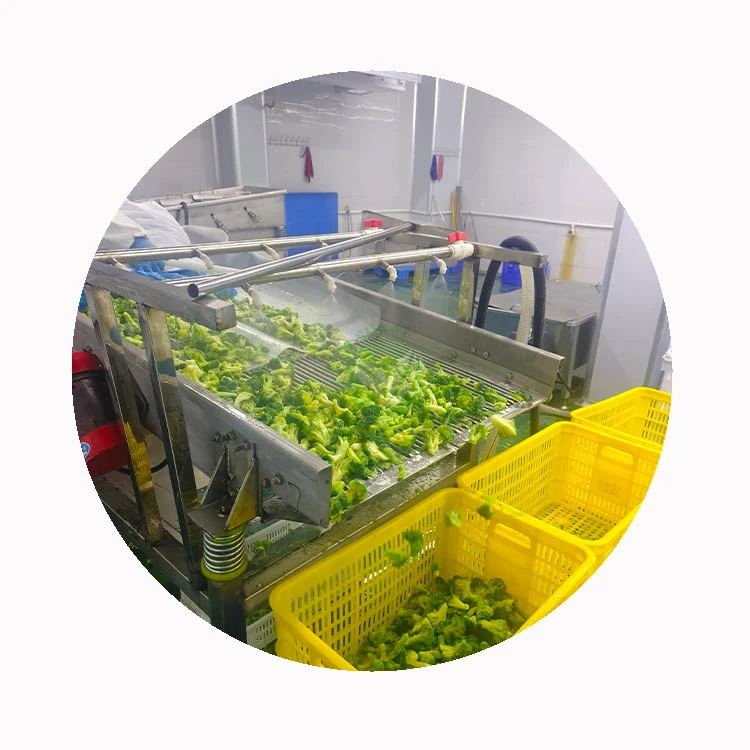
XMSD sourcing note: Share your target floret size, boiling or reheating process, pack format, destination market, and cooked acceptance criteria. We can discuss a suitable IQF frozen broccoli specification, review relevant frozen packaging options, and plan samples for your actual application.
Final Thoughts
Boil plain frozen broccoli for about 2–4 minutes as a starting point. Add it from frozen to already boiling water, check the thickest stem at 2 minutes, and drain as soon as the required tenderness and package-directed safety endpoint are reached. Smaller pieces and light loads tend to finish sooner; large stems, fused clusters, and heavy batches need closer testing.
For repeat production, define the timer convention, water-to-product ratio, heat-recovery time, drained yield, and result after holding or reheating. Those controls turn a general household answer into a process that buyers and kitchens can reproduce.
References
- Good Food: How to Freeze and Cook Broccoli
- Martha Stewart: How to Cook Frozen Broccoli
- Purdue Extension FoodLink: Broccoli
- U.S. FDA: Test Your Safety Knowledge About Ready-to-Cook Foods
- University of Maine Cooperative Extension: Cooking and Handling Frozen Vegetables
- Proceedings of the Nutrition Society: Cooking at Home to Retain Nutritional Quality
- Journal of Zhejiang University Science B: Effects of Cooking Methods on Broccoli Compounds
- USDA Agricultural Marketing Service: Frozen Broccoli Grades and Standards