


How long do frozen strawberries last?
Jul 17, 2024

For frozen strawberries kept continuously at 0°F (-18°C) or below, an 8–12 month range is a useful best-quality starting point, not an automatic discard date. Commercial packs may carry a validated shelf life that differs by cultivar, cut, packaging, process and destination rule, so the manufacturer's date and handling instruction take priority. Freezing slows deterioration; it does not sterilize the fruit or guarantee unchanged texture after thawing. The XMSD frozen strawberry range should therefore be judged by its exact form and pack rather than a generic fruit rule.
For everyday use, plain frozen pieces work especially well in smoothies, sauces, yogurt, baking, desserts, and other applications where a softer thawed texture is acceptable. For commercial buying, the name of the fruit is only the beginning. You also need to define the form, size, ripeness or soluble-solids target, defect tolerance, free-flowing condition, pack format, cold-chain requirements, and performance in your actual recipe. The XMSD frozen fruit range illustrates why whole berries, halves, dices, slices, pulp, and purée should not be treated as interchangeable products.
The short answer: choose frozen fruit by its ingredient list, intended use, and verified quality-not by the word "frozen" alone. Plain frozen fruit can fit a nutrient-dense diet, while its texture and process value depend on the fruit, cut, cold chain, and how you thaw or cook it.

What Frozen Fruit Actually Is
Frozen fruit is fruit that has been prepared and reduced to a temperature that keeps it in the frozen state during storage and distribution. In commercial quick freezing, the critical idea is speed through the zone in which most ice crystals form. Codex describes the process by its result: the maximum ice-crystallization range should be passed as quickly as possible, and the process is complete when the thermal center reaches -18°C or colder after stabilization. Codex also calls for quick-frozen food to remain at -18°C or colder through the cold chain, subject to tolerances allowed by relevant law.
That definition corrects a common misconception in older articles. Commercial fruit is not generally defined by the use of dry ice or liquid nitrogen. Different facilities and product forms can use different freezing equipment. What matters to product performance is the validated freezing process, the time-temperature history, the size and structure of the fruit, and the condition maintained after freezing. A whole strawberry, a 10 mm mango dice, and a block of fruit purée do not freeze or thaw in the same way.
The term IQF, or individually quick frozen, describes pieces intended to remain separate rather than becoming one solid block. Free-flowing condition can make portioning and automated dosing easier, but "IQF" alone does not define fruit variety, sweetness, size distribution, defect level, or microbial status. In our work, we treat those points as separate specification and approval decisions.
Preparation also varies. Fruit may be sorted, washed, peeled, pitted, cored, trimmed, cut, treated for color control when appropriate, frozen, graded, and packed. Unlike many vegetables, delicate fruits are not automatically blanched because heat may damage their texture and flavor. The exact sequence should match the commodity and finished format. Ask for the real process flow instead of assuming every fruit follows one generic line.
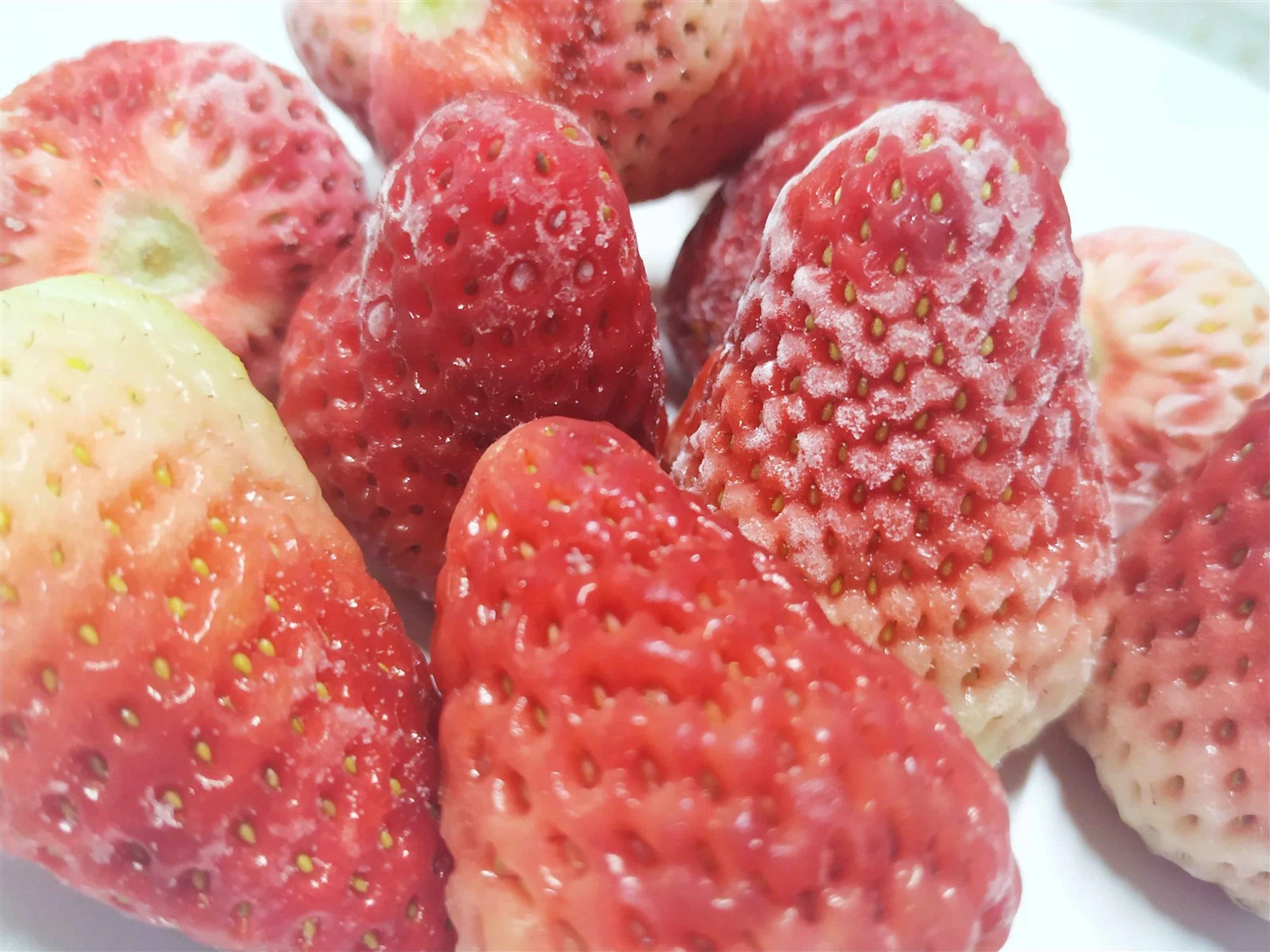
Are Frozen Fruits Nutritious?
Plain frozen fruit can be part of a nutrient-dense diet. The current U.S. Dietary Guidelines emphasize diets built around whole, nutrient-dense foods, including fruits, while limiting highly processed foods and added sugars. Freezing does not turn fruit into a different food group. The more important distinction is between intact fruit or fruit pieces and a sweetened dessert, syrup-packed product, juice drink, or highly formulated smoothie.
No single nutrient profile represents all frozen fruits. Strawberries, blueberries, peaches, mangoes, bananas, cherries, and passion fruit naturally differ in carbohydrate, fiber, vitamin, mineral, acid, and phytochemical composition. Variety, maturity, growing conditions, edible portion, and laboratory method add more variation. If an exact value matters for nutrition labeling or formulation, use data for the exact fruit form and confirm it against the finished-product analysis rather than copying a number from another fruit or an unspecified database entry.
What the fresh-versus-frozen studies actually show
A 2015 comparative study measured ascorbic acid, riboflavin, alpha-tocopherol, and beta-carotene in eight commodities, including strawberries and blueberries, under refrigerated and frozen storage. Overall vitamin content in the frozen samples was comparable to, and sometimes higher than, the fresh comparison, but the result changed by nutrient and commodity. Beta-carotene fell substantially in some vegetables. That is useful evidence against the belief that freezing automatically destroys nutrition, but it does not prove that every frozen fruit retains every nutrient.
A separate 2017 study compared fresh, frozen, and "fresh-stored" produce after five days of refrigeration. It examined strawberries, blueberries, and six vegetables for vitamin C, provitamin A, and total folate. Most comparisons did not show significant differences. Where differences were significant, frozen produce outperformed the five-day fresh-stored comparison more often than the reverse. The practical message is that the comparison point matters: fruit eaten soon after harvest is different from fruit that has spent days in distribution, retail display, and a refrigerator.
These studies measured selected vitamins in selected produce under defined conditions. They did not establish a universal ranking for all fruits, fiber, minerals, phytochemicals, sensory quality, or every storage period. A responsible conclusion is therefore narrow: frozen fruit can be nutritionally comparable to fresh fruit, while the winner for a specific nutrient depends on the commodity, process, storage history, and preparation.
Nutrient functions are not disease promises
Some fruits contribute vitamin C. NIH describes vitamin C as an essential nutrient involved in collagen synthesis, antioxidant systems, immune function, and absorption of nonheme iron. Those are normal physiological roles. They do not justify saying that frozen fruit prevents cancer, eliminates inflammation, or treats illness. NIH notes that research on vitamin C and cancer has not produced a conclusive prevention claim, and most randomized trials of vitamin C supplements have not shown an effect on cancer risk.
Whole or piece fruit can also contribute intrinsic dietary fiber, with the amount depending on the fruit and portion. Fiber has recognized physiological effects, including effects on bowel function and, for some fibers and dietary patterns, blood cholesterol or glucose. The leap from that general role to "this frozen fruit lowers cholesterol" is not justified without a defined product, serving, fiber amount, overall diet, and compliant claim basis. Purée may retain fiber if the whole edible fruit remains, while clarified juice generally contains less. Straining, concentrating, adding sugar, and changing the serving size can all alter the nutritional result.
Claims about frozen fruit improving memory, attention, mood, energy, or stress also require evidence for a defined intervention and population. A food can contribute nutrients without producing a predictable mental-health outcome. If you are writing a label, product page, or menu, describe the ingredient and verified nutrition facts. Do not turn general fruit research into a therapeutic promise for one frozen product.
| Product form | What changes the nutrition decision | Best verification |
|---|---|---|
| Plain whole fruit or IQF pieces | Fruit variety, edible portion, maturity, pretreatment, frozen storage, and serving size | Ingredient list, exact nutrition data, and lot or finished-product analysis when required |
| Sweetened, sauced, or dessert fruit | Added sugar, syrup, fat, portion size, and the rest of the recipe | Full ingredient statement and Nutrition Facts for the finished item |
| Purée, pulp, juice, or concentrate | Fiber removal, concentration, added ingredients, heat treatment, and dilution basis | Specification, composition, Brix or solids basis, ingredient list, and intended serving |

Frozen Versus Fresh: Which Performs Better?
Fresh fruit performs best when appearance, crispness, snap, or intact cell structure is central to the eating experience. A fresh strawberry garnish, a firm apple slice, or a ripe peach eaten out of hand relies on texture that freezing and thawing usually soften. Ice formation can damage cell structure, and the released liquid becomes visible as drip after thawing. Faster freezing and stable storage can reduce damage, but they do not make every thawed fruit identical to fresh.
Frozen fruit often performs better when consistent availability, portion control, reduced preparation, and year-round recipe use matter more than fresh texture. Smoothies, cooked sauces, bakery fillings, jams, dairy inclusions, beverages, sorbets, and foodservice prep can benefit from fruit that is washed, trimmed, cut, frozen, and ready to dose. You can remove only the amount needed and return the rest to frozen storage, provided the package is resealed and the cold chain remains controlled.
Price per kilogram is not enough to decide which form is more economical. Fresh fruit may lose weight through trimming, pits, peels, bruising, spoilage, and unplanned ripening. Frozen fruit may release drip, contain pieces outside the useful size, or require a different recipe water balance. Compare the delivered cost of the usable ingredient, the labor needed to prepare it, and the effect on finished yield. Season, origin, freight, exchange rate, pack size, grade, and contract volume can reverse a simple assumption that frozen fruit always costs less.
Convenience also depends on format. Whole peeled frozen bananas may suit blending but require cutting or controlled feeding in another line. A dice can dose more uniformly; slices provide visible identity; purée provides consistency but no distinct fruit piece. The "best" form is the one whose dimensions and thaw behavior fit your equipment and finished product.

How to Use Frozen Fruit Without Losing Control
Use frozen fruit directly from the freezer when the process can absorb the cold load and released moisture. Smoothies and blended beverages commonly use frozen pieces because they contribute fruit solids and cooling. Sauces, compotes, jams, and fillings can often begin with frozen fruit because heat will soften the tissue anyway. Muffins and quick breads may accept small frozen berries or dices when the recipe accounts for their moisture and the pieces are folded in without excessive mixing.
Thaw first when you need to drain or measure released liquid, distribute fruit into a cold product, inspect the thawed texture, or prevent a frozen mass from cooling the next process step too sharply. Thaw under controlled refrigeration in a covered, food-safe container unless the package gives another validated instruction. A perforated tray or colander over a catch pan can separate drip when the recipe needs less free water. Record the fruit weight before thawing, drained fruit weight, and collected liquid if yield matters.
Do not assume all drip should be discarded. In a sauce, beverage, or purée, the liquid may contain flavor, color, soluble solids, and nutrients that belong in the recipe. In a pie with a bottom crust, uncontrolled liquid can make the base soggy. The correct action depends on the finished product, which is why a thaw-and-drain instruction copied from one recipe may be wrong for another.
Practical example: A smoothie line can dose 10 mm frozen mango pieces directly because the blender breaks the fruit down and the formula uses the fruit as part of its cooling load. A bakery using the same mango in a laminated pastry may thaw a sample under refrigeration, measure drip, and adjust the filling thickener or fruit loading. The fruit is not "good" in one application and "bad" in the other; the water release and required texture change the handling decision.
For continuous production, check whether pieces bridge in a hopper, freeze together after partial warming, or break under conveying. A free-flowing sample at -18°C may behave differently after staging near a filling line. Define the maximum staging time, acceptable product temperature, and return-to-freezer policy. Repeated warming and refreezing can increase clumping, surface dehydration, drip, and texture loss even when a package still looks intact.

Storage, Thawing, and Food-Safety Boundaries
A frozen state slows microbial growth and many chemical reactions, but it is not a sterilization step. FDA's work on fresh and frozen berry safety notes that freezing generally does not inactivate viruses that may enter the supply chain through contaminated water, surfaces, or handling. The proportionate response is not to treat all frozen fruit as dangerous. It is to rely on preventive controls, approved suppliers, traceability, hygienic handling, current recall information, and the intended-use or cooking directions on the package.
"Ready to eat," "ready to use," and "cook before eating" are materially different instructions. A smoothie ingredient that will receive no kill step needs a supplier and product program appropriate for that intended use. A fruit intended for a cooked filling may be managed under a different validated process. Do not change the use from cook-before-eating to ready-to-eat because the pieces look clean or because they were frozen.
Keep commercial quick-frozen product at -18°C or colder through storage and distribution, with any permitted tolerance defined by the destination requirement and contract. Monitor more than the air display on a reefer or cold room. Review loading temperature, recorder data, door openings, transfer time, pallet location, package condition, and representative product temperatures at receipt. A short surface reading does not always describe the thermal center or the history of the load.
Separate quality observations from safety conclusions. Freezer burn is surface dehydration and a quality defect; FDA states that it does not by itself make food unsafe. Light frost can arise from exposed moisture, while heavy internal frost, fused pieces, collapsed cartons, liquid stains, torn liners, or distorted pouches can signal temperature fluctuation or package failure. These signs justify investigation, but visual appearance alone cannot prove that a lot is safe or unsafe.
Safety note: follow the product label and your destination-market rules. Check recall notices, keep thawing under temperature control, prevent cross-contamination, and do not use smell or appearance as the only food-safety test.
A universal "use within a few months" rule is also too broad. Properly frozen food can remain safe for a long period, while flavor, color, aroma, juiciness, and texture decline with time. The quality life of a frozen berry, a fruit dice, and a sweetened purée may differ because of packaging, oxygen exposure, solids, pretreatment, storage stability, and intended use. Use the manufacturer's validated shelf life for the exact product and pack, then confirm that the remaining life at delivery fits your distribution plan.
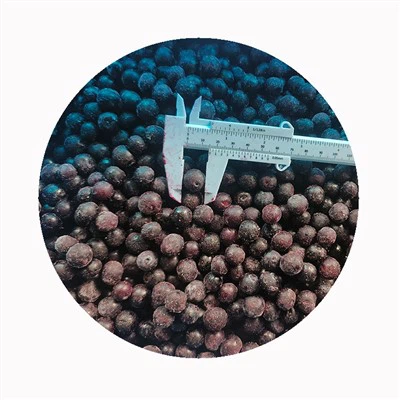
How to Specify and Inspect Frozen Fruit
If you import, manufacture, distribute, or operate a foodservice program, "Grade A frozen fruit" is not a complete specification. Begin with the fruit identity and variety when variety affects color, acidity, firmness, aroma, seed perception, or processing performance. Then define the physical form: whole, halves, slices, dices, segments, pulp, purée, or another agreed format. For pieces, state the target dimensions, permitted distribution, and measurement method rather than relying on a photograph.
Ripeness and composition require application-specific measures. Brix can help describe soluble solids, but it is not a complete measure of sweetness, flavor, maturity, or fruit percentage. Acidity, Brix-to-acid balance, color, aroma, variety, and sensory approval may matter together. For a beverage or yogurt, a narrow flavor and color range can be more important than intact piece count. For retail IQF berries, piece identity, size uniformity, bruising, breakage, and free-flowing condition may carry more weight.
Define defects in countable or measurable terms. Depending on the fruit and form, relevant categories can include unripe or overripe pieces, discoloration, peel or pit fragments, calyx, leaves, stems, broken pieces, fused clusters, excessive frost, foreign material, and pieces outside size. State the sample size, inspection state, method, and acceptance limit. A percentage by weight is different from a count per kilogram, and a frozen inspection can produce a different result from a thawed inspection.
Approve the product in the order that reduces risk
- Define the finished use. State whether the fruit will be eaten without further processing, blended, cooked, baked, fermented, packed for retail, or used as a visible inclusion.
- Lock the specification. Confirm fruit identity, form, dimensions, composition targets, ingredients, defect tolerances, packaging, labeling, shelf life, and destination requirements.
- Test the sample twice. Inspect it frozen, then run a controlled thaw or the actual production process. Record piece integrity, drip, color, flavor, dosing behavior, and finished yield.
- Approve the pack and evidence. Review inner liner or pouch, case strength, coding, pallet pattern, temperature records, certificate scope, laboratory reports, traceability, and shipping documents relevant to the order.
- Verify the arriving lot. Compare code, quantity, packaging, representative product temperature, physical condition, and retained evidence against the approved standard before release.
We use this sequence to prevent a common mismatch: approving an attractive frozen sample and discovering later that its thawed drip, size distribution, packaging, or document scope does not fit the program. It also creates a record for resolving a genuine deviation. Photographs are useful, but a photograph cannot replace a measurable specification, temperature evidence, or a retained sample.
Worked example: Assume two hypothetical offers for the same frozen strawberry dice, delivered under comparable terms. Offer A costs US$1.80 per kg and gives 92% usable yield after your defined thaw-and-sort test. Its usable cost is US$1.80 ÷ 0.92 = US$1.96 per usable kg. Offer B costs US$1.68 per kg but gives 84% usable yield, so its usable cost is US$1.68 ÷ 0.84 = US$2.00 per usable kg. Before labor or recipe effects, the lower-priced offer is already more expensive. Use your own agreed test method and representative samples; the percentages here illustrate the calculation, not a market norm.
Packaging closes the loop between factory approval and arrival condition. The primary package should protect the fruit from contamination, dehydration, odor transfer, and moisture loss while remaining suitable for the filling and sealing process. The outer case must tolerate frozen handling, stacking, condensation, and transport. Review the current frozen packaging formats against your unit weight, retail or bulk channel, pallet pattern, labeling language, and cold-store handling-not as an isolated graphic decision.

XMSD sourcing note: Tell us the fruit, form, target size, application, ingredient requirements, pack format, destination, and order volume. We can align the quotation and sample discussion with those decision points instead of treating "frozen fruit" as one undifferentiated item.
Final Thoughts from XMSD
Frozen fruits are valuable because they can extend availability, simplify preparation, support portion control, and perform reliably in many recipes. Their nutrition is not erased by freezing, but neither is every nutrient locked in permanently. Their safety is not guaranteed by low temperature alone, and their commercial value cannot be judged from price per kilogram alone.
For personal use, choose plain fruit when that fits your goal, read the ingredient list, follow the package directions, and match thawing to the recipe. For commercial use, define the intended application first, then approve the fruit form, composition, dimensions, defects, thaw behavior, packaging, documentation, and cold-chain evidence. That method gives you a defensible decision for both a kitchen purchase and a container-scale production program.
References
- U.S. Department of Health and Human Services and USDA: Dietary Guidelines for Americans, 2025-2030
- Bouzari, Holstege, and Barrett: Vitamin Retention in Eight Fruits and Vegetables
- Li et al.: Selected Nutrient Analyses of Fresh, Fresh-Stored, and Frozen Fruits and Vegetables
- NIH Office of Dietary Supplements: Vitamin C Fact Sheet for Health Professionals
- U.S. Food and Drug Administration: Questions and Answers on Dietary Fiber
- U.S. Food and Drug Administration: FDA Works to Enhance the Safety of Berries
- U.S. Food and Drug Administration: Are You Storing Food Safely?
- Codex Alimentarius: Code of Practice for the Processing and Handling of Quick Frozen Foods
- XMSD operational experience in frozen-fruit sourcing, IQF specifications, application testing, packaging, quality review, and export cold-chain coordination.