


Selecting a Produce Drying Line: What to Test Before Buying
Apr 21, 2020

Select fruit and vegetable drying equipment by the finished product you need and the amount of acceptable food the complete line must deliver. A tray count, chamber volume or advertised kilograms per hour is not enough. The useful proposal identifies the incoming material, cut, loading method, starting condition, final quality requirements and time needed for a complete production cycle.
Before buying, ask the equipment supplier to demonstrate that combination with representative material. Include preparation, loading, drying, unloading, cleaning and the transfer to packing in the assessment. A dryer that performs well in isolation can still leave the business short of usable output if the cutter, staff, utilities or packing stage cannot support it.
Choose the line that can reproduce the required food quality within the plant's real operating conditions, with an understandable cleaning method, maintainable components and an agreed way to verify performance.
Start with a product trial and a clear acceptance basis; then compare quotations.

Describe the food before discussing the dryer
Write a short product brief that a technologist and an operator can both use. Identify the fruit or vegetable, variety where relevant, incoming ripeness or maturity, prepared form and any pretreatment. Describe whether the material arrives fresh, chilled or frozen. These details affect the proposed process and the preparation work required before the first tray or conveyor is loaded.
The finished-food brief is just as important. Chewy fruit, a brittle garnish, a vegetable ingredient for cooking and a powder for mixing have different priorities. Decide which characteristics the customer will actually use to accept the product: appearance, bite, piece integrity, rehydration behavior, flavor or performance in a recipe. Include the appropriate analytical and safety requirements without using appearance as their substitute.
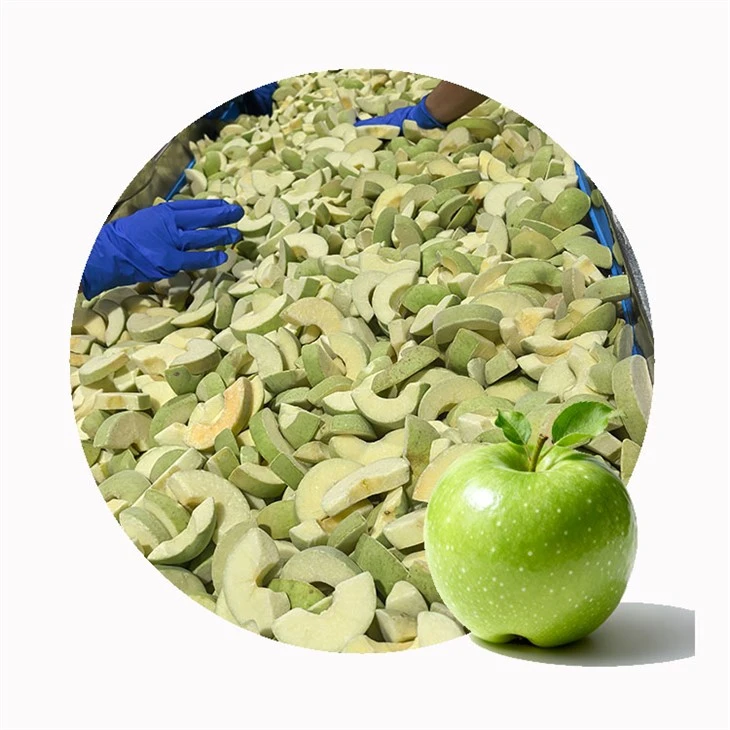
For example, a proposal using prepared apple slices should identify the supplied form and intended pretreatment rather than treating all apples as the same feed material. Skin, slice geometry, surface moisture and the proportion of broken pieces can change the trial. A result obtained with carefully selected demonstration pieces is not automatically representative of a normal incoming lot.
At XMSD, our starting point would be the ingredient description. We would keep washed, cut, blanched and frozen conditions separate in the brief, rather than allowing "prepared produce" to hide those differences. The equipment supplier then has a defined input to assess, and the food buyer can see which product the performance statement actually covers.

Match the operating pattern as well as the drying route
A batch operation can be useful when the business changes crops, cuts or recipes frequently. A continuous operation becomes worth investigating when a repeatable material flow and a suitable production schedule can support it. Neither arrangement is inherently the right answer for every fruit and vegetable business. The question is how the line will be loaded, staffed and changed over on an ordinary working day.
Warm-air drying, freeze-drying and other specialized routes should be evaluated against the required food, not ranked by the prestige of their names. A process that produces an attractive light fruit structure may be unnecessary for a chewy inclusion. Conversely, a process that gives an acceptable cooking ingredient may fail a delicate decorative-piece requirement.
Ask where the proposed technology has been tested with a comparable material and what "comparable" means. Similar water content alone does not make a puree equivalent to a whole berry. The food's geometry, composition and target structure need to be represented. Separate an engineering estimate from a result actually measured during a relevant trial.
There may be more than one suitable configuration. In that case, compare the practical consequences: product change time, staffing, cleaning access, utility demand, reject handling and the ability to maintain the agreed quality. A familiar process with a good application result can be more useful than a sophisticated system whose performance on your food remains untested.
Give every capacity number a defined basis
Capacity can mean wet material loaded, water removed, dry product discharged or saleable product packed. Those are different quantities. A quotation should state the units and basis prominently enough that two offers can be compared without guessing. "Kilograms per hour" is incomplete until the material and operating conditions are attached to it.
Time needs the same discipline. In a batch dryer, the active drying period is only part of the elapsed cycle. Loading, unloading, preparation for the next batch and the appropriate cleaning steps also take time. Some activities can overlap; some occupy the same equipment or the same workers and cannot.
For a continuous line, examine start-up, steady production, product transitions and shutdown. An impressive short steady-state result does not by itself describe the output of a shift containing several changes. Ask how much material is acceptable during each stage and where any off-specification material goes.
| Claim | Basis to request | Acceptance question |
|---|---|---|
| Batch loading | Prepared input mass and distribution | Does the entire load meet the agreed result? |
| Hourly throughput | Wet input or finished output, with elapsed time | Does it include the required operating cycle? |
| Energy use | Metered inputs within a stated system boundary | Are auxiliary services included? |
| Product yield | Accepted grade after normal handling | What was rejected or diverted? |

Example: a six-hour drying period is not a six-hour cycle
Consider a representative processor comparing a batch system on an illustrative planning basis. The proposed load is 100 kilograms of prepared wet produce. Active drying takes 6 hours, while unloading, the required cleaning and preparation for reloading occupy the equipment for another 2 hours. Assume those activities cannot overlap on this machine.
The complete cycle is therefore 8 hours. The cycle-average input rate is 100 kilograms ÷ 8 hours = 12.5 kilograms of prepared wet input per hour. Dividing by drying time alone gives approximately 16.7 kilograms per hour, but that number excludes the occupied turnaround period. Neither number represents finished dry product output.
For one 8-hour shift under these assumptions, one complete load means 100 kilograms of prepared input processed. Multiplying the drying-only rate by the whole shift would suggest roughly 133 kilograms, which the stated cycle does not support. The arithmetic exposes the scheduling issue before a purchase decision.
The processor's action is to obtain a full-cycle demonstration or a revised operating plan that explains any genuine overlap. The useful result is a realistic shift plan, not a larger number with turnaround hidden outside it. Actual drying times, loads and staffing must come from the product-specific trial; these figures are examples only.
Look upstream when the drying result is uneven
The equipment line begins before drying. Washing, sorting, peeling, cutting, pretreatment and removal of excess surface water need to deliver the intended material consistently. Different products need different preparation, so the line layout should identify which steps are included and which are outside the supplier's scope.
Cutting deserves particular attention. A mixture of thick and thin pieces can produce a wide range of results under the same drying conditions. Loading also matters: the agreed distribution and depth must be achievable at production speed. If normal staff cannot reproduce the demonstration arrangement, the proposal has not yet established a practical operating method.
Look at transfer points. Does prepared fruit wait in containers while the dryer is occupied? Can small pieces fall through or collect in difficult corners? Does a loading operation damage a form that the buyer expects to remain intact? These are observable questions for a trial, and they can reveal improvements outside the drying chamber.
When reviewing produce preparation and inspection equipment, keep each machine's role clear. A washer, sorter, freezer or packing unit is not evidence that a drying process has been validated. Ask how the relevant operations work together for the particular food.

A meaningful trial uses more than a perfect sample
Start with representative food and record what was loaded. Keep enough information to explain the result: material identity, prepared form, load distribution and the relevant incoming condition. Agree the trial's purpose before it begins. Establishing whether a product can be dried is a different exercise from demonstrating sustained commercial performance.
Bühler's drying application work explicitly includes drying curves, residence times and moisture profiles, while GEA describes feasibility and scale-up testing alongside upstream processing. Use those kinds of measurements to frame questions for your equipment supplier, then relate the answers to the proposed configuration and your own material.
Observe the full load rather than selecting only the most attractive pieces for inspection. Record sample locations or collection intervals so that a poor result can be traced to part of the process. Keep analytical measurements tied to those samples. A single average can hide a mixture of overly dry pieces and pieces that have not reached the agreed endpoint.
The finished food also needs an application check. A product may meet an analytical requirement and still break too easily, taste wrong or fail the customer's preparation method. Decide in advance how those attributes will be judged and by whom. This keeps acceptance connected to the food you intend to sell.

Example: a successful demonstration needs a production-sized retest
Imagine a fruit processor whose first apple trial uses uniformly thin slices spread carefully on a lightly loaded tray. The sample looks acceptable, so the processor considers ordering a larger line. The planned routine input, however, contains a wider thickness range and will be loaded by operators at a different rate.
The appropriate next step is a trial using the intended preparation and loading arrangement. Suppose that hypothetical retest finds firm, insufficiently dried centers in the thicker pieces while thinner pieces meet the target. Accepting only the batch average would overlook the exact problem that the production trial was meant to expose.
The processor first tightens the cutting and loading method with the relevant suppliers, then repeats the trial. If the load becomes acceptably consistent, the revised preparation method becomes part of the operating requirement. If it still fails, the drying configuration or the product brief needs further work before acceptance.
The result connects material preparation, loading and finished quality. Keep the revised cutting requirement with the successful trial record. It tells the production team what must be reproduced, while a larger chamber by itself tells them nothing about correcting uneven slices.
Check the site against the complete utility requirement
A technically suitable dryer still has to work in the intended building. Obtain the required electrical supply, heating source, cooling arrangements, ventilation and other services for the complete proposed system. Compare those requirements with what the site can actually provide, including periods when other equipment is operating.
Distinguish connected power from measured energy consumption. Connected power helps assess installation needs; it is not, by itself, a prediction of energy consumed per acceptable kilogram. For a meaningful operating comparison, request a defined measurement boundary and the product conditions associated with the result.
Include auxiliaries that the main machine needs. Depending on the route, these may include air handling, refrigeration, pumps or other equipment. Ask which items are supplied, which are quoted separately and which the buyer must arrange. A missing utility package can change installation cost and the practical production schedule.
Allow room to work around the machine.
The footprint alone does not describe the access needed for loading, cleaning, maintenance and safe movement. Check doorways and the installation route as well as the production position. A layout review with the site team can identify these conflicts before equipment arrives.
Cleaning access is part of the purchase specification
The people responsible for hygiene should review the equipment before it is selected. Ask them to walk through the proposed cleaning method, identify food-contact surfaces and examine areas where pieces or residue can collect. The question is not merely whether the exterior looks smooth, but whether the relevant surfaces can be reached, treated appropriately and inspected.
Dry production areas need deliberate control of water. FDA's January 2025 draft guidance for low-moisture ready-to-eat foods discusses equipment design, cleaning and preventing unwanted water in these environments. It is a draft with non-binding recommendations, not a universal cleaning recipe. Use a product- and facility-specific sanitation program developed by competent personnel.
Ask the manufacturer to explain disassembly, reassembly, access tools, cleaning compatibility and the steps required before production restarts. If a part must be moved elsewhere for cleaning, the layout and staffing need to support that action. A cleaning method that exists only in a manual but cannot be performed in the available space is an unresolved operating problem.
The dryer should also be reviewed within the wider food-processing workflow. Ingredient movement, people, waste and finished product should be considered together. Dryness alone does not establish food safety, and freeze-drying itself should not be assumed to kill pathogens.
Measure acceptable output after normal handling
Quality at the dryer exit is not always the final quality. Conveying, grading and filling can change the proportion of intact pieces. Product can also gain moisture during exposed handling. Include the intended transfer and packing stage in the application review, particularly for a fragile crisp fruit product.
At XMSD, we would separate useful whole pieces, acceptable smaller pieces and material outside the intended grade when discussing the result. The distinction should reflect the customer's application. Fragments may be a usable ingredient for one product and unsuitable for another; they should not disappear from the performance record.
Match the finished food to appropriate packing and handling requirements. A dried product needs its own assessment of moisture protection, closure and handling conditions. Do not transfer a frozen-food packaging instruction to a dry product without evaluating whether it fits.
Record the condition at packing as well as after the chosen application or handling test. This helps distinguish a drying problem from damage introduced later. It also gives the buyer and equipment supplier a shared point at which the promised output is measured.
Agree acceptance while changes are still practical
Put the trial basis, acceptance criteria and evidence requirements into the technical discussion before the order is finalized. Identify the material, operating method, sampling approach, analytical methods and permitted quality range. Both parties need the same definition of acceptable output.
State what happens when a trial does not meet that definition. The useful response is an agreed correction, retest and review process, with responsibilities clear. Do not leave a major unanswered performance question until the machine is installed and the business has already committed its production plan.
Separate the different checks. A factory trial can establish important performance evidence before dispatch. A site trial can assess the installed configuration and actual utilities. Operator training, maintenance instructions and the availability of essential spares then determine how realistically the process can be kept running.
Keep the acceptance record readable: what was tested, under which conditions, what was measured and what conclusion was reached. A folder of attractive photographs is not equivalent to that record. Photos are useful when they identify the load, sample position or defect being discussed.
The buying decision becomes clearer once these pieces are connected. You are choosing a repeatable production method for a defined food, supported by equipment that can be operated, cleaned and maintained at your site. That is a stronger basis than comparing headline capacities detached from the product.

If your project involves selecting a fruit or vegetable ingredient, send the product form and intended application through the XMSD inquiry form. We can review the ingredient requirement; machine design and performance guarantees belong with the equipment supplier.
References
- FAO: Fruit and Vegetable Processing, drying design criteria
- UNIDO: Small-scale Fruit and Vegetable Processing and Products
- Bühler: Drying Application and Training Center
- GEA: Drying Test Center
- FDA: January 2025 draft guidance on sanitation for low-moisture ready-to-eat foods
- University of Minnesota Extension: Freeze-drying food safety