


Frozen Water Chestnut: Uses and Buyer Guide | XMSD
Jan 02, 2019

Frozen water chestnut is a convenient form of the crisp, white corm used in stir-fries, soups, fillings, ready meals, and vegetable blends. It is usually peeled before freezing and may be sold whole, sliced, or diced. The right format depends less on the recipe name than on the bite, cooking time, and portion consistency the finished dish requires.
The short answer: Frozen water chestnut is a peeled frozen vegetable ingredient, not a chestnut from a tree. It can often be cooked from frozen, but the package directions and the requirements of the finished dish should decide whether thawing is useful.

What Is a Water Chestnut?
Chinese water chestnut is the cultivated corm of Eleocharis dulcis, a sedge rather than a tree nut. The dark outer skin is removed to reveal pale flesh with a mild flavor and a firm, juicy bite. This identity matters because the ingredient is sometimes confused with edible chestnuts or with other aquatic plants that share a similar common name.
Commercial frozen products normally begin with cleaned and peeled corms. They may remain whole or be cut before freezing. A product specification should identify the presentation clearly because "frozen water chestnut" alone does not tell a kitchen or processor whether the pack contains whole pieces, slices, or dice.

How Freezing Changes the Ingredient
Freezing makes peeled water chestnuts easier to store, portion, and distribute through a cold chain. It does not make every pack identical. Raw-material maturity, peeling quality, cut geometry, blanching or other pretreatment, freezing conditions, package protection, storage history, and cooking method can all influence the final bite.
A sound frozen product should remain visibly clean and appropriate to the agreed style. Codex guidance for quick-frozen vegetables emphasizes characteristic color, cleanliness, freedom from foreign material, normal flavor and odor, and clear identification of the cut or presentation. Water chestnut is not given its own annex in that standard, so buyers still need a product-specific specification and sample review.
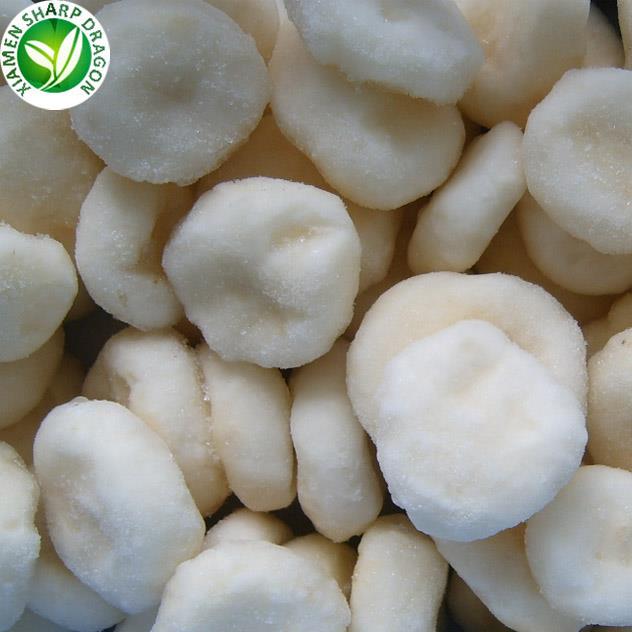
How to Cook Frozen Water Chestnuts
For a hot stir-fry, soup, or ready-meal component, frozen water chestnuts can often move directly from the freezer into the cooking process. Adding them later in a stir-fry can limit unnecessary softening. In a soup or braise, the timing can be adjusted according to how much bite the final dish should retain.
Thawing is more useful when excess surface ice would dilute a filling, sauce, or measured formulation. If thawing is required, use a controlled refrigerated method and drain only as needed for the recipe. Do not assume a universal cooking time: whole pieces, thin slices, small dice, appliance type, batch size, and the manufacturer's pretreatment all change the result.
Handling note: A frozen pack is not automatically ready to eat. Follow the label's storage and cooking directions. FDA guidance also distinguishes freezer burn, which is a quality problem, from temperature abuse or unsafe handling.

Whole, Sliced, or Diced: Which Format Fits?
The best cut is the one that matches the finished product. Large pieces make water chestnut visible and give a pronounced bite. Slices distribute more evenly through soups and stir-fries. Dice are easier to meter into fillings, mixed vegetables, and industrial formulations.
| Format | Useful applications | Check before purchase |
|---|---|---|
| Whole | Plated dishes, catering, visible vegetable portions | Piece-size range, peeling quality, broken pieces |
| Sliced | Stir-fries, soups, hot pot, ready meals | Thickness, diameter range, slice integrity |
| Diced | Fillings, blends, sauces, portion-controlled products | Nominal cut, size distribution, fines and breakage |

Practical Applications
Stir-fries and noodle dishes
Slices or small whole pieces give a clear textural contrast to softer vegetables, noodles, or sauce-coated proteins. Control the surface ice and add the ingredient at a stage that heats it through without prolonged cooking.
Dumplings, spring rolls, and other fillings
Dice can distribute crunch through a filling more consistently than large pieces. The formulation should account for water released during thawing or cooking, especially when a wrapper or coating must stay crisp.
Soups, hot pot, and ready meals
Slices are easy to recognize in soup and hot-pot portions, while dice can suit rice bowls and mixed entrées. For ready meals, test the complete heat-and-hold cycle rather than judging texture immediately after blanching or a short kitchen trial.

Storage and Package Condition
Keep commercial frozen water chestnuts at the temperature stated on the pack and protect them from repeated thawing. FDA consumer guidance uses 0°F (-18°C) as the freezer benchmark and notes that quality can decline during extended storage even when a product remains frozen.
Examine the sealed package as well as the ingredient. Heavy clumping, abundant loose frost, leakage, damaged seals, or misshapen cartons may indicate handling problems, although appearance alone cannot establish safety. Freezer burn can create dry, pale areas and reduce eating quality without automatically making the food unsafe.

Buyer Checks for Bulk Frozen Water Chestnut
A photograph can confirm the general form, but it cannot replace a written specification and an application trial. Buyers should define whole, sliced, or diced presentation; nominal dimensions; acceptable size variation; color direction; peeling residue; broken-piece or fines tolerance; foreign-material controls; ingredient statement; packing format; label needs; and cold-chain expectations.
At XMSD, we currently present whole, sliced, and diced IQF water chestnut formats. We recommend confirming the current product specification, sample performance, packing, documentation, and destination-market requirements for each project rather than relying on a generic website description.
XMSD sourcing note: Share the required form, cut size, application, packing format, order quantity, destination, and document needs. We can then discuss specification matching, sample review, and the relevant frozen-food packaging options.
Frequently Asked Questions
1. What are frozen water chestnuts?
They are the peeled edible corms of Chinese water chestnut, preserved by freezing and sold whole or in cut forms. They are a vegetable ingredient, not a tree nut.
2. Do frozen water chestnuts need to be thawed?
Not always. They can often enter a hot cooking process from frozen. Controlled thawing and draining may help when surface ice would change a filling, sauce, or precise formulation.
3. Are frozen water chestnuts already cooked?
Do not assume so. Pretreatment varies among manufacturers, and freezing itself is not a cooking step. Check the label and supplier specification, then follow the stated cooking directions.
4. How can I keep water chestnuts crisp in a stir-fry?
Avoid an unnecessarily long heat exposure, manage surface ice, and add them late enough to preserve bite while still following the pack's cooking instructions. Test the actual cut and batch in the intended recipe.
5. Are whole, sliced, and diced water chestnuts interchangeable?
They provide the same basic ingredient but behave differently in portioning, heating, visibility, and texture. A recipe or production line may need timing and dosage adjustments when the cut changes.
6. Which water chestnut cut is best for dumpling filling?
Dice are usually easier to distribute through a filling. The ideal nominal size depends on wrapper thickness, the other ingredients, the desired bite, and the filling equipment.
7. Can frozen water chestnuts go into soup or hot pot?
Yes. Whole pieces or slices are easy to recognize in broth-based applications. Add them according to the desired texture and the cooking directions for the specific product.
8. What is the difference between frozen and canned water chestnuts?
Frozen products require a maintained cold chain and may be available in buyer-specified cuts. Canned products are heat processed and shelf stable while sealed. Flavor, texture, formulation, packing, and handling are therefore not equivalent.
9. Are frozen water chestnuts the same as fresh ones?
They come from the same ingredient, but peeling, pretreatment, freezing, storage, and cooking can change texture and handling. Frozen supply reduces preparation work, while fresh produce requires cleaning, peeling, and tighter raw-material management.
10. Does freezer burn make water chestnuts unsafe?
FDA guidance treats freezer burn as a quality issue rather than an automatic safety failure. It can still make the ingredient dry or less pleasant. Temperature history, seal condition, and label instructions require separate review.
11. Can thawed water chestnuts be refrozen?
That decision depends on how the product thawed, how warm it became, how long it stayed there, and the applicable food-safety procedure. Do not refreeze a temperature-abused pack simply because it still looks normal.
12. How should frozen water chestnuts be stored?
Keep them continuously frozen at the temperature stated on the package, with the bag or carton sealed and protected from damage. Monitor cold-chain conditions rather than relying only on product appearance.
13. What should a bulk buyer include in a frozen water chestnut inquiry?
State the form, cut dimensions, application, acceptable variation and defects, ingredient requirements, packing format, quantity, destination, label needs, documents, and expected shipment window. Ask for a current specification and sample when application performance is important.
Final Thoughts from XMSD
Frozen water chestnut is most useful when the cut, texture target, cooking process, and package format are considered together. For kitchens, the practical question is how the ingredient should behave in the finished dish. For buyers, the same question should be converted into measurable specifications and confirmed with a representative sample.
References
- Kew Science: Eleocharis dulcis (Chinese water chestnut)
- U.S. Food and Drug Administration: Are You Storing Food Safely?
- Codex Alimentarius: Standard for Quick-Frozen Vegetables (CXS 320-2015)
- XMSD: IQF Frozen Water Chestnuts product and procurement information
- XMSD: Frozen-food packaging options and operational images