


Frozen Vegetable Retained Samples and Complaint Evidence
Aug 22, 2026

A retained frozen vegetable sample is useful only when its identity, selection point, packaging, frozen custody and access history are trustworthy. It is not automatic proof that a shipment was conforming. Use it as one controlled comparison within a complaint investigation that also tests the returned product, production records, distribution conditions and pattern across the lot.
The practical method is to define retention by risk and contract: what unit to take, when and where to take it, how many packs, how long to keep them, how to protect them, and who can open or transfer them. Connect every retained pack to product, cut, grade, production lot, packing line, date code, packaging revision, pallet range and shipment. A freezer full of anonymous bags creates storage cost, not evidence.
We recommend keeping complaint triage separate from root-cause conclusion. First preserve the evidence and assess potential safety, legal and commercial severity. Then compare like with like under a written method. A good retained sample does not erase a genuine distribution or isolated-package failure, while a damaged returned sample does not prove the factory caused the damage.
The short answer: retain representative sealed units under documented frozen custody, preserve complaint material and packaging separately, compare traceability and test conditions before opening, and base disposition on the complete evidence pattern rather than one convenient sample.

Define What the Retained Sample Can Prove
A retention unit can preserve the packaged product as it left a defined point. If selected after final packing, it can support later checks of identity, color, odor, cut distribution, foreign-material allegation, seal, code, label, net quantity or analytical attributes. It cannot by itself reproduce temperature abuse after dispatch, every location within a large lot, a consumer's handling, or an event that affected only one package.
Write the purpose beside the retention plan. A safety-related pathogen program needs laboratory sample integrity and validated methods. A sensory or cut-size comparison needs sufficient material and a standardized preparation method. A foreign-object complaint needs sealed comparison packs, line inspection records and the returned object's chain of custody. A coding complaint may require packaging rather than edible product. The purpose changes pack count, storage and opening authority.
Choose the Unit and Sampling Points
Select the same commercial unit the buyer receives whenever possible. A loose handful taken before packing cannot verify seal, coding, net quantity or material transferred through the packing line. Keep bags sealed and retain the outer case label or a controlled image. For a 10 kg bulk carton, a whole unit may be ideal but expensive; a documented smaller unit can be acceptable for certain quality comparisons if it was taken hygienically and cannot be mistaken for a sealed commercial-pack sample.
| Selection point | What it represents | Important limitation |
|---|---|---|
| Start of pack | Startup clearance and early output | May not capture later drift or raw-material change |
| Middle of lot | Stable-run output | One point may miss a roll, shift or freezer transition |
| End of pack | Tail-end and line-emptying conditions | Can overrepresent fines if line depletion is uncontrolled |
| After intervention | Output after stop, adjustment or material change | Must link to the exact intervention and time |
Stratify the selection across meaningful changes instead of taking adjacent bags. For a long frozen pea run, choose packs across start, stable middle, film roll change, shift change and end. For a mixed vegetable recipe, include points after blend replenishment. For individually quick-frozen pieces, protect the sample from thawing during transfer from line to retention freezer.

Control Frozen Custody and Access
Store retained samples at the product's specified frozen condition in a monitored location. Use an access-controlled cabinet or freezer zone, durable label and location register. Record sample movement, freezer alarms, prolonged door events, power loss, defrost events and any transfer to another freezer. If the retained sample thaws or loses identity, mark the limitation; do not quietly compare it with a properly frozen complaint pack.
Keep the sample sealed until the investigation plan defines opening, photographs, measurements, test portions and witnesses. If one bag must support several analyses, decide allocation before opening. Microbiology, sensory, physical defect and packaging checks can have incompatible handling needs. Use separate units when the risk and available quantity justify it.
Our frozen packaging reference helps frame package formats, but custody evidence must identify the actual film, seal and pack code. A stable freezer temperature record supports the stored sample; it does not reconstruct conditions before receipt or during the customer's distribution.

Set Retention Time From the Decision Need
Do not copy a universal retention period without identifying the market, product life, distribution lag, complaint window, contract and risk. A practical baseline often extends beyond the declared shelf life by an agreed investigation allowance, but regulations or customer programs may define another period. Document the start event-production, packing, release or expiry-because "keep for two years" is ambiguous without it.
CFIA's current traceability guidance, for example, states specific two-year document-retention and accessibility duties for covered Canadian food businesses. That rule concerns traceability documents, not a universal physical-sample period for every product. Separate record retention from physical sample retention. Keep the records long enough to interpret the sample and shipment even after the sample is disposed.
Review capacity honestly. If the plan requires five 1 kg bags from every lot and 1,200 lots are packed annually, one year creates 6,000 kg of retained product before racks and access aisles. A smaller risk-based design with stratified selection may create better evidence than an unmanageable freezer that encourages mislabeling, crowding or premature disposal.
Worked example: freezer capacity and retention choice
A hypothetical factory packs 80 frozen vegetable lots per month. The proposed plan holds six 1 kg bags per lot for 30 months: 80 × 6 × 30 = 14,400 kg, excluding shelving and access space. The risk review finds that three stratified 1 kg bags plus controlled packaging samples and full electronic traceability satisfy the defined quality-complaint purpose. The revised physical load is 80 × 3 × 30 = 7,200 kg. Safety-related sampling remains under its separate validated program. The action is not merely to halve storage; it is to document which investigation questions the three units can answer and which require another source of evidence.
Preserve the Complaint Sample Before Analysis
Ask for product name, pack size, lot/date code, purchase and opening dates, storage history, preparation method, photographs of all package sides, remaining quantity, alleged defect, injury or illness information and whether foreign material was removed or washed. Give safe instructions for isolation and frozen storage without asking the complainant to handle a sharp or hazardous object unnecessarily.
Preserve the original container, label, object, remaining food and shipping materials. Record who collected, sealed, transported, received, stored, opened and transferred each item, with date, time, condition and seal number. FDA explains that intact product is often preferred when a complaint item could become legal evidence, and same-lot product may be collected for comparison. FSA practice guidance likewise emphasizes preserving storage, analysis and evidential value when a complaint sample is shared.
Do not promise that the returned pack alone will establish cause. An open bag may contain a real defect but lack continuity; a sealed bag may still have experienced temperature abuse; a photograph may show appearance but not dimensions, material identity or custody. Record each limitation before testing so the conclusion does not outrun the evidence.
Use a Six-Step Complaint Comparison
1. Triage severity and protect people
Escalate suspected illness, allergen, sharp foreign material, chemical contamination, widespread temperature failure or misleading identity under the applicable incident procedure. Preserve evidence while the responsible safety team decides notification, hold or recall action. Do not delay urgent risk control until a retained sample is opened.
2. Verify identity and scope
Match returned pack, retained pack, work order, code, packaging revision and shipment. Map adjacent lots, shared raw material, line window, pallet and customers. The equipment route can guide record review, while actual line and intervention logs define the scope.
3. Lock the examination plan
Define photographs, weights, sieve or cut check, thaw/cook method, material identification, laboratory tests, observers and acceptance basis. Blind or code samples where practical. Use the same preparation and measurement basis for returned and retained product; otherwise method difference can masquerade as lot difference.
4. Compare multiple evidence streams
Review production, QC, foreign-material, packaging, freezer, loading, transport, receiving and complaint-trend records. The current CFIA complaint inspection procedure expects documented complaint details, investigation results and actions. One normal retained sample is stronger when supported by stable process records and weak when records show an unresolved deviation.
5. State the conclusion strength
Use categories such as confirmed, probable, possible, not substantiated or indeterminate, and state the basis and limitations. "Retain passed" is not a cause analysis. Identify whether evidence supports factory origin, distribution origin, handling origin, isolated pack event or no defensible assignment.
6. Close actions and test effectiveness
Connect correction, root-cause action, affected-lot disposition, customer response and effectiveness review. Trend similar complaints by product, defect, line, supplier, season and pack. Update retention or inspection when a repeated failure shows the sample plan misses a real risk.
Interpret Matches and Mismatches Carefully
Practical example: a distributor reports excessive broccoli fines in pallet 18. The returned open bag contains 16% sub-specification fragments; the retained start and middle packs contain 3% and 4%, while the retained end pack contains 11%. End-of-run depletion records show a feeder adjustment, and pallet mapping places pallet 18 after it. The pattern supports a late-lot process cause despite two normal retains. Hold the mapped window, inspect remaining stock and correct the end-of-run control. Averaging the three retains to 6% would hide the useful time pattern.
The reverse is also possible. A returned pack may show a thawed block while retained packs remain free-flowing and dispatch records are normal. Receiving temperature, reefer events, warehouse records and neighboring cartons become decisive. Do not state that factory cold-chain control was perfect; state that the tested evidence did or did not identify a failure within the reviewed window.

Connect the Sample to Traceability and Shipment
CFIA explains that traceability records help identify recall scope, while FDA describes tracing as linking production, processing and distribution. For frozen vegetables, connect field or raw-material lot where available, processing day, line, freezer, packing lot, case and pallet, inspection, cold store, container and customer. The retained pack should be one node in that map.
Review the frozen vegetable quality standard and order-specific specification before selecting tests. A complaint about cut size, color, odor, clumps, foreign material or net weight needs a different measurement. Ask for raw data rather than only a pass certificate.

Make the Retention Plan Product-Specific
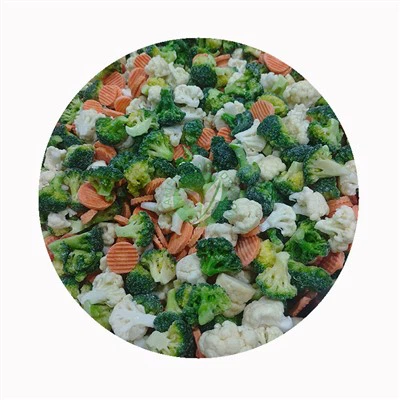
The frozen vegetable portfolio contains products that fail in different ways. Peas and corn may need enough sealed units to study clumping, color, foreign material and fill variation. Broccoli and cauliflower need a sample size large enough to represent floret/stem distribution and breakage. Mixed vegetables need blend proportion as well as individual component defects. Leaf products may require careful frozen transfer because pieces compact or fracture during handling. Write the failure modes and intended measurements beside the pack count.
Season, field source, production shift and packaging route can change variability. A fixed one-bag rule cannot show whether each of these factors was represented. Use the hazard analysis, complaint history, customer specification and process knowledge to select strata. When an initial order introduces a new cut or pack, increase information density during qualification, then justify any reduced routine plan with stable evidence rather than habit.
Prepare the Investigation Before the Complaint Arrives
Keep a complaint intake form, severity matrix, contact tree, courier instruction, laboratory list, sample-opening form and decision template ready. Record time zones and business-hour escalation for international orders. Decide how a returned frozen pack will be shipped with temperature control and tamper evidence. If cross-border return is impractical, specify which high-resolution photographs, measurements, unopened comparison units or local laboratory steps can preserve useful information.
Test the process through a mock complaint. Select a real lot, retrieve its retain, trace the pallet and customer, build the document set, simulate a returned-sample receipt and reach a timed disposition. Include the applicable processing facility, cold store, logistics and commercial contacts. Record missing fields and access delays. A mock exercise reveals that a sample exists but cannot be found, or that its code does not resolve to shipment, before a live safety or customer issue makes the gap expensive.
Align Test Method, Specification and Sample State
Inspect frozen appearance before thawing, because opening and warming can change ice, clump structure, breakage and odor. Photograph label, seal, frost and distribution inside the bag. Weigh the unopened pack if net quantity matters. Then use the agreed thaw, cook, drain, sieve, blending or sensory preparation. Keep the sequence consistent across returned, retained and control samples and record any departure.
Laboratory method scope matters. A negative result from one portion does not prove absence throughout a heterogeneous lot, and a screening result may require confirmation. A foreign object may need material identification and dimensional evidence; microbiology needs aseptic custody; pesticide or allergen investigation needs a laboratory able to measure the intended analyte in the frozen vegetable matrix. State the analytical uncertainty and sampling limitation when they change disposition.
Trend Complaints by Exposure, Not Count Alone
Ten complaints can signal improvement or deterioration depending on kilograms, packs, markets and time in distribution. Calculate a rate on a suitable denominator, then stratify by defect family, product, cut, plant, line, supplier, season, film and customer route. Look for repeated low-frequency safety signals separately from cosmetic complaints. Preserve both substantiated and unsubstantiated cases because repeated uncertainty can expose an evidence weakness.
Set action triggers before the pattern appears. A single credible sharp-object or undeclared-allergen event can demand urgent escalation, while color variation may require a trend threshold and reference-standard review. Verify corrective action with later lots and complaint rate, not only a completed training record. Update the retained-sample plan if investigations repeatedly fail because the right pack, time point or packaging record was not preserved.
Frequently Asked Questions
How many frozen vegetable packs should be retained?
Set quantity from the defined investigation purposes, lot variability, pack size, expected tests, market and contract. Use stratified points rather than adjacent units, and keep separate units for incompatible tests where risk justifies them.
Does a normal retained sample reject a customer complaint?
No. It shows the condition of that controlled unit under its custody. Compare the returned pack, lot pattern, process and distribution evidence before deciding whether evidence substantiates the allegation, contradicts it or leaves the cause indeterminate. Record the deciding facts and unresolved limitations.
Can the same sample be used for microbiology and sensory checks?
Only under a plan that protects sample integrity and allocates portions correctly. Opening and sensory preparation can compromise microbiological evidence. Separate sealed units are usually clearer when both questions matter.
When can retained samples be discarded?
After the approved retention period and only when no active complaint, hold, legal request or investigation requires them. Record identity, quantity, date, reason and authorization for disposal.
For an import complaint or retention-plan review, send us the frozen vegetable specification, pack format, lot code, alleged defect, photographs and requested tests. We can help align the production and shipment evidence available for your decision. Discuss the evidence package with XMSD.