


Does Frozen Fruit Go Bad? How to Judge Changes in Quality
Apr 16, 2025

Yes, frozen fruit can lose flavor, color and texture, and it can spoil after unsuitable handling or thawing. But a frosty strawberry or a soft defrosted raspberry is not automatically spoiled. Start with its storage and handling history; use appearance to judge quality, not to prove safety. Properly handled food kept continuously at 0°F (about −18°C) remains safe during frozen storage, although its quality declines. Freezing does not make contaminated fruit safe.
Dry patches and faded color usually call for a quality assessment. Mold, an unexpected fermented odor, sliminess, a recall affecting the pack, or contamination are reasons to stop using it. A bag that has warmed up needs a handling assessment even when the fruit looks normal. Never taste a questionable piece to decide whether the rest is safe.
After the safety question is resolved, the recipe matters. Fruit that no longer looks attractive on a dessert may still perform well in a cooked filling. Fruit with an unpleasant freezer flavor will not become better simply because it goes into a blender. That distinction helps avoid both unnecessary waste and attempts to rescue unsuitable food.

What freezer burn, frost and clumps actually tell you
Freezer burn is drying at the surface of frozen food. It may leave pale, tough or leathery areas and a disappointing mouthfeel. The FDA identifies it as a quality issue, not a safety issue. Assess any broken seal, unknown handling history or other concern separately. A dried edge and a contaminated bag are different problems that can occur together, so look at the whole pack before deciding what the visible damage means.
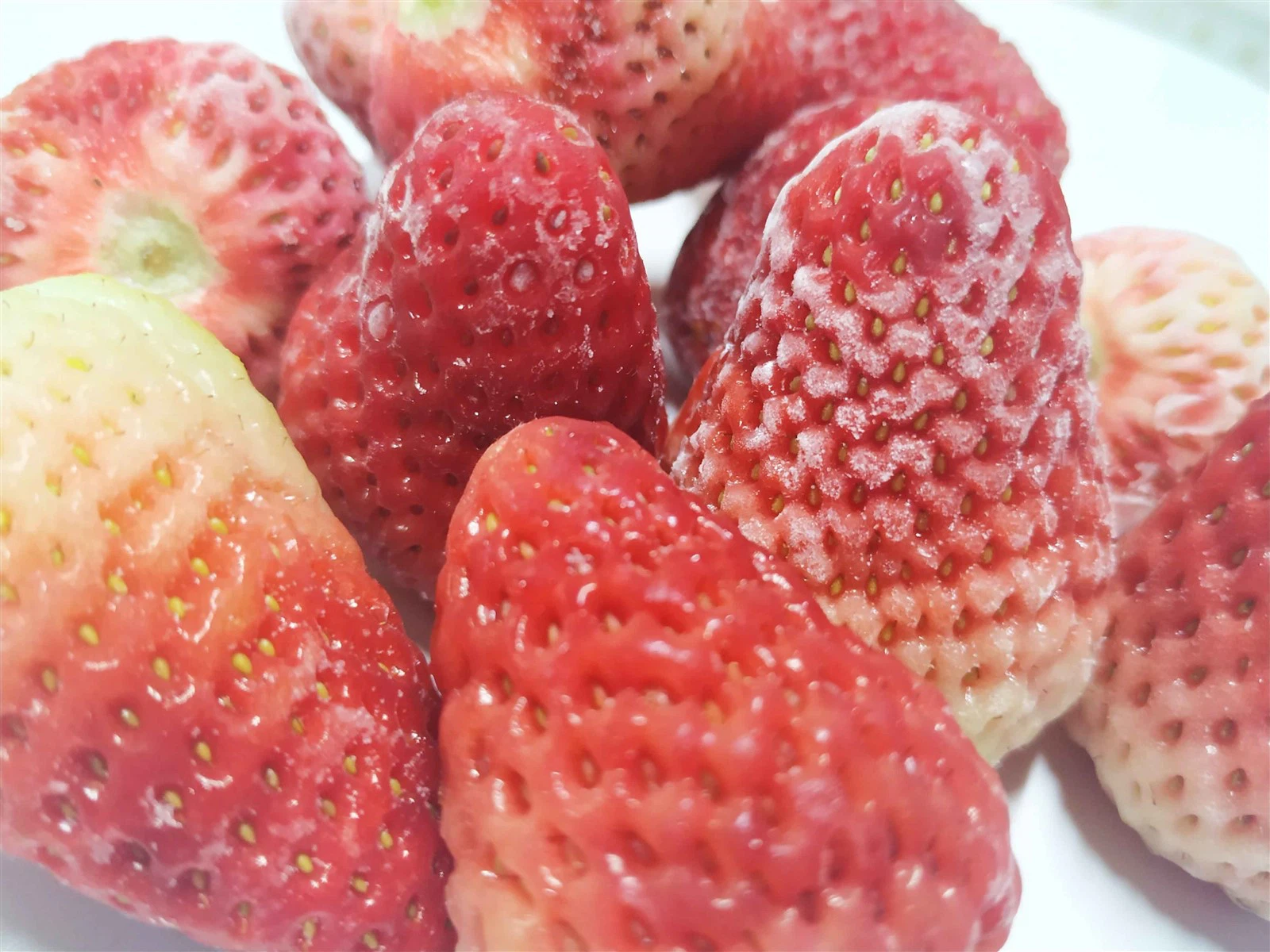
Loose ice crystals are another observation. Some surface frost is visible on many frozen berries, including the mixed fruit pictured above. Frost is not mold. To establish how long a pack spent outside the freezer, you need its handling history. Moisture movement, exposure when opening the bag and changes in temperature can all affect the appearance. Photograph the frost before handling the fruit if you need to discuss a quality concern with a supplier.
Large clumps deserve attention when the product was bought as free-flowing IQF fruit. The immediate problem may be portioning: instead of weighing separate pieces, you have a block that will not feed evenly into a recipe.
Investigate the cause by checking compression, moisture between pieces and any history of warming. Compare the delivery with the agreed product form before calling every joined piece a defect. Fruit intentionally frozen as a block needs a different comparison from loose IQF pieces.
| Observation | What it can indicate | Useful next action |
|---|---|---|
| Dry, pale areas | Surface dehydration and quality loss | Assess flavor and texture only after safety is established |
| Loose frost or joined pieces | A condition to investigate, not a temperature record | Check seals, product form and handling records |
| Mold, slime or unexpected fermentation | A reason to stop using the food | Discard at home; isolate affected stock commercially |
For us, the useful distinction is between a description and a diagnosis. "About half the bag needs breaking apart before portioning" is a description that someone else can verify. "The fruit definitely thawed during transport" is a diagnosis requiring temperature and handling records. Keeping those apart produces a better complaint record and makes it easier to decide whether the issue is packaging, separation, delivery handling or application performance.
Check where the change appears. A dry, pale patch on exposed fruit can be freezer burn if the pack stayed properly frozen. Loose frost on the inside of a bag can come from moisture moving within the pack. A clump, by itself, cannot tell you when or how far a bag warmed. Keep evidence of the seal, the handling history and any known temperature issue before deciding what a visual change means.
Soft fruit and colored juice are not a spoilage test
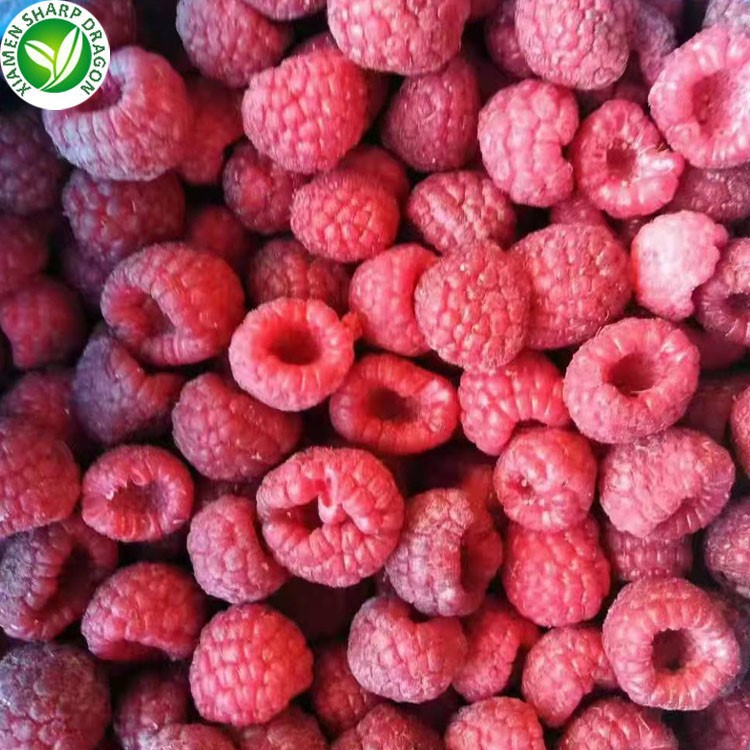
Frozen fruit normally becomes softer after thawing because freezing changes its cellular structure. Iowa State University Extension explains that thawed fruit can release juice and color, especially in baking. A raspberry that slumps after defrosting has therefore not necessarily "gone bad." Compare it with the expected behavior of that fruit and cut, rather than with a fresh berry selected for a display tray.
The starting material matters too. Ripeness, variety, size and preparation all affect how a fruit behaves. Colorado State University Extension describes softness as a normal difference between frozen and fresh fruit. Look at the whole sample: are the pieces merely softer, or are they so fragmented that their original form has been lost? That question connects the observation to the recipe and helps distinguish an unrealistic expectation from a genuine quality mismatch.
When comparing a sample, keep the thaw method consistent. Put equal quantities of the same product form into covered containers in the refrigerator, follow the pack instructions, and compare them at the same stage of thawing. Note how many pieces remain recognizable, how much liquid collects and whether the color suits the dish. Comparing a partly frozen sample with a fully thawed one can make the second lot seem much poorer without a fair basis. Also record whether the assessment includes the released juice. A sample lifted from a sieve and one left sitting in its liquid are answering different texture questions.
We would judge whole raspberries for a visible topping differently from raspberries intended for a cooked sauce. For the topping, broken pieces and juice staining may make the product unsuitable even when handling has been satisfactory. For the sauce, the useful questions are flavor, seed character, finished consistency and the recipe's preparation requirements. Compare the fruits and formats in XMSD's frozen fruit range by their expected thawed performance and the role they will play in the dish.
When appearance is not enough to keep the pack
Visible mold, an unexpected yeasty smell and sliminess are stop signals. Do not trim a suspect berry and treat the rest of a mixed bag as cleared. At home, discard questionable food. In a business, isolate the affected stock and keep its identification available for the person responsible for food safety and any supplier investigation. Do not blend the suspect pieces into another batch while waiting for a decision.
The reverse is just as relevant: normal-looking fruit can carry a hazard. The FDA explains that freezing generally does not inactivate viruses that may contaminate berries. Use the controls required for the intended application even when the color, bag and packing date appear satisfactory. Check label instructions, including any requirement to cook, before putting frozen fruit into an uncooked dessert or drink.
A recall is a separate reason to act. Match the actual product name, lot code, pack size and any other identifiers in the recall notice. Follow its return or disposal directions; do not use an appealing appearance to overrule it. For a mixed-fruit product, a problem involving one ingredient may affect the whole finished pack. Keep the original label until the contents have been used so that this check remains possible.
Avoid home experiments intended to prove safety. Rinsing, tasting a tiny amount, picking out the worst pieces or freezing the bag harder is not a release procedure.
Likewise, choosing a cooked application is a quality decision only after the fruit is suitable for use. Ordinary recipe cooking should not be presented as a way to rescue recalled, spoiled or contaminated food.
For a foodservice menu, record whether the ingredient is intended for use without a further cooking step. A berry topping added after a dessert has cooled has a different process from a fruit filling cooked as part of a validated recipe. Our foodservice and catering information is a starting point for discussing portions and applications; the product's actual handling instructions still govern the kitchen's use.
In a cold smoothie or uncooked topping, the fruit needs to be suitable for that use. Check the pack directions and any recall notice for the actual item. FDA has documented outbreaks associated with fresh and frozen berries. Appearance or taste cannot establish the absence of a virus. A recalled lot should be handled as the notice directs.
Dates help with rotation; they do not explain every defect
For correctly prepared and packaged fruit stored at or below 0°F, the National Center for Home Food Preservation gives an approximate quality range of 8–12 months. Use this home-preservation range to plan rotation. Commercial packs have their own marked dates and instructions. Beyond a general quality range, judge the actual fruit using its condition before freezing, its packaging and its storage history, together with any applicable label requirements.
Use the manufacturer's date and instructions for the commercial product you have. Read the wording on the actual pack, and keep any use-by or after-opening instruction attached to the product when you transfer it into another container. A bag can develop poor quality before its marked date if storage has been unsuitable. An older bag with a sound history may simply need a closer quality assessment. The date provides one piece of information, not a complete account of the pack.
Keep the thaw and date decisions separate. For a preparation method, see the frozen food thawing guide and follow the directions for the product.
Keep an opening date as well as the original lot information where your kitchen procedure requires it. Transferring fruit into an unmarked container can remove the very information needed to investigate a concern.
Write the identity and original batch reference on the new container, and avoid topping up old fruit with a new lot. Separate lots make rotation easier and keep a later quality issue from becoming a guessing exercise.
For a commercial delivery, distinguish when the fruit was produced or frozen from when your site bought it. Check the lot code and the supplier date statement, then compare the remaining shelf life at receipt with the agreed order requirement. A fresh purchase date does not tell you how long the fruit has been in frozen storage. Keep the source label with the inspection record.

A thawed bag needs a time and temperature decision
Thawing in the refrigerator is a practical default when a recipe requires thawed fruit. Keep it covered and follow the label's thawing and use instructions. Thaw only the portion needed. Iowa State University Extension notes that safely thawed excess fruit may be refrozen, with further softening. That is different from returning a bag to the freezer to erase an unknown period of warm handling.
For a household power outage, FoodSafety.gov says food can generally be refrozen if it still has ice crystals or is at 40°F (4°C) or below, though quality may suffer. Its frozen-food chart specifically allows refreezing home or commercially packaged fruit, including in its warmer-exposure column, while directing disposal if mold, a yeasty smell or sliminess develops. Use the chart for that defined emergency situation; it is not a commercial receiving specification or permission to disregard contamination and label instructions.
Identify the food correctly before applying that advice. Plain fruit, frozen yogurt with fruit, a dairy smoothie and a prepared dessert occupy different categories. The same emergency chart directs disposal of ice cream and frozen yogurt even when ice crystals remain. Select the row for the complete food or mixture. For business stock, use the site's food-safety procedure and the agreed product requirements to assess any temperature deviation.
A frozen exterior today tells you little about yesterday's handling. If the fruit was moved, refrozen or delivered after a disruption, preserve the timing and available temperature information. At home, discard it when the basis for safe use is uncertain. In a business, keep it on hold until the responsible person completes the assessment. Take photographs for identification and obtain the handling records needed to explain the sequence of events.

Decide whether the fruit still works in the recipe
Once safety and handling are satisfactory, assess quality against the finished dish. Appearance has more weight in a clear dessert cup than in an opaque sauce. Piece integrity matters when a customer expects recognizable fruit. Released juice matters when it changes a filling's consistency or stains a pale topping. Assess flavor in the intended recipe after any required preparation, since a strong freezer odor may remain objectionable even when texture no longer matters.
Practical example: Suppose a catering kitchen has a properly stored pack of whole raspberries, with no safety concerns and handling instructions suitable for its planned preparation. A refrigerator-thawed sample breaks down too much for individual berries on a plated dessert. The kitchen compares a small portion in its cooked raspberry sauce recipe instead. If the flavor and finished consistency meet its usual standard, it can use the fruit for that application. The result is a justified change of use, not a claim that cooking repairs spoiled fruit.
Worked example: Take a bakery comparing two suitable fruit lots for a filling that requires drained pieces. Under the same documented thaw and drain method, illustrative 1,000 g samples yield 880 g and 760 g of pieces. The retained yields are 88% and 76%. To obtain 10 kg of drained fruit, the calculated inputs are 10 ÷ 0.88 = 11.36 kg and 10 ÷ 0.76 = 13.16 kg. Before rounding, the difference is about 1.79 kg of input. These assumed figures demonstrate the calculation; they are not XMSD test results or acceptance limits.
That calculation changes if the recipe uses the released juice. Do not call all drained liquid waste when it can be included in the formulation. For a sauce using the whole contents, drained yield may be the wrong buying measure. Compare finished batch yield, consistency and flavor instead. We would choose the test around the recipe's actual loss, because an impressive whole-piece percentage can distract from the property that controls the customer's cost.
Suppose a pack of berries has remained properly frozen and has dry surface patches, while a separate recalled pack looks perfect. After resolving the first pack as a quality issue, a cook can decide whether the berries still suit a cooked filling. The recalled pack follows the recall instructions. Keep the quality trial separate from the decision about whether the food can be used at all.

Prevent repeat damage through the pack and portion size
Use packaging intended for freezing and close it promptly after removing a portion. The National Center for Home Food Preservation recommends moisture-resistant packaging that protects against leaks and unwanted odors. For a bag that will be opened repeatedly, the closure needs to work in actual use. A fold loosely held under another bag is a different protection level from a secure closure. Keep the original label even if a second freezer bag is needed.
The most useful pack is often the one that matches how much the operation uses at once. A large bag can be economical when it is emptied directly into a batch. The same bag can be awkward when only a small portion is taken each day, with repeated handling of the remaining fruit.
Compare the extra packaging cost of smaller inner packs with the labor, exposure and loss associated with the large pack. Count how many times it is opened during a normal production week. That simple observation often explains why the same fruit works well for a batch processor but becomes difficult to manage at a low-volume service station.
Inspect the inner bag separately from the carton. Record an outer-box scuff and an open inner seal as separate observations, because they affect different protective layers. Note punctures, open seams, leakage and whether the label is legible. Review the closure and portioning approach when comparing the formats shown in our frozen-food packaging options. The pack should suit both delivery protection and the way the contents will be used.

For a delivery complaint, keep evidence and make two decisions
A commercial delivery needs both a safety decision and a specification decision. Keep affected stock identifiable and separate while it is assessed. Record lot numbers, arrival time, package condition, the sampling locations and measured product temperatures using the site's approved method. A truck set point describes a setting, whereas a product reading describes a sample at a particular time. Neither should be presented as the entire history of the load.
Check whether the concern is isolated or repeated across the delivery before making a claim about the whole lot. Preserve photographs showing the closed pack, label, opened contents and the observed defect, with a scale where size matters. Keep the temperature record in its original form. The handling questions described for cold-chain distribution are useful here because the handoff between storage, loading and receiving may determine what evidence is available.
After the food-safety assessment, compare the lot with the written quality requirements and a representative application trial. Obtain agreement before changing its use to a less appearance-sensitive recipe. Keep the ordered grade and any proposed alternative clearly recorded. Maintain the hold or reject stock that fails the applicable release procedure. Discuss price only after those decisions: the food must be suitable for use, and the customer must agree to any departure from the quality specification.
For an XMSD frozen-fruit enquiry, share the fruit, product form, recipe, pack size and sample requirements so we can review the quality criteria that matter to your use.
References
- FDA - Are You Storing Food Safely?
- FoodSafety.gov - Food Safety During Power Outage
- National Center for Home Food Preservation - How Long Can I Store Frozen Foods
- Iowa State University Extension - How to Use Your Frozen Fruit
- Colorado State University Extension - Freezing Fruits
- FDA. Berry safety and why freezing generally leaves viruses active.
- FDA. Prevention strategy for norovirus and hepatitis A outbreaks associated with fresh and frozen berries.