


Do You Need to Cook Frozen Spinach?
Aug 19, 2019

Most frozen spinach should be cooked before it is eaten unless the package or supplier specification clearly identifies it as ready-to-eat. Commercial frozen spinach is commonly washed and blanched before freezing, but blanching is usually a short quality-preserving step; it does not automatically make every product suitable for a smoothie, salad, or cold dip straight from the bag.
You usually do not need to thaw it first for a soup, sauce, skillet dish, or another recipe that heats the spinach thoroughly. Thawing is useful when a filling, dip, pastry, or portion-control process requires you to remove excess water before the final cooking step. Do not make room-temperature thawing and rewashing the default. Follow the package directions; when thawing is necessary, keep the product cold or use the method specified by the manufacturer. The practical decision is therefore not simply "frozen versus fresh." It is ready-to-eat status, product form, heating method, and moisture requirement.
The short answer: Cook frozen spinach unless it is clearly labeled ready-to-eat. Cook it directly from frozen when the instructions and recipe allow; thaw it under controlled cold conditions only when you need portioning or water removal.

Cook It Unless the Product Is Clearly Ready-to-Eat
Codex describes quick-frozen spinach as spinach that has been sorted, washed, sufficiently blanched to support color and flavor stability, and properly drained. That definition explains why frozen spinach often looks wilted or partly cooked. It does not say that every pack is a ready-to-eat food. The U.S. Food and Drug Administration makes the broader safety distinction clear: freezing can leave bacteria alive, and partial factory cooking does not necessarily provide the time and temperature needed to eliminate harmful organisms.
The label therefore outranks assumptions based on appearance. Wording such as "cook before eating," "ready to cook," or a complete microwave or stovetop instruction means the heating step is part of the intended use. A statement that the spinach is blanched describes processing; it is not the same claim as ready-to-eat. If a product is specifically validated and labeled for ready-to-eat use, follow its storage and handling directions instead of applying a general cook-before-eating rule.
This distinction is most important for cold recipes. A soup or pasta sauce contains an obvious heating step. A smoothie, salad, chilled spread, or cold dairy dip may not. When the status is unclear, the proportionate action is to cook the spinach according to its directions and, if the finished dish will be cold, cool it safely before mixing or serving.

Why room-temperature thawing and rewashing are not the default
The old kitchen habit of leaving a frozen vegetable on the counter until soft adds time in an uncontrolled environment. EFSA recommends thawing at low temperature and following the manufacturer's storage instructions. If a recipe truly needs thawed spinach, use the refrigerator, a cold-water method that keeps the product protected, or a microwave method permitted by the package, then continue preparation without unnecessary delay.
Commercial quick-frozen spinach is normally washed during processing, so routine rewashing is not the decisive safety step. Water does not replace the cooking direction. Extra rinsing can also add handling and more moisture, which is unhelpful for pastry, pasta filling, quiche, or dip. If the supplier gives a specific rinse instruction, follow it; otherwise focus on package integrity, correct frozen storage, controlled thawing when needed, and the stated heating method.
Do You Need to Thaw Frozen Spinach First?
Thawing is a recipe-performance decision, not a universal preliminary step. Loose chopped spinach, separated leaf pieces, small pellets, and portioned balls can often move directly into a hot system if the manufacturer permits it. A dense block may heat more slowly or release a concentrated pool of water, so the equipment, batch size, and final texture change the preferred method.
| Application | Practical starting method | What decides acceptance |
|---|---|---|
| Soup, stew, sauce | Add from frozen when directions allow and return the whole dish to a thorough heat. | Even heating, leaf distribution, and whether released water fits the formula. |
| Skillet side, egg dish, pasta | Heat from frozen or partially loosen first; stir so cold centers disappear. | Hot-through result, tenderness, and removal or evaporation of excess liquid. |
| Quiche, dumpling, ravioli, pastry or dip | Thaw under controlled cold conditions when squeezing or exact dosing is needed, then complete the required cooking step. | Drained yield, filling stability, seam or crust performance, and final heating status. |
Use the table as a starting point, then check the exact pack rather than treating the format name as a cooking instruction. A ball that separates quickly in a small saucepan may behave differently in a crowded kettle, while a block that is awkward for partial use may be efficient when the whole unit enters one batch. If the directions do not cover the intended equipment or batch size, run a controlled application trial and document the method that produces even heating and the required final texture.

How to Cook Frozen Spinach Without Making It Watery
Frozen spinach naturally releases liquid as ice melts and the softened leaf structure drains. That is not, by itself, evidence of poor quality or spoilage. The right response depends on where the water should go. In a soup, it may become part of the recipe. In a pastry filling, the same amount can weaken a crust, dilute seasoning, or prevent a clean seal.
For a pan or skillet
Place the permitted amount in a pan, add only the liquid needed to prevent scorching, cover briefly if steam will help separate the pieces, and stir as the spinach loosens. Continue according to the package direction until the portion is hot throughout. Then uncover to evaporate liquid or drain it before seasoning. A small loose portion and a large dense block do not heat at the same rate, so a universal minute count would be misleading.
For soup, sauce, curry, or a batch kettle
Add frozen spinach at a point that lets the full system recover its heat and gives the pieces time to separate. Stir beyond the visible surface, especially in a deep vessel, because a hot liquid around a cold center is not an even result. Judge the batch by the validated process, product directions, leaf distribution, and final texture rather than by whether the outside of one piece looks wilted.
For a microwave
Use a microwave-safe container and the exact power, covering, stirring, and standing instructions on the pack. FDA guidance notes that uneven microwave heating can leave a center cooler than the edges. If the package has no microwave method, do not invent one for a commercial product or large block; use a validated stovetop or production method instead.

When Draining or Squeezing Matters
Drainage changes both texture and yield. For lasagna, ravioli, dumplings, savory pastries, quiche, or a thick spinach dip, remove enough liquid to keep the filling stable. Let the spinach cool sufficiently for safe handling if it has been heated, then press or squeeze it with clean equipment. The target is not "as dry as possible" in every formula; excessive squeezing can also reduce usable yield and make a filling coarse.
For a buyer or product developer, weigh the product before thawing and after the agreed draining procedure. Test that drained yield in the actual formula, not only in a bowl. A spinach that appears inexpensive per carton may cost more per usable kilogram if it releases substantially more water under the same controlled method. Acceptance should therefore define the product form, thaw method, drain time, pressure or squeezing method, batch size, and application result.

Cold Dips, Salads, and Smoothies Need a Different Decision
A no-cook recipe removes the final heating step that a ready-to-cook frozen vegetable expects. Do not use an unlabeled or cook-before-eating spinach directly in a smoothie, salad, chilled spread, or cold dip merely because it was blanched. Either select a product whose ready-to-eat status is explicitly supported for that application, or cook the spinach as directed and cool it under a controlled food-safety procedure before combining it with ready-to-eat ingredients.
Safety note: EFSA advises following frozen-vegetable labels and reports that risk is generally much lower when the vegetables are properly cooked. Pregnant people, older adults, newborns, and people with weakened immune systems face greater consequences from listeriosis and should be especially careful with non-ready-to-eat frozen vegetables.
What Foodservice and Industrial Buyers Should Specify
Professional buyers should convert "Do we need to cook it?" into an agreed process-status statement. The specification should say whether the product is ready-to-cook or ready-to-eat, identify the intended application, and align the label with the downstream kitchen or factory procedure. A microbiological report or a blanching statement should not be used as a substitute for a clear intended-use declaration.
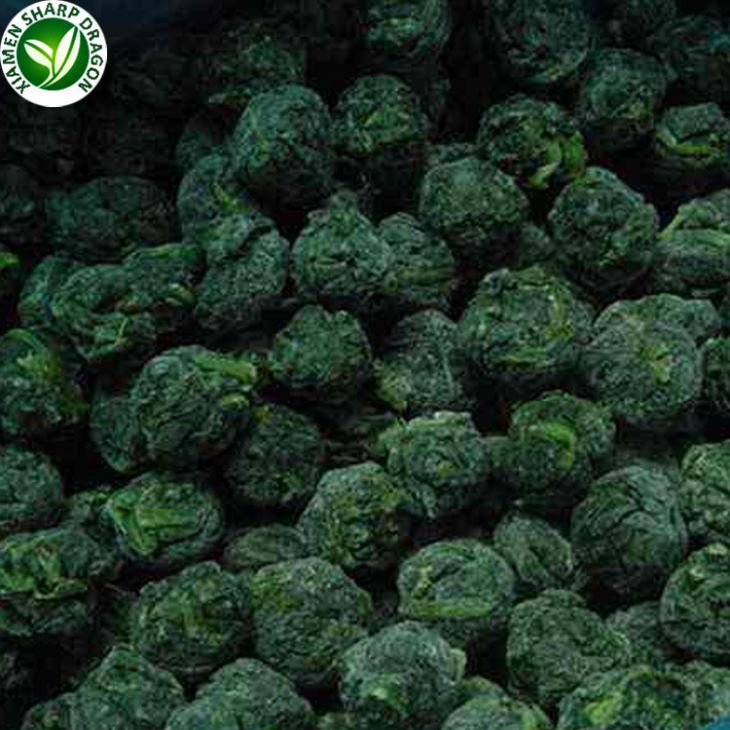
Product form is the second decision. The current XMSD frozen spinach range shows leaf-cut, ball, and block formats. Loose leaf or smaller pieces may support flexible dosing and faster separation in a hot system; balls support repeatable portions; blocks suit full-batch processing but can create a colder center and less portion flexibility. The acceptable form depends on the equipment, batch mass, recipe timing, and whether visible leaf identity matters.
Third, define performance after preparation. For a soup, evaluate even dispersal and final tenderness. For a bakery or pasta filling, define drained yield, water migration, filling stability, and cooking performance. For retail or foodservice, confirm that cooking directions match the pack size and likely equipment. Review a representative sample using the same thawing, heating, draining, and holding procedure planned for production, then turn the approved result into measurable acceptance language.
Finally, inspect packaging and cold-chain evidence. Damaged seals, excess loose ice, clumping inconsistent with the agreed form, or evidence of thawing and refreezing can signal handling problems even when the product is still frozen at inspection. The XMSD frozen packaging overview provides a starting point, but the purchase specification should define the exact inner pack, outer carton, labeling, storage instruction, and destination-market requirements.

XMSD sourcing note: If you are comparing BQF frozen spinach balls, leaf-cut spinach, or blocks, we can review the intended heating method, portion format, drained-yield test, packing requirement, and requested documents before quotation.
Final Decision
Treat ordinary frozen spinach as a product to cook unless its label and specification clearly support ready-to-eat use. Skip room-temperature thawing and unnecessary rewashing. Cook directly from frozen when the directions and recipe allow; thaw under controlled cold conditions when water removal, exact dosing, or a dense block makes that useful. For buyers, the same conclusion becomes a specification: define process status, product form, heating method, drained yield, pack instructions, and cold-chain acceptance before approving the product for its final application.
References
- U.S. Food and Drug Administration: Test Your Safety Knowledge About Ready-to-Cook Foods
- European Food Safety Authority: Listeria in Frozen Vegetables-How to Reduce Risks
- European Food Safety Authority: Defrosting Food Safely
- Codex Alimentarius: Standard for Quick-Frozen Vegetables (CXS 320-2015), Annex on Spinach