


Do Bananas Lose Nutrients When Frozen? What Actually Changes
Oct 25, 2019

Bananas do not suddenly lose their nutritional value when frozen. Plain banana that is peeled, cut, and frozen still provides carbohydrate, fibre, potassium, vitamin B6, vitamin C, and other components found in the fruit. Freezing is generally a nutrient-preserving method because low temperature slows many chemical, enzymatic, and microbial changes. It does not remove minerals or fibre, and it does not add sugar or calories.
The qualified answer is that retention is not 100% or identical in every product. Some vitamin C and other oxidation-sensitive compounds may decline during peeling, exposure to air, frozen storage, thawing, or later cooking. The amount depends on ripeness, processing speed, freezing rate, packaging, storage time and temperature, and whether thawed liquid is kept in the recipe. Freezing changes banana texture much more obviously than it changes the basic nutrient profile. A thawed banana becomes softer because ice crystals disrupt tissue; that physical damage does not mean its nutrients have disappeared.
The short answer: Properly frozen, plain bananas retain most of their nutritional character. Minerals, fibre, carbohydrate, protein, and fat are comparatively stable; sensitive vitamins and plant compounds can change with processing and storage. Exact retention requires product-specific data, not a universal percentage.

What Freezing Does to a Banana
Freezing converts much of the water in banana tissue into ice. The process greatly slows reactions that drive ripening and quality loss, but it does not stop every reaction forever. Enzymes can retain some activity, oxygen can still reach poorly protected surfaces, and temperature fluctuations can accelerate deterioration. This is why raw-material condition, fast handling, stable storage, and moisture- and vapour-resistant packaging all influence the final result.
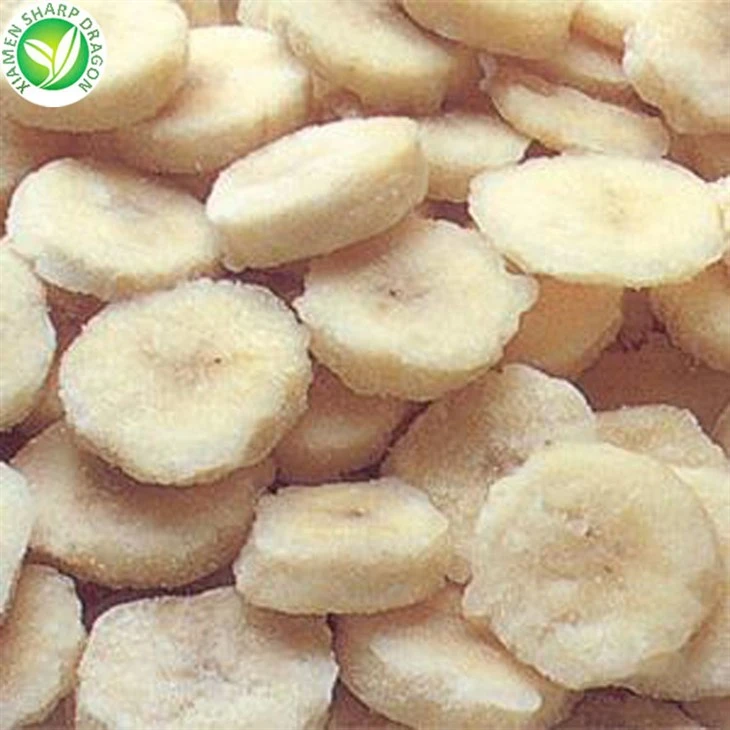
Ice crystals can rupture plant cell walls. The FAO describes this as a reason frozen fruit becomes softer after thawing. The old idea that quick freezing "ensures cell integrity" is therefore too absolute. Faster freezing usually produces smaller crystals and can reduce physical damage, but no responsible explanation should promise that every cell remains intact. Bananas are naturally soft and high in water, so the difference is easy to see as released liquid and a mashable texture.
That texture change is not automatically a defect. Soft thawed banana performs well in smoothies, puree, bakery batter, sauces, dairy applications, and frozen desserts. It is less suitable when the application requires a fresh, firm slice after thawing. The practical judgment should therefore separate nutritional retention from texture performance: freezing can preserve the fruit as a useful ingredient while still changing how it looks and feels.

Which Nutrients Are Stable, and Which Are More Sensitive?
USDA FoodData Central lists raw banana at about 89 kcal, 22.84 g carbohydrate, 2.6 g dietary fibre, 358 mg potassium, 8.7 mg vitamin C, and 0.367 mg vitamin B6 per 100 g. These figures describe a raw reference food, not every frozen banana lot. They are useful for showing what nutrients are present before processing, but they cannot be copied as a guaranteed analysis for a commercial frozen product.
Potassium contributes to normal cell function, nerve transmission, and muscle contraction. Vitamin B6 participates in many enzyme reactions involved in metabolism, while vitamin C has antioxidant functions and is required for collagen synthesis. Those physiological roles explain why retention matters, but they do not turn frozen banana into a treatment. A serving contributes nutrients within the whole diet; it does not guarantee a clinical outcome.
| Nutrient or component | Expected response to freezing | What can change the result |
|---|---|---|
| Potassium and other minerals | Not destroyed by low temperature | Loss of thawed liquid, formulation, and serving basis |
| Dietary fibre | Largely remains in the fruit | Pureeing, straining, analytical method, and portion |
| Carbohydrate, protein, and fat | Freezing itself does not remove them | Ripeness, added ingredients, water loss, and recipe dilution |
| Vitamin C | More vulnerable to oxidation and storage changes | Peeling, air, time, temperature, thawing, and heat |
| Vitamin B6 and plant compounds | Retention is product- and process-dependent | Raw material, pretreatment, storage, and analytical basis |
Studies comparing fresh and frozen produce show why a single slogan is unreliable. Research across several fruits and vegetables found that mineral, fibre, and phenolic retention depended on the commodity, with no significant fresh-versus-frozen difference for most tested items and analytes. Reviews of frozen plant foods also show that antioxidant measures may decrease, remain stable, or occasionally appear higher depending on the fruit, pretreatment, tissue damage, extraction, and storage. These findings support a qualified conclusion for bananas; they do not provide a banana-specific retention percentage.

Ripeness Often Matters More Than the Act of Freezing
A green banana and a fully ripe banana are not nutritionally identical before either one enters a freezer. During ripening, banana starch is converted into soluble sugars, the fruit softens, and flavour and aroma develop. Research measuring bananas at different retail ripeness stages found large differences in starch and sugar content. This means a sweet frozen banana is usually sweet because it was ripe when frozen, not because freezing created sugar.
Ripeness also changes how the ingredient behaves. A less-ripe banana may provide a firmer, starchier result, while a riper banana is sweeter, softer, and often easier to blend. Variety, growing conditions, maturity, and water content add further variation. For home use, freeze bananas at the stage that suits the intended recipe. For commercial use, define a ripeness or soluble-solids target only when it can be supported by the agreed specification and measurement method.
Product form creates another important distinction. Plain frozen banana is not nutritionally equivalent to chocolate-coated banana, sweetened puree, banana ice cream, a smoothie with syrup, or fried banana chips. Freezing itself does not add sugar or fat, but a formulation can. Anyone comparing labels should first confirm whether both products are 100% banana and whether the values use the same serving or 100 g basis.
Storage, Thawing, and Cooking Can Change the Answer
Good retention depends on a stable frozen chain. Repeated warming and refreezing can encourage larger ice crystals, more drip loss, clumping, browning, and texture damage. Oxygen exposure and inadequate packaging can also accelerate quality loss. A pale, free-flowing product is not direct proof of a vitamin level, but excessive surface ice, damaged packaging, fused pieces, or unexpected darkening can justify a closer review of handling history and application performance.
Thawing matters because some soluble material moves with the released liquid. If a recipe uses both the softened banana and its liquid, less material is discarded than when the liquid is drained away. A smoothie can usually use banana directly from frozen. Bakery production may thaw and mash it, but the formula should account for released moisture. Long holding after thawing increases exposure to oxygen and creates a food-safety management issue as well as a quality issue.
Cooking adds a separate process. Heat can reduce vitamin C and other heat-sensitive compounds, while the extent depends on temperature, time, water, and whether cooking liquid remains in the food. A banana bread, sauce, or dessert should therefore be judged as a finished recipe. It is misleading to attribute every nutritional difference between a fresh banana and a baked frozen-banana product to freezing alone.
Food-safety note: Freezing stops the growth of bacteria while food remains frozen, but it does not reliably kill all microorganisms. Use clean handling, follow the product instructions, maintain the cold chain, and confirm whether a commercial ingredient is intended for ready-to-eat use or further processing.
How to Judge a Frozen Banana Nutrition Claim
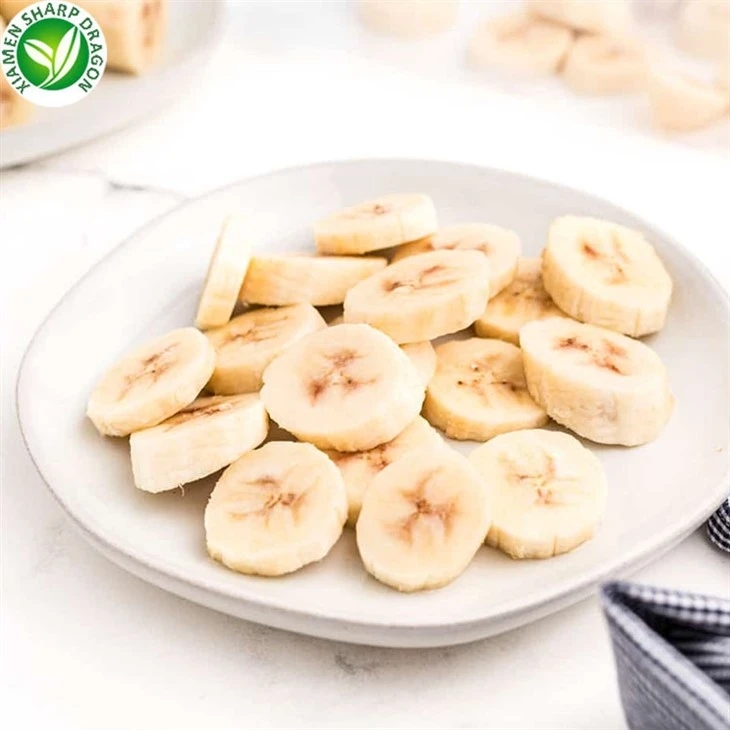
A useful claim should identify the food form, comparison basis, and evidence. "Frozen banana retains all nutrients" is too strong because it ignores sensitive nutrients and storage. "Frozen banana loses nutrients" is also too broad because minerals, fibre, and macronutrients do not simply vanish. The defensible answer is conditional: plain frozen banana retains much of its overall nutritional profile, while some components can change with processing and time.
- Identify the exact food. Check whether it is whole banana, slices, chunks, puree, a sweetened pack, a coated snack, or a prepared dessert.
- Use the same measurement basis. Compare equal edible weights and the same preparation state. A 100 g raw-fruit database entry and a 100 g sweetened frozen dessert answer different questions.
- Separate composition from retention. A nutrition panel shows the product's declared composition; a retention claim requires a suitable fresh baseline and a validated method.
- Check the handling variables. Ripeness, pretreatment, freezing rate, storage duration, temperature stability, oxygen barrier, thawing, and cooking can all influence the result.
For everyday use, this usually leads to a simple decision: choose plain frozen banana when its convenience and soft texture suit the recipe, keep it well packaged and frozen, and count any added ingredients in the finished dish. It can be part of a varied diet, but no single food needs to carry the burden of meeting every nutrient requirement.

What B2B Buyers Should Verify
For an importer, beverage producer, bakery, dairy processor, foodservice distributor, or retail brand, the question is not solved by saying "IQF locks in nutrients." IQF describes an individual freezing format and can support portionability and product separation. It does not guarantee a specific nutrient value, colour, ripeness, microbiological result, or shelf life without supporting product evidence.
1. Match the Evidence to the Product
Start with the ingredient statement and product identity. Confirm whether the item is 100% banana and define the cut or puree form. Then ask whether the nutrition values come from a recognized database, a calculation, or laboratory analysis. The supporting basis should match the destination-market rules and the product actually being sold. A generic raw-banana table is a reference, not a certificate for every frozen batch.
A risk signal is a supplier quoting an exact retention percentage without naming the baseline, nutrient, sampling point, storage interval, or method. Better evidence states the sample identity and analytical basis. Acceptance can then be defined around the required nutrition declaration, ingredient statement, and any claim threshold relevant to the intended market.
2. Test the Product in Its Real Application
Nutrition is only one part of commercial suitability. A smoothie buyer should review blending performance, sweetness, colour, and portionability. A bakery buyer should measure thawed liquid and test moisture balance, flavour, crumb, and colour. Dairy and dessert developers should confirm how the banana disperses and whether the selected form produces the desired texture. The appropriate acceptance sample is therefore application-specific.
XMSD's current guide to frozen banana forms and uses explains the distinction between slices, dices, chunks, and puree. Buyers should use that form decision before setting texture or yield acceptance criteria.
3. Treat Packaging and Cold Chain as Part of Quality
Packaging should limit moisture loss, oxygen exposure, seal failure, and handling damage while remaining suitable for the pack size and channel. Review the inner bag, closure, carton, label, batch coding, and storage statement together. XMSD's frozen-food packaging overview shows the variables buyers can discuss; the final material and artwork still need approval for the specific banana product and destination.
On arrival, compare package integrity, product temperature records where required, piece separation, surface ice, colour, odour, and thawed performance with the approved sample and specification. These observations cannot measure vitamin content, but they can reveal handling problems that justify further investigation. Nutrient declarations and quality acceptance should remain connected without being treated as the same test.

XMSD sourcing note: Our current IQF frozen banana page confirms slices, chunks, and customized cut discussions for B2B applications. Buyers can request the current ingredient statement, specification, packing options, sample plan, and available product documents for review.
Frequently Asked Questions
Do frozen bananas have more sugar than fresh bananas?
Freezing does not add sugar to plain banana. Ripeness is the larger variable because starch changes into sugars as bananas ripen. Added syrup, chocolate, sweetened puree, or other ingredients can raise the sugar content of a prepared frozen product.
Should thawed banana liquid be discarded?
Not automatically. The liquid contains water and soluble material released from damaged tissue. Keeping it may preserve yield and some soluble components, but it can make a batter or filling too wet. Decide according to the recipe, and include the choice in application testing.
Does minus 18 degrees mean the banana was quick-frozen at that temperature?
Not necessarily. -18°C is commonly used as a frozen storage condition. The freezing equipment, air temperature, product core temperature, residence time, and storage set point are different process variables. Do not describe -18°C as the quick-freezing machine temperature unless the actual process record confirms it.
Final Thoughts from XMSD
Frozen bananas remain nutritionally useful, but the accurate answer is more precise than "all nutrients are locked in." Freezing preserves much of the fruit's overall profile; minerals, fibre, and macronutrients are comparatively stable, while vitamin C and some plant compounds are more sensitive to processing, storage, thawing, and heat. Ripeness and added ingredients can change the comparison as much as, or more than, freezing. For a commercial decision, verify the exact product, evidence basis, application performance, packaging, and cold-chain history.
References
- USDA FoodData Central - Bananas, Raw
- FAO - Freezing of Fruits and Vegetables: Final Product Quality
- Mineral, Fiber, and Total Phenolic Retention in Eight Fruits and Vegetables
- Antioxidant Activity in Frozen Plant Foods: Freezing Process and Frozen Storage
- Dietary Fiber, Starch, and Sugars in Bananas at Different Stages of Ripeness
- University of Minnesota Extension - How to Freeze Fruit Safely
- NIH Office of Dietary Supplements - Potassium Fact Sheet
- NIH Office of Dietary Supplements - Vitamin B6 Fact Sheet
- NIH Office of Dietary Supplements - Vitamin C Fact Sheet