


Can You Use Frozen Carrots in Soup?
Oct 28, 2019

Yes, you can use frozen carrots in soup, and most plain frozen carrots can go straight from the freezer into the pot. A 15-minute soak in warm water is usually unnecessary. Add the carrots to hot broth or a simmering soup, let the liquid return to a steady simmer, and check the largest pieces for tenderness before serving. Follow the package directions if the carrots are seasoned, sauced, mixed with other ingredients, or labeled with a specific preparation method.
The useful question is not simply whether frozen carrots work. It is which cut you have and what texture the soup needs. Small dice and shreds soften quickly and suit blended soups, chowders, and ready-meal fillings. Thick slices, crinkle cuts, and larger pieces need more time but remain more visible. Because commercial processing and cut size vary, a fixed cooking time is less reliable than a fork test and a taste test.
The short answer: Cook plain frozen carrots directly in the soup unless the label says otherwise. Add them according to cut size and the texture you want, then judge doneness by the largest piece rather than by the clock alone.

Do Frozen Carrots Need to Thaw Before Soup?
For an ordinary broth, stew, or puréed soup, thawing adds work without giving a clear advantage. The hot liquid transfers heat around each piece, while any small amount of surface ice becomes part of the recipe water. The pot may briefly stop simmering after a frozen ingredient is added, especially in a large batch. Let it recover to a controlled simmer before deciding how much longer the carrots need.
Processing history matters. The USDA grade standard describes frozen carrots made through washing, sorting, peeling, trimming, blanching, and freezing. The international Codex standard, however, permits quick-frozen carrots that may or may not be blanched. That difference is a good reason not to assume that every frozen carrot has received the same heat treatment. Read the product description, follow the label, and treat blanching as a quality and process detail rather than proof that the product is ready to eat.

When thawing can still help
Thawing can be useful when the carrots must be drained before entering a tightly controlled recipe, when a cook wants to sauté them with aromatics before adding liquid, or when a factory needs to measure thawed yield. It is not the default step for a normal soup. If thawing is required, use a controlled method. FDA guidance identifies the refrigerator, cold water, and the microwave as safe thawing routes; food thawed in cold water or a microwave should be cooked promptly. A bowl of standing warm water is therefore not a good standard procedure.
Handling note: Package directions take priority, especially for prepared products or vegetable mixes. If the soup also contains meat, poultry, seafood, eggs, or another ingredient with a defined safe cooking requirement, judge the complete dish by the applicable guidance, not by carrot tenderness alone.

When to Add Different Frozen Carrot Cuts
Add timing should follow the soup, not a universal number of minutes. Start with the desired serving texture and work backward. A clear noodle soup may need visible carrot pieces that are tender but intact. A long-held buffet soup needs a cut that can tolerate both cooking and hot holding. A blended carrot soup only needs the pieces to soften evenly enough for smooth processing.
| Frozen carrot form | Useful soup applications | Best judgment method |
|---|---|---|
| Small dice | Chowders, vegetable soups, fillings, ready meals | Check for even tenderness and excessive fines |
| Slices or crinkle cuts | Clear soups, stews, foodservice vegetable soups | Pierce the thickest slice and confirm it still holds shape |
| Large pieces or whole small carrots | Longer-cooked stews and rustic soups | Test the core of the largest piece |
| Shreds or fine strips | Fast soups, sauce-like bases, blended formats | Watch integration and water release rather than piece firmness |
For soups that will continue to simmer or sit in hot holding, add frozen carrots later than you would add equally sized raw carrots, then recheck before service. For a short-cook soup, add them earlier so the center has time to heat and soften. These are directional choices, not fixed formulas. Starting temperature, batch mass, kettle power, blanching level, cut tolerance, and the amount of other frozen material all change the result.

How to Keep Frozen Carrots from Becoming Mushy
Frozen carrots are usually softer after cooking than fresh carrots because freezing and any prior blanching have already changed the tissue. That does not make them unsuitable for soup. It means the cook should protect the texture that remains. Use a steady simmer rather than an aggressive rolling boil, test the thickest pieces, and stop cooking when they reach the serving texture. Remember that hot holding and reheating are additional cooking time.
If the soup begins with onions, celery, spices, or another aromatic base, develop that base first and add the frozen carrots when the liquid goes in. Trying to brown icy carrots in a crowded pan often creates steam instead of browning. When roasted or browned carrot flavor is essential, cook that component separately under a method designed for moisture removal, then combine it with the soup.
Blended soups are the most forgiving application. Shape retention is unimportant, so dice, slices, broken pieces, or shreds can all work if flavor, color, and ingredient specifications are acceptable. In a clear soup, appearance matters more. Wide variation in thickness can leave thin pieces soft while thick pieces remain firm, so cut uniformity becomes part of cooking control.

Water Release, Frost, and Broth Balance
A small amount of frost on a frozen vegetable is normal, but heavy loose ice or large clumps can change recipe water and portion accuracy. In a household pot, the effect may be minor. In a soup factory or central kitchen, repeated variation can alter solids, seasoning concentration, cooked yield, and the number of portions from a batch. The practical response is to weigh the frozen input consistently and record how the product behaves in the real recipe.
Do not treat surface frost as a complete food-safety verdict. Freezer burn and dehydration are mainly quality problems, while damaged seals, unknown thawing history, and temperature abuse need separate evaluation. A bag that contains one hard mass rather than separable pieces may have experienced moisture migration, compression, or temperature fluctuation, but the cause should be investigated rather than guessed from appearance alone.
For recipe control, begin with the specified broth volume rather than adding extra water automatically. Add the frozen carrots, allow the batch to return to process temperature, and then adjust consistency or seasoning near the proper stage of the recipe. This avoids compensating for water that may never be released and gives a more repeatable result across lots.
How Foodservice and Processing Buyers Should Evaluate Frozen Carrots for Soup
1. Match the cut to the finished eating experience
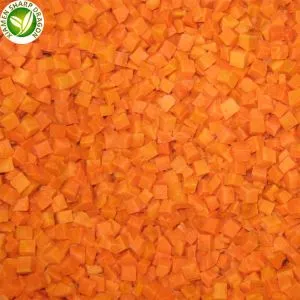
A soup buyer should define what the carrot must look and feel like at service, then select a cut. The current XMSD frozen carrot range shows dice, slices, cubes, crinkle cuts, strips, and customized formats. The decision benefit is not variety by itself; it is the ability to align thickness and piece identity with a clear broth, chunky stew, puréed soup, meal kit, or filling.
Approve the sample in the actual cooking system. Use the intended kettle or cooker, batch mass, ingredient order, hold time, cooling plan, and reheat step. Set acceptance around the largest and smallest pieces, broken-piece level, tenderness after holding, and visual distribution in a normal serving. A tabletop sample can look acceptable yet fail after a long commercial hold.
2. Confirm process state and recipe-water behavior
Ask whether the product is blanched, what cut tolerance applies, and how free-flowing condition is evaluated. Then run more than one lot through the recipe. Risk signals include an unusually broad size spread, excess fines, severe clumping, unexpected surface ice, or a texture that collapses during the planned holding period. The useful evidence is a product specification, representative sample, lot records where applicable, and a repeatable cooking test.
For each trial, record frozen input weight, initial broth volume, return-to-simmer behavior, final cooked yield, portion count, and sensory result. Acceptance should be tied to the real formula. A little moisture release may be harmless in a broth but unacceptable in a concentrated filling or a soup base sold by solids content.
3. Make the pack and arrival condition part of the specification
Choose a pack size that matches the batch dose. Repeatedly opening an oversized bag increases handling and makes portion control harder. Review seal integrity, liner condition, carton strength, lot identification, and frozen condition at receipt. XMSD's frozen-food packaging overview explains the roles of inner pouches, master cartons, labels, and pallet protection; the buyer still needs to agree the exact pack for the destination and use.
Document review should also match the destination market and buyer program. Instead of assuming that a certification name applies to every product or line, request the current scope and relevant batch documents. The XMSD certification and compliance page is a starting point for checking which current documents should be discussed for a project.

XMSD sourcing note: For a soup, ready-meal, or foodservice project, we can review the intended carrot cut, cooking endpoint, pack format, and sample-test plan with you before the final specification is agreed.
Final Decision
Frozen carrots are well suited to soup, and plain pieces usually perform best when cooked directly from frozen. Skip the routine warm-water soak. Add them according to cut size and the soup's remaining cook and hold time, then test the largest pieces for the intended tenderness.
For commercial use, the strongest decision comes from a full recipe trial rather than from a generic cooking time. Define the cut, process state, piece tolerance, water behavior, packaging, cold-chain condition, and serving endpoint. That turns a simple frozen vegetable into a controlled soup ingredient.
References
- BBC Good Food: How to Freeze Carrots
- USDA Agricultural Marketing Service: U.S. Standards for Grades of Frozen Carrots
- Codex Alimentarius CXS 320-2015: Standard for Quick-Frozen Vegetables
- U.S. Food and Drug Administration: Safe Food Handling
- U.S. Food and Drug Administration: Are You Storing Food Safely?
- FoodSafety.gov: Four Steps to Food Safety