


Prepared Corn: Serving and Add-On Energy Math
Jul 04, 2019

Corn does not have a special property that automatically makes you gain body fat. What matters is the energy in the amount you actually eat, how the corn is prepared, what is added to it, and how that served dish fits your intake over time. Plain cooked sweet corn and corn covered with butter, cheese sauce, cream or sugar may share a name, but they are not the same calculation.
For a useful answer, start with edible grams rather than a vague unit such as "one corn," "one bowl" or "one side." Match those grams to a nutrition value for the same food state. Then enter every oil, spread, sauce and garnish on a separate line. That method tells you how much of the serving's energy comes from corn and how much comes from the preparation. It does not turn one serving into a prediction of future body weight.
Direct answer: Plain corn can be part of an eating pattern that maintains, reduces or increases weight. The deciding calculation is the complete served unit: edible corn mass × matching calories per gram, plus every measured addition. If the additions supply more than the corn, the dish name can hide the main energy source.

The Question Is About the Served Dish, Not the Crop
Body weight changes are not assigned to one ingredient in isolation. NIDDK explains that taking in too many calories can lead to weight gain over time, while calorie needs vary with age, current weight, height, metabolism, sex and activity. Corn can contribute energy, just as other carbohydrate foods, fats and proteins can. That is different from saying corn uniquely directs the body to store fat.
The classification can also confuse the decision. Sweet corn is treated as a starchy vegetable in food guidance, while mature dry corn is a grain. Our corn vegetable-or-grain explanation covers that distinction. Neither label makes a serving "free." Classification tells you what kind of food you are handling; edible mass and finished composition tell you what is in the serving.
Preparation is often the larger source of uncertainty. Boiling plain kernels in water does not add calories from the water. A measured coating of oil does. Salt changes sodium rather than calories, while butter changes both fat and calories. Cheese, mayonnaise, cream, coconut milk, sugar and crumb coatings each add their own values. If a menu calls all of these versions "corn," the word is too broad for energy accounting.
Keep the conclusion proportionate. A higher-calorie serving does not prove that you will gain weight, and a plain serving does not promise that you will lose it. The calculation answers a narrower and more controllable question: how much energy is in the portion in front of you, and which component contributes it?
Start with Edible Corn, Not the Weight You Bought
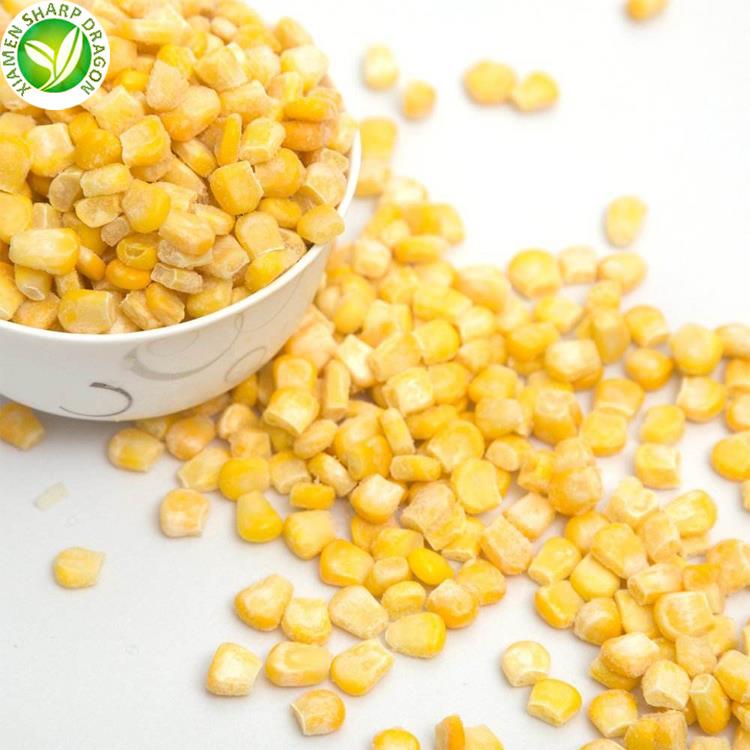
Loose kernels are straightforward because most of the measured weight is edible. A cob is different. Its gross weight includes the inedible core, and husk or silk may add more non-edible mass if they are still attached. Applying a per-100 g kernel value to the gross weight of a whole cob will overstate the corn that was eaten.
For the most accurate kitchen check, remove the cooked kernels and weigh them directly before adding toppings. If that is impractical, weigh the cooked cob before eating and the stripped core afterward under similar conditions. The difference is an estimate of the edible amount. It can be less precise because moisture and stray kernels may be lost, but it is much better than treating the complete cob as edible.
Practical example: A cooked cob weighs 230 g before service. The stripped core weighs 115 g after the kernels are eaten, so the estimated edible corn is 115 g: 230 − 115. Using the USDA FoodData Central value of 96 kcal per 100 g for cooked yellow sweet corn, boiled, drained and without salt, the corn contributes about 110.4 kcal: 115 × 96 ÷ 100. Record butter or sauce separately; do not call 110.4 kcal the finished dish if anything else was served on it.
Piece count is also unreliable across cob sizes. Two short segments can contain more or fewer edible kernels than one long segment because diameter, maturity, kernel fill, trimming and cutting differ. If a foodservice specification uses "one piece," pair the piece count with a target weight range or an established edible-yield factor. Recheck that factor when the raw-material size grade changes.
Drained canned corn creates a similar basis issue. Net weight includes packing liquid when the product is sold in liquid, while drained weight better represents the kernels placed in a salad or side. Frozen corn may carry surface ice or small clumps. Weighing edible product on the same basis as the selected data prevents a package figure from being mistaken for a serving figure.

Match the Number to the Exact Corn Form
A per-100 g value is useful only when its description matches the food closely enough. USDA FoodData Central lists 96 kcal per 100 g for cooked yellow sweet corn that is boiled, drained and prepared without salt. A separate entry for frozen yellow sweet corn kernels, cooked, boiled, drained and without salt, lists 81 kcal per 100 g. These are defined reference foods, not universal guarantees for all cultivars, crop lots, cooking times or branded products.
The difference between those entries should not be turned into a claim that freezing automatically removes calories. Food composition per 100 g changes with water content, sampling and the exact food description. Cooking can increase or reduce the water held in the measured portion. Variety, maturity and laboratory sampling also matter. Use the entry that best matches the served product, and use the finished Nutrition Facts label when you have a labeled commercial food.
Write the basis beside the number. "96 kcal/100 g, cooked and drained" is auditable. "Corn is 96 calories" is not: it lacks a mass and food state. If your recipe sheet begins with frozen input but your nutrition source describes cooked, drained output, measure or validate the cooking yield before scaling the value. Otherwise, the arithmetic may be correct while the basis is wrong.
For a branded seasoned pouch, canned product or ready meal, read the label as a finished-food document. FDA notes that a labeled serving size reflects the amount customarily consumed; it is not a recommendation for how much you should eat. The label also gives the serving in a household measure and grams. If you eat two labeled servings, the listed calories and nutrients must be multiplied by two.
The basic scaling equation is simple:
Corn calories = edible corn grams × matching kcal per 100 g ÷ 100
For a package label stated per serving, use: amount eaten in grams ÷ labeled serving grams × calories per labeled serving.
Do not mix the two methods halfway through. If the label describes 85 g drained corn, compare your drained portion with 85 g. If the database describes cooked kernels, compare it with cooked kernels. When you need a consistent plain frozen ingredient, review the available frozen sweet corn kernel format and use an order-specific specification that states the ingredients, net weight and product state rather than borrowing a generic number.
Put Every Addition on Its Own Line
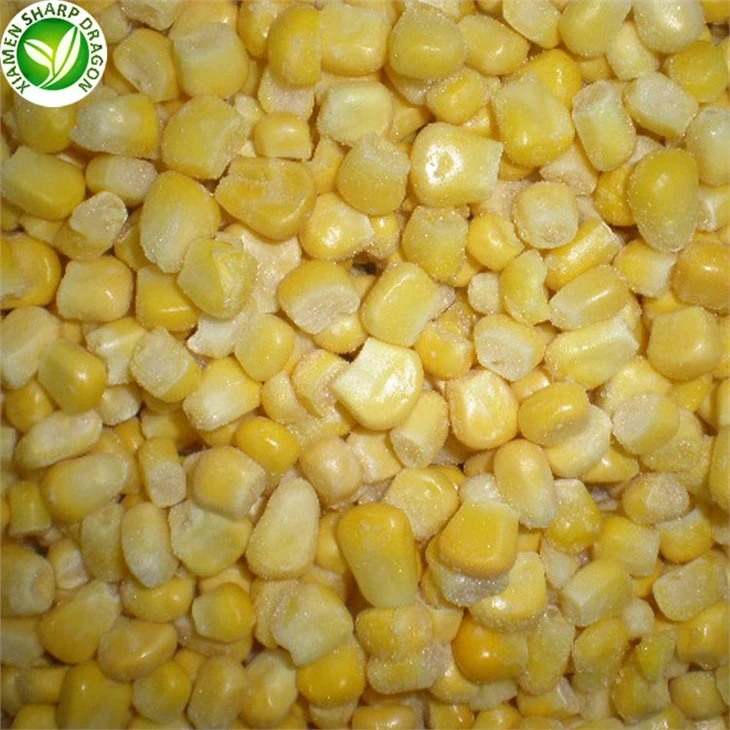
A preparation ledger is more revealing than a "healthy" or "fattening" label. List the corn, added fat, sauce, cheese, cream, sugar and coating separately. For each line, record the measured amount, the value source and the calculated calories. Add the lines only after each basis is clear. This exposes the contribution that disappears when everything is described as one corn side.
| Component | Measurement basis | Common error |
|---|---|---|
| Plain kernels | Edible cooked or drained grams matched to data | Using frozen input against cooked output data |
| Corn on the cob | Kernel mass or validated edible-yield estimate | Counting the core as edible corn |
| Butter or oil | Grams actually retained on the serving | Counting a brush or spoon as zero |
| Sauce or cheese | Finished label and grams dispensed | Applying plain-corn data to the complete dish |
| Garnish or coating | Recipe quantity divided by actual servings | Ignoring small additions that accumulate |
Retained quantity matters. If oil remains in the pan, the amount poured into the pan is not automatically the amount on the serving. If a sauce batch coats 20 portions unevenly, dividing the batch total by 20 gives an average, not proof that every portion received the average. A repeatable utensil and spot weights improve the estimate. In production, a depositor target and check-weight record are stronger than a visual drizzle.
Seasonings that contribute negligible calories can remain in the recipe record without distorting the main result. They may still matter for sodium, allergens or labeling. The purpose of the ledger is not to declare every addition undesirable; it is to stop one ingredient from borrowing the nutrition profile of another. A measured butter portion can be an intentional recipe choice. It simply belongs in the total.
This separation is especially important when comparing plain frozen kernels with canned creamed corn or a ready-to-heat pouch. Canned products can differ in packing liquid, sugar, sodium and other ingredients. The finished label takes priority over a plain-corn database entry. An opened can makes the visual difference obvious, but the ingredient list and serving data make it measurable.

Worked Serving-Unit Calculation: Corn, Butter, and Sauce
Worked example: A plated side contains 150 g of cooked frozen yellow sweet corn, 12 g butter and 25 g cheese sauce. For the corn, use the USDA reference of 81 kcal per 100 g for frozen kernels that are cooked, boiled, drained and unsalted. For demonstration, assume the butter label states 717 kcal per 100 g and the sauce label states 240 kcal per 100 g. Those two label values are hypothetical examples; replace them with the actual products used.
Corn: 150 g × 81 ÷ 100 = 121.5 kcal
Butter: 12 g × 717 ÷ 100 = 86.0 kcal
Cheese sauce: 25 g × 240 ÷ 100 = 60.0 kcal
Complete serving: 121.5 + 86.0 + 60.0 = 267.5 kcal
Additions' share: (86.0 + 60.0) ÷ 267.5 × 100 = 54.6%
The result changes the diagnosis. Plain corn supplies about 121.5 kcal, while the two additions supply about 146.0 kcal. More than half of this example serving comes from the additions. Calling the 267.5 kcal dish simply "corn" would direct attention to the wrong component. If the development goal is a lower-energy side, reducing the butter or sauce can change the total without pretending the kernels are calorie-free.
The numbers are not a recommended portion and do not determine whether you will gain weight. They support a controlled comparison. A second recipe might use 100 g corn with 5 g butter and no sauce. A third might use 150 g plain corn with herbs and lime. The same method lets you compare the complete served units on a consistent basis rather than rank them by recipe name.
Round only at the end. The displayed line items are rounded to one decimal, while the percentage uses the unrounded figures. In a commercial recipe, retain enough decimal precision in the formulation sheet and apply the destination market's labeling rules to the final declared value. Do not copy the sample butter or sauce values into a specification.
Read the Result Without Predicting Body-Weight Change
A serving calculation is an inventory of food energy, not a forecast. It does not know your energy needs, total daily intake, physical activity, repeated habits or physiological adaptations. It also does not prove that every calorie in a mixed meal produces an identical short-term scale response. Water balance and glycogen can move scale weight without representing the same change in body fat.
Avoid converting one meal into a fixed body-weight claim with the old "3,500 kcal equals one pound" shortcut. NIDDK's Body Weight Planner was developed because body weight responds dynamically as calorie intake and activity change. Metabolism and energy expenditure adapt over time, so a static division cannot predict an individual's long-term change accurately.
The serving result still has real value. It can reveal that an add-on doubles a portion, show whether two menu descriptions are genuinely comparable, support recipe development, and help you read the complete label. Repeated totals can be discussed within an individualized eating plan. The defensible statement is "this prepared serving contains an estimated 267.5 kcal on the stated basis," not "this serving causes a specified amount of weight gain."
If you are managing diabetes, kidney disease, a medically prescribed diet, an eating disorder, pregnancy-related nutrition or medication that affects weight or appetite, energy is only one part of the decision. Ask a qualified clinician or dietitian to interpret carbohydrate, sodium, allergens, portion size and total diet together. A generic corn calculation cannot replace individualized care.
Keep Frozen, Canned, and Cob Portions on Separate Bases
Corn form changes how you establish the serving. Loose IQF kernels can be weighed directly, but confirm whether your number refers to frozen input, cooked output or drained cooked product. Cob corn requires edible-yield control. Canned corn requires a net-versus-drained decision. A seasoned frozen pouch or creamy product requires the complete finished label. Keeping these bases separate prevents a convenient number from being applied to an incompatible product.
Our current frozen corn range includes kernel and cob formats. For calculation control, the product name is only the start. Confirm whether ingredients are added, the kernel or cob size, declared net weight, pack configuration, cooking status, glazing or surface ice condition, and the basis used for any supplied nutrition data. The accepted sample should represent the form used in the recipe test.
Free flow affects serving repeatability. Clumped kernels can make a volumetric scoop inconsistent even when the recipe target is written in grams. A scale can correct the portion during development, but the operating method still needs to work during service or filling. Review several consecutive portions, not one carefully prepared sample. If variation is wide, improve product handling, utensil choice or dosing equipment before trusting the average.
Opened-pack handling can change condition as well. Repeated temperature exposure may promote clumping and ice accumulation, which affects dosing even though it does not create calories. Choose a pack size that fits the use cycle and keep frozen handling controlled. The available frozen packaging options should be reviewed against batch or service volume, not selected independently of the portion method.

Turn the Calculation into a Product or Menu Control
For a restaurant side, frozen meal, salad, soup or seasoned retail pouch, define one served-unit record. It should name the exact corn form, state whether the weight is frozen, cooked or drained, give the target grams, list every addition, identify each data source, and show the total per served unit. That single record aligns the recipe, production check and published product information.
Test the serving under normal operating conditions. In foodservice, weigh a sequence of scoops or cob pieces after the usual cooking and holding time. For a packed product, compare units from the beginning, middle and end of a run. Sauce can settle, kernels can bridge in a hopper, and an acceptable total pack weight can still conceal the wrong corn-to-sauce ratio. Our foodservice and catering supply overview provides the broader format context; the serving record must still be specific to your recipe.
Use actual yield when a batch loses or gains water. Suppose a recipe starts with 10 kg frozen kernels but produces 9.4 kg cooked, drained corn. If the target is 150 g cooked corn per serving, the cooked corn yields about 62 full target portions, with 100 g remaining: 9,400 ÷ 150 = 62 remainder 100. Dividing 10 kg by 150 would incorrectly imply 66.7 portions because it mixes frozen input with cooked serving weight.
Additions need the same yield discipline. A sauce recipe may begin at one mass and finish lower after heating. Record the actual finished sauce quantity and the amount dispensed or retained per serving. If the recipe is sprayed or brushed, measure representative pickup rather than assuming everything prepared reaches the food. For a mixed pouch, validate component distribution as well as total fill weight.
At approval, compare four records: the ingredient specification, the approved recipe, the measured production yield and the finished label or menu calculation. A change in sauce supplier, butter specification, portion utensil or corn size grade can invalidate the result even when the product name stays the same. Version control matters because an old spreadsheet can look precise while describing a retired formula.
Do not market plain-corn nutrition as if it described a multi-ingredient product. Front-of-pack nutrition or health claims must be supported by the final formula, serving basis, testing or calculation method, and destination-market rules. A transparent product name-such as "sweet corn with butter sauce"-also gives you a better prompt to check the finished label than a broad "corn" claim.

The Record That Makes a Serving Repeatable
A useful serving record fits on one page but preserves the basis behind the answer. Put the product and lot at the top. Record the intended preparation, starting weight, cooked or drained yield, edible grams per serving, additions per serving, nutrition source version, calculation date and rounding method. Add the actual portion checks and acceptable range. The result must be reproducible without guessing what "one serving" meant.
For retail packs, also record labeled serving grams and servings per container. FDA's distinction matters: serving size describes customary consumption and is not dietary advice. A small pack can contain more than one labeled serving, while a larger single-serving container may require the whole-package presentation under applicable rules. Use current destination-market requirements when preparing final labels.
For foodservice, the menu portion must be executable at the station. State the scoop, ladle, tong or piece specification, but verify it by weight. Retrain after a utensil change or product-size change. If sauce is optional, calculate and communicate the plain base and the added option separately. That lets the served-unit decision survive real service instead of existing only in development notes.
For frozen ingredient purchasing, ask whether nutrition information is typical or guaranteed, which product state it describes, and whether the sample condition supports repeatable dosing. Inspect free flow, excessive ice, broken kernels, color and foreign material under the agreed specification. These are product-control questions; they do not establish a body-weight outcome. They determine whether your serving calculation can be repeated from lot to lot.
When a result changes, diagnose the line that changed. More corn, less drained yield, heavier sauce pickup, a denser replacement sauce or a larger actual serving can each raise the total. The phrase "corn makes you gain weight" cannot identify any of them. A component ledger can.
The Bottom-Line Decision
Corn is not automatically fattening, and it is not automatically weight-reducing. To judge a real serving, measure the edible corn, match it to data for the same food state, list every addition separately and total the complete served unit. On a cob, exclude the core. For canned corn, distinguish net and drained weight. For frozen kernels, distinguish frozen input from cooked output. For a finished product, use the finished label or validated recipe.
The calculation can show where the energy comes from. In the worked example, butter and cheese sauce supplied 54.6% of the serving total, so blaming the corn would misidentify the main lever. What the calculation cannot do is forecast an individual's body-weight change from one serving. That requires the larger pattern, personal needs and time.
Use the result as a decision tool: compare two preparations, set a repeatable portion, correct a recipe basis, or verify the declared serving. A precise statement about the prepared unit is more useful than a promise or warning attached to the crop name.
XMSD sourcing note: Send us the corn format, recipe basis, target cooked or drained serving, pack size and application. We can review a frozen-corn option and the product controls needed for repeatable dosing.
References
- USDA FoodData Central. Corn, sweet, yellow, cooked, boiled, drained, without salt.
- USDA FoodData Central. Corn, sweet, yellow, frozen, kernels, cooked, boiled, drained, without salt.
- NIH National Institute of Diabetes and Digestive and Kidney Diseases. Just Enough for You: About Food Portions.
- U.S. Food and Drug Administration. Serving Size on the Nutrition Facts Label.
- NIH National Institute of Diabetes and Digestive and Kidney Diseases. NIH Body Weight Planner Added to Expert Guidelines.