


Best Way to Freeze Bananas for Smoothies and Baking
Jul 02, 2019

The best way to freeze bananas is to peel them first, choose the form that matches the final use, and portion before freezing. For smoothies, cut ripe bananas into roughly 1/2-inch (1.3 cm) rounds, freeze the pieces in one layer until solid, then transfer them to an airtight freezer bag. For baking, mash the fruit and freeze it in measured recipe-size portions. Whole peeled bananas work when you know you will use a whole fruit at a time, but they take more freezer space and are harder to dose.
Keep the freezer at 0°F (-17.8°C) or colder, remove excess air from freezer-suitable packaging, and label the weight or portions and date. Sound, washed and peeled home-frozen fruit can be blended frozen; for purchased frozen bananas, follow the label and confirm they are suitable for the intended uncooked use. Thaw baking portions in a covered container in the refrigerator, and handle released liquid consistently. Thawed banana will be softer than fresh fruit.
The short answer: Freeze peeled, ripe banana in the portion and shape you will actually use: tray-frozen rounds for smoothies, measured mash for baking, or peeled whole fruit for one-banana recipes. Package only after the pieces are solid, remove excess air, and store at 0°F (-17.8°C) or below.
Choose the Final Use Before You Cut Anything

To compare commercial forms with a home-prepared portion, see the frozen banana category. Confirm the exact product, ingredient statement and preparation instructions for the intended dish.
There is no single shape that is best for every recipe. The useful decision is made backward from the next use. Smoothies reward small, separated pieces that a blender can pull down quickly. Baking rewards a measured mass of mashed fruit that can thaw evenly. Frozen snacks or banana pops need larger pieces that can hold a stick. Whole peeled fruit saves preparation time today but pushes measuring and breaking work to later.
If you are unsure, choose rounds. They are the most flexible home format because you can count or weigh them, blend them from frozen, thaw them for oatmeal, or mash them after thawing. A 1/2-inch (1.3 cm) round is a practical starting point used by several current culinary guides. Thinner slices freeze faster but expose more surface to air; very thick chunks take longer to freeze and can challenge a small blender.
| Your next use | Freeze this form | Main reason |
|---|---|---|
| Smoothies or blended dessert | Single-layer frozen rounds or small chunks | Easy dosing and faster blending from frozen |
| Banana bread, muffins or pancakes | Measured mashed banana | The recipe quantity is ready before thawing |
| One-banana recipes | Whole peeled banana | Minimal cutting with a clear unit count |
| Frozen pops or dipped snacks | Whole or half banana on a stick | The larger piece holds its shape during coating |
Freezing a whole banana with its peel is possible, but the peel darkens and can be awkward to remove once frozen. Peeling before freezing makes it easier to use a whole banana later. If smaller, independently removable amounts suit the recipe, cut and tray-freeze pieces instead; for baking, a measured mash can simplify dosing. These are different uses, rather than one mandatory shape.
Start with Ripe, Sound Fruit-not Spoilage
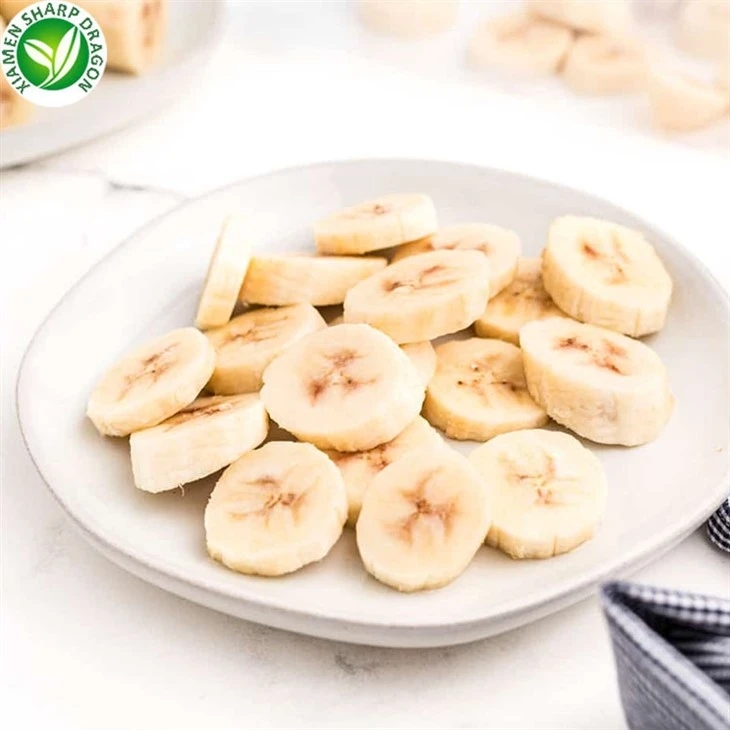
Freeze bananas when the flavor fits the future recipe. A firm ripe banana works for pieces that need to remain easy to handle. A yellow banana with brown speckles usually gives a sweeter, more developed flavor for smoothies or baking. Very soft fruit can still suit measured mash if it smells normal and has no mold, leakage or fermented off-odor. Freezing does not repair spoiled raw material.
The National Center for Home Food Preservation specifically recommends firm ripe bananas for its mashed-banana method. That is a useful default because the fruit is sweet enough to use but still cleanly peelable. If appearance matters, prepare the fruit promptly after peeling. Cut banana browns when enzymes and fruit compounds are exposed to oxygen; colder temperature slows deterioration, but freezing is not an instant off switch during preparation.
Use clean hands, a clean knife, a clean board and freezer-safe packaging. Rinsing an intact peel under clean running water before peeling can reduce surface dirt, but repeated soaking is unnecessary. Keep the knife from carrying debris from the peel onto the flesh. Discard fruit with visible mold or an off-odor rather than assuming freezing will make it acceptable. USDA explains that freezing inactivates microbes while food remains frozen; it does not reliably destroy them, and they can become active after thawing.
Ripeness is also a specification variable in commercial work. A paler, firmer slice and a sweeter, softer slice can both be usable, but not for the same target. For a smoothie, flavor intensity and blendability may matter more than thawed appearance. For a visible retail mix, color and piece definition carry more weight. The correct action is to approve fruit at the use stage, not by peel color alone.
The Best Method for Smoothie Portions

Illustrative photo: Ourlibrary, CC0; resized. This image does not document the method in this article.

For a home smoothie freezer, a useful alternative preparation is to peel sound ripe bananas, cut rounds and freeze them in a single layer before bagging. NCHFP describes a tray-pack method for fruit pieces generally; its banana-specific page separately describes the treated mash method. Tray-freezing minimizes contact between pieces so they are easier to portion, but a home freezer does not reproduce commercial IQF equipment or freezing rate.
A four-step home sequence
- Portion and cut. Peel sound ripe bananas, weigh the edible fruit if consistent servings matter, and cut roughly 1/2 inch (1.3 cm) thick.
- Pre-freeze in one layer. Place the rounds on a parchment- or silicone-lined tray without overlap. Freeze until hard; current culinary methods commonly report about 2–4 hours, with actual time changing with thickness, load and freezer performance.
- Pack with little air. Transfer the solid pieces quickly into a freezer bag or rigid freezer container. Press out excess air without crushing the fruit.
- Label and return to 0°F. Mark the net weight or portion count and the freeze date, then place the package back at 0°F (-17.8°C) or colder.
Worked example: Suppose eight peeled bananas weigh 920 g in total and your smoothie formula uses 115 g. The theoretical yield is 920 g ÷ 115 g = 8 portions. Weigh eight piles of 115 g before pre-freezing, then combine the solid portions in one larger bag with separators or use eight small bags. You now dose by the recipe requirement rather than guessing how many irregular rounds equal one banana.
Do not wash ice or frost from the pieces before blending. Add the frozen portion directly to the blender and account for it as part of the cold solids. A small blender may need smaller pieces or more liquid; a high-powered blender can accept thicker chunks. If the motor stalls, stop and adjust the liquid or piece size rather than forcing a frozen block against the blade.
The Best Method for Banana Bread and Other Baking

Illustrative photo: Janna Mordan Osborne, CC BY-SA 2.0; resized. This image does not document the method in this article.

For baking, mash before freezing and measure by weight or volume. This removes three later uncertainties: how many bananas the recipe meant, how much a particular fruit weighed, and whether the thawed portion is large enough. Flat bags also freeze and thaw more evenly than one deep container. Leave suitable headspace in a rigid container because the fruit mixture expands as it freezes.
NCHFP's banana-specific method starts with firm ripe fruit: peel and mash thoroughly, add 1/2 teaspoon (1,500 mg) ascorbic acid per cup of mashed banana, pack in suitable containers, seal and freeze. Use food-grade ascorbic acid and follow the source directions. That is the center's specified method for color control in mashed banana. Plain mash without that treatment is a different preparation and can brown; browning alone does not establish spoilage.
Practical example: A muffin formula calls for 300 g of mashed banana. Prepare ripe fruit, weigh 300 g into each freezer bag, flatten the bag to an even layer, remove excess air and label it "300 g banana mash." Thaw one sealed portion in the refrigerator over a bowl. If the formula was developed with whole mashed fruit, mix the separated liquid back into the mash and verify the bag still delivers 300 g. The action protects recipe water balance and makes batch-to-batch sweetness easier to evaluate.
Count-based labels such as "two bananas" are convenient at home but weak for scaled recipes because edible fruit weight varies. Weight-based portions are better for repeatability. If your recipe truly uses a count, record both count and weight for the first few batches; that simple note tells you whether weight control would improve consistency.
Browning, Clumping and Freezer Burn: Diagnose the Right Problem

A darker banana is not automatically spoiled. Browning can begin during peeling and cutting, continue before the fruit is fully frozen, and become more visible after thawing. If color matters, use sound ripe fruit, work promptly, reduce oxygen exposure and apply a validated anti-browning treatment where appropriate. If aroma is clean and handling was sound, darker fruit may still work well in a cocoa smoothie or baked product where visual color is secondary.
Clumping is a separate usability failure. At home, it usually means the pieces touched before becoming solid or the bag partially warmed and refroze. In a commercial sample, clumping can also signal free moisture, pack compression or cold-chain fluctuation. Breakable light contact is different from one fused mass. Define the acceptable condition according to dosing: a blender shop may tolerate a few joined slices; an automated portioning line may not.
Freezer burn is moisture loss from exposed frozen food. It appears as dry, pale or leathery areas and is mainly a quality problem. USDA recommends freezer bags, freezer paper, foil or rigid containers and advises pressing out as much air as practical. Ordinary plastic wrap alone is not enough protection for longer storage. A tight package cannot reverse damage already present, but it slows further dehydration and odor pickup.
Quality-first rotation rule: Plan to use home-frozen banana within about three months for the best chance of clean flavor and limited surface frost. Several current culinary guides allow up to about six months. These are quality targets, not a safety cliff.
USDA states that food kept continuously at 0°F remains safe indefinitely, while quality declines over time. A package that warmed, leaked, was contaminated or developed an off-odor needs a separate safety decision; a date alone cannot answer it.
How to Thaw Bananas Without Losing Recipe Control

Use sound home-frozen banana frozen when cold texture is part of the result. Smoothies and blended frozen desserts may use the pieces without thawing. A purchased frozen product must be suitable for that uncooked use under its label and supplier instructions; follow any cooking directions. For baking, move the sealed portion to the refrigerator and set it in a bowl in case the package leaks. A shallow, flat pack can thaw more evenly than a deep tub.
Expect soft texture and brownish liquid. Ice crystals formed during freezing disrupt cell structure; when the ice melts, some water and soluble fruit material are released. This does not mean the banana has "lost all nutrients," nor does it mean the liquid is plain water. Decide based on the formula. If the recipe was designed around whole mashed banana, include the liquid. If a tested formula specifies drained fruit, drain and record the yield in the same way every time.
Do not expect thawed rounds to return to fresh salad texture. Use them where softness is functional: batter, sauce, oatmeal, puree or filling. For a visible topping, use fresh banana or test a partially frozen application in which the piece is served cold before full thaw. The expected service state changes the correct acceptance standard.
Avoid repeated thaw-refreeze cycles because they increase cell damage, drip and clumping. USDA permits refreezing food thawed safely in the refrigerator, but warns of quality loss from moisture release. Portioning before freezing remains the better design because it lets you remove only what you need.
When Home Tray-Freezing Is Not Enough

Home tray-freezing is excellent for reducing waste and preparing a few smoothie portions. A café, bakery or factory has a different problem: the ingredient must repeat across many shifts, arrive through a cold chain and dose at a predictable rate. At that scale, the "best way" is not a larger home recipe. It is a product specification tied to the application.
Commercial IQF aims to freeze pieces individually so they remain portionable; it does not make thawed banana identical to fresh fruit. The frozen food guide explains how storage fluctuations can affect texture and clumping. For an order, agree maturity, cut, ingredient statement, intended use, storage and acceptance criteria before approving a sample.
Use a sample in the real process before approving bulk supply. For smoothies, test dose removal from frozen, blender time, flavor and final viscosity. For baking, thaw a measured sample and record total mass, free liquid, color, aroma and batter performance. For a visible retail mix, review piece count, thickness distribution, fragments, frost and contrast with the other fruits. These observations turn "good frozen banana" into an acceptance decision.
The frozen diced banana page illustrates a commercial cut; verify the proposed product and intended use before ordering. A guide to buying frozen bananas addresses commercial forms and purchasing questions. Slices, dice and other cuts serve different dosing needs; do not infer that every cut is available in every specification.
Worked commercial example: A hypothetical smoothie line opens a 10 kg inner pack and doses 250 g per batch. The theoretical yield is 10,000 g ÷ 250 g = 40 batches. If trial handling leaves 2% unusable residue or spill, usable mass becomes 10,000 × 0.98 = 9,800 g, which supports 39 complete batches with 50 g remaining. You can now compare pack sizes by usable batches, not price per carton alone, and set an acceptance limit for clumping that protects portioning speed.
Packaging and Arrival Checks for Repeat Use
Choose the inner pack from the quantity you use before the fruit can warm or dehydrate. A small café may prefer several smaller bags because each opening exposes less product to room air. A high-throughput line may prefer a larger liner if it empties the pack quickly. The correct pack minimizes repeated opening while remaining easy to lift, dose and reseal within your operation.
The package needs a moisture-vapor barrier, sound seals and enough mechanical strength for frozen handling. Our overview of frozen-food packaging formats and carton protection provides the next design questions for bulk, foodservice or private-label packs. Treat artwork and bag appearance as secondary to seal integrity, product contact suitability, net weight and cold-chain performance.
At arrival, check that the product is still frozen, the inner bag is sealed, the carton is sound and the lot information matches the documents. Open a representative sample and observe separation, frost, color, aroma, cut distribution and foreign material. Heavy fused blocks, wet collapsed cartons, large loose ice deposits or inconsistent pieces are signals to hold the lot for review against the agreed specification. Do not diagnose the cause from appearance alone; compare temperature records, packaging condition and the approved sample.
The most reliable acceptance plan connects every observation to the application. A slightly darker banana may pass a cocoa smoothie formula but fail a pale retail fruit mix. A soft thawed texture may be normal for banana bread but unsuitable for a visible dessert garnish. Record the intended use on the specification so the same evidence produces the same decision at both ends of the shipment.
XMSD sourcing note: Share your banana form, cut, ripeness target, pack size, application and destination. We can match the sample and quotation discussion to the way you will portion and use the product.
Final Thoughts from XMSD
The best method is application-first. Use tray-frozen 1/2-inch rounds for flexible smoothie portions, measured mash for repeatable baking, and peeled whole fruit only when a whole unit suits the recipe. Freeze sound ripe fruit promptly, package with little air, keep it at 0°F (-17.8°C) or colder, and accept that thawed banana will be soft. Those choices prevent the common failures-one frozen block, mystery portions, excessive browning and inconsistent recipe water-before they happen.
References
- National Center for Home Food Preservation: Freezing Bananas
- USDA FSIS: What Is the Right Temperature for the Freezer?
- USDA FSIS: How Should Food Be Packaged for the Freezer?
- Utah State University Extension: Fruit and Vegetable Guide Series-Bananas
- NCHFP: Tray-freezing fruit for smoothies
- FDA: Refrigerator and freezer temperatures and refreezing
- FDA: Ready-to-cook food safety