


Are Frozen Blueberries Washed? Safety, Label and Buyer Guide
Aug 21, 2026

Commercial frozen-blueberry processing commonly includes cleaning and may include washing before individual quick freezing, but you should not assume that every pack follows the same process or has the same intended use. "Washed" can mean that field soil and foreign material were reduced during preparation. It does not automatically mean that the fruit has received a validated microbial kill step, is approved for raw use, or can ignore preparation directions.
For a household pack, read the label first. If it is clearly marked pre-washed or ready-to-eat, use it as directed and protect it from cross-contamination. If it says rinse, cook, or heat before use, follow that instruction. If a recall applies, rinsing is not a remedy; do not eat, sell, or serve the affected lot. For a commercial order, verify the intended-use statement, process flow, wash-water controls, hazard analysis, lot identification, microbiological requirements, and any validated treatment needed by the application and destination market.
Direct answer: Frozen blueberries may have been washed before freezing, but the word washed is not enough to decide how they can be used. Product status and preparation instructions control the decision. A rinse can reduce surface soil and bacterial load in some conditions; it cannot be treated as sterilization, a validated virus control, or a way to make a recalled lot acceptable.

What "washed" can mean in a frozen-blueberry specification
A washing statement needs a defined purpose. At one facility, washing may be a cleaning step designed to remove dust, leaves, loose soil, and other visible material. At another, a controlled water or antimicrobial treatment may be included within a broader food-safety plan. The equipment, water quality, contact time, chemical concentration where applicable, product load, drainage, changeover, and monitoring records determine what the step actually achieves. A generic claim such as "triple washed" does not reveal those controls.
Keep four terms separate. Cleaned describes removal of unwanted material. Washed says water or another permitted wash system contacted the fruit. Ready-to-cook means a later cooking step remains part of the intended use. Ready-to-eat means the food is intended for consumption without another pathogen-reduction step. The last status carries much greater hazard-control and verification consequences than a simple wash statement.
The specification should therefore name the incoming-fruit condition, cleaning and sorting sequence, wash or no-wash status, water standard, any permitted processing aid, drainage requirement, freezing step, post-freeze handling, pack environment, intended use, and label direction. If the supplied lot may enter a smoothie, yogurt, garnish, or thaw-and-eat retail pack, the ready-to-eat decision must be explicit. If it will enter a validated heated process, the documentation should identify it as an ingredient for further processing rather than letting users infer raw suitability.
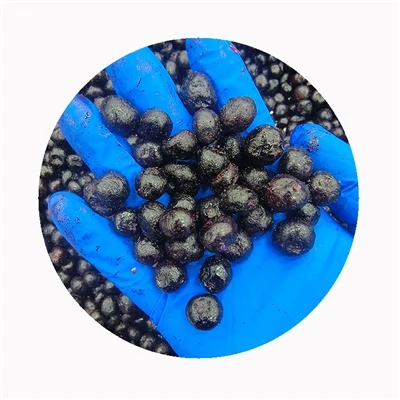
Where washing usually fits in commercial processing
A frozen-blueberry line commonly starts with receiving and lot identification, followed by removal of leaves, stems, damaged fruit, stones, and other foreign material. Cleaning or washing may occur before drainage and rapid freezing. Frozen berries are then inspected, graded or sized where required, checked for foreign material under the facility's control plan, packed, coded, and transferred to frozen storage. The exact order and equipment vary by plant, fruit type, field condition, and intended market.
Washing before IQF creates an operational trade-off. Adequate cleaning and controlled water management can reduce field debris and some surface contamination. Excess free water can contribute to ice, clumping, weight variation, and a less free-flowing pack. Drainage and freezing capacity must therefore work together. A visually clean berry with good separation suggests useful process control, but appearance alone cannot establish microbiological status.
A high-level sequence cannot stand in for a facility record. The XMSD frozen blueberry production process guide gives broader context for sorting, freezing, inspection, and packing. For order approval, ask for the actual process flow and specification associated with the nominated supplier, facility, product code, and intended use.

A process wash and a household rinse answer different questions
A commercial wash is part of a controlled process and should be connected to monitored inputs and records. A household rinse happens after packaging and can remove loose frost, surface juice, or visible debris, while also beginning to thaw the berry surface. It does not recreate the processor's water controls, supplier approval, environmental hygiene, or preventive plan. Repeating a rinse at home is therefore not evidence that an ingredient has become ready-to-eat.
FDA consumer guidance says produce should be rinsed under running water when washing is needed, and soap, detergent, and commercial produce wash are not recommended. The agency also states that washing can reduce bacteria but does not eliminate them. Its general guidance for packaged produce says an item clearly marked pre-washed and ready-to-eat can be used without another wash, provided it is protected from unclean surfaces and utensils. For frozen berries, that principle still has to be read with the specific pack instruction and applicable market advice.
Why washing and freezing do not prove pathogen control
Berries can be exposed to hazards through agricultural water, field sanitation, harvest handling, workers, containers, equipment, wash water, mixing, and packaging. A wash may lower a surface load, but effectiveness depends on the organism, surface, method, water condition, contact, and starting contamination. Poorly managed water can also transfer contamination among fruit. The correct control strategy begins before washing and continues through hygienic handling and lot traceability.
Freezing preserves the fruit but is not a universal kill step. FDA's berry sampling material notes that viruses can survive low temperatures, and its 2025 prevention strategy focuses on consistent preventive measures across fresh and frozen berry supply chains. Peer-reviewed reviews of frozen-produce outbreaks likewise report that hepatitis A virus and norovirus can persist through freezing and that normal washing does not ensure their removal.
Recent events make the boundary concrete. A CDC Emerging Infectious Diseases report described 24 hepatitis A cases in a Netherlands cluster during November 2024 through February 2025; epidemiologic and food evidence pointed to a specific frozen-blueberry product. In July 2026, FDA reported an E. coli O145:H28 investigation and recalls involving organic frozen blueberries and mixed berries. These events do not mean every frozen blueberry lot is unsafe. They show why a washed appearance, freezing, or a clean flavor cannot override lot codes, recall instructions, intended use, and verified controls.
Practical example: A frozen-blueberry bag looks clean and the ingredient list says only blueberries, but the label states "cook before use." Rinsing the berries under cold water does not cancel that direction. The practical action is to use the fruit in a process that follows the stated heat instruction, or choose a different product that is explicitly suitable for the planned raw application.

Use the label and intended application to decide what to do
A single universal "wash" or "do not wash" rule is weaker than a product-status decision. Start with the label, then check the planned use and the public-health advice that applies in your market. Preparation rules differ because authorities evaluate local outbreak history, import patterns, vulnerable populations, and regulatory controls differently.
| Pack or lot status | What the status establishes | Practical action |
|---|---|---|
| Clearly pre-washed and ready-to-eat | The responsible business presents it for use without another preparation step | Use as directed and subject to local advice; keep hands, utensils, and surfaces clean |
| Rinse before use | A household rinse remains part of preparation | Use clean running water; drain well; do not add soap or detergent |
| Cook or heat before use | A later heat step is required | Follow the exact direction; a rinse is not a substitute |
| No clear statement | Ready-to-eat status is not established by silence | Check manufacturer guidance and applicable local advice before raw use |
| Lot included in a recall | The authority or responsible business has identified a lot-level concern | Do not eat, sell, or serve; return or discard as instructed |
Regional heat advice can be stricter than the pack assumption
Food Safety Authority of Ireland guidance recommends boiling imported frozen berries for one minute before consumption because of hepatitis A and norovirus outbreaks. New Zealand Food Safety advises bringing frozen berries to the boil or heating them above 85°C for at least one minute and states that washing does not remove the relevant risk. Those instructions are jurisdiction-specific and should not be converted into a worldwide label claim, but they are essential when the destination or foodservice operation is governed by that advice.
Heat effectiveness depends on the entire food matrix, target hazard, time, temperature, equipment, cold spot, and process validation. A bakery, jam, sauce, or puree line should not rely on oven or kettle set-point alone; verify that the product reaches the required condition. For a smoothie, thaw-and-eat cup, or frozen garnish with no heat step, source an ingredient whose status and control evidence fit raw use.
If rinsing is required, protect texture and prevent cross-contamination
Rinsing frozen blueberries begins to warm the surface. Long soaking can soften fruit, release color and juice, increase wetness, and reduce free-flowing handling. When the pack instructs you to rinse, use clean running water, keep contact brief, drain thoroughly, and move directly into the intended preparation. A clean colander and clean hands matter because washed fruit can be contaminated again by the sink, utensils, towels, or work surface.
Do not use soap, dish detergent, bleach, or an improvised chemical soak on blueberries. FDA advises against soap, detergent, and commercial produce washes for produce. Vinegar rinses are also not a validated substitute for the hazard controls or cooking direction associated with a frozen-berry product. If the objective is to make a product safe for a raw high-risk use, select a suitable ingredient and documented process instead of inventing a kitchen treatment.
Rinsing can also change a recipe. Water retained on the fruit can thin yogurt, increase ice in a frozen dessert, streak bakery batter, or change sauce yield. For a repeatable foodservice or factory result, define whether the input weight is frozen, rinsed and drained, thawed, or fully drained. Use the same basis in the formula, nutrition work, and production instruction.

Commercial approval needs evidence beyond the word washed
When we review a frozen-blueberry offer, we separate product identity, process evidence, verification evidence, and use instructions. Product identity covers species or cultivar where relevant, origin, whole or broken form, size, ingredients, and pack. Process evidence covers the nominated facility flow, cleaning or wash step, water and hygiene controls, drainage, freezing, post-freeze exposure, and packing. Verification evidence covers the agreed microbiological, chemical, and foreign-material checks. Use instructions state whether the lot is ready-to-eat, ready-to-cook, or intended for a defined later process.
A certificate of analysis is useful only when its scope is clear. Check the product and lot identity, sample date, sampling party, laboratory, method, analytes, units, specification limits, results, and release decision. A general COA does not prove that the wash was controlled, and a negative result for routine bacterial indicators does not automatically establish absence of hepatitis A virus or norovirus. FDA and outbreak reports also show that contamination can be unevenly distributed, so a small sample cannot describe every berry in a large lot.
Facility certification is another layer, not a product guarantee. Review the certificate holder, site address, issuing body, standard, scope, product categories, issue and expiry dates, and any exclusions. Then connect the certificate to the facility named on the process flow and lot documents. A certificate for a different site or a scope that does not cover frozen berries cannot support the approval decision.
A practical document matrix
| Decision | Evidence to review | Failure signal |
|---|---|---|
| Was the lot washed? | Signed specification and facility process flow | Marketing wording with no facility or product code |
| Is raw use intended? | Explicit RTE status, hazard analysis, label, and applicable validation | Only "washed" or "IQF" is stated |
| Does the lot meet agreed tests? | Lot-linked COA with method, units, limits, and laboratory identity | Undated template or a report for another lot |
| Can a recall be executed? | Lot code, production and packing records, quantity, and consignee trace | Codes are missing, unreadable, or disconnected across documents |
Worked example: A foodservice customer plans a no-heat blueberry smoothie. The proposed specification says "washed IQF whole blueberries," and the COA covers aerobic count, yeast and mold, and E. coli, but neither the specification nor label states ready-to-eat. The process flow ends with washing, freezing, and packing, with no validated virus-control step identified. The evidence supports that cleaning occurred; it does not approve a raw smoothie use. The next action is to select a product explicitly supported for that use or add a validated treatment that fits the destination rules and formula.
XMSD's frozen blueberry range and bulk IQF blueberry page show available product directions. Treat them as the starting point for form and pack selection; the nominated facility documents, approved specification, sample, and intended-use statement must control each order.

Receiving, label and recall checks close the gap
Receiving cannot verify a wash that happened earlier, but it can verify that the delivered lot matches the approved identity. Check supplier and facility, product code, lot and date marks, quantity, seal integrity, inner liner, carton condition, frozen state, temperature evidence under the agreed method, and required documents. The XMSD quick-frozen food receiving guide sets out accept, hold, and reject logic for package and cold-chain evidence.
Label review should happen before packing approval. The use direction must match the hazard decision and destination rules. A retail design that implies immediate smoothie use should not be paired with a cook-before-use ingredient. A foodservice case should state the handling instruction where staff will see it. Private-label artwork, outer-carton marks, and product records should use the same product code and lot logic.
Packaging does not sanitize berries, but it protects the approved status from mix-up, leakage, and uncontrolled exposure. Define food-contact liner material, closure, net weight, case strength, coding location, pallet marks, and storage instruction. XMSD's frozen-food packaging overview can help frame the pack discussion; the signed artwork and packing specification remain the acceptance basis.
Recall monitoring is a separate control. Keep supplier contact data, destination-market alert sources, and lot distribution records available. If an alert names the product, responsible business, pack, date, or lot, isolate affected stock and follow the authority or supplier instruction. Do not attempt to rescue recalled berries through rinsing, visual sorting, refreezing, or routine cooking unless the official recall instruction explicitly provides a permitted action.

Final decision
Commercial frozen blueberries commonly undergo cleaning and may undergo washing before freezing, but neither washing nor IQF proves ready-to-eat safety. For a household pack, let the label, recall status, application, and local authority guidance decide whether no further wash, a rinse, or a heat step is appropriate. For a commercial program, approve the intended use only after the product specification, facility flow, hazard controls, lot-linked verification, label, and traceability all tell the same story.
The simplest reliable question is not "Was water used?" It is "What product status does the evidence support, and what preparation step remains before consumption?" That wording keeps visible cleanliness, microbial safety, quality, and regulatory use from being confused.
Frequently asked questions
Should frozen blueberries be washed before a smoothie?
Use only a product and preparation method suitable for a no-heat application. If the pack is explicitly ready-to-eat, follow its directions. If it says rinse, rinse under clean running water and drain, while recognizing that rinsing is not a kill step. If it says cook or heat, do not use a rinse to convert it into a raw smoothie ingredient.
Can I wash frozen blueberries with soap or vinegar?
Do not use soap, detergent, or bleach. FDA advises against soap, detergent, and commercial produce washes. A vinegar soak is not a validated substitute for supplier controls, an RTE process, a cooking direction, or an authority notice. When rinsing is instructed, use clean running water.
Does a COA prove frozen blueberries were washed?
No. A COA reports defined tests on a defined sample or lot. The facility process flow, product specification, and wash records establish whether washing occurred. The COA then adds verification for the analytes, methods, units, and limits it actually lists.
Are washed frozen blueberries safe for vulnerable people?
A washed claim alone is not enough. Older adults, young children, pregnant people, and people with weakened immunity may face more serious consequences from foodborne illness. Follow the product direction and the public-health advice in the relevant market; when raw-use evidence is uncertain, use a properly validated heat-treated option or seek professional medical and food-safety guidance.
For a frozen-blueberry quotation or sample review, send XMSD the target application, RTE or further-processing status, destination market, product form, pack, annual volume, and required tests through the inquiry form. We can return a document checklist for the nominated product and use condition.
References
- U.S. FDA: Selecting and Serving Produce Safely
- U.S. FDA: Prevention Strategy for the Control of Enteric Viruses in Berries
- U.S. FDA: Sampling Frozen Berries for Harmful Viruses
- U.S. FDA: E. coli O145:H28 Frozen Blueberry Investigation, July 2026
- CDC Emerging Infectious Diseases: Hepatitis A Outbreak Linked to Frozen Blueberries, Netherlands, 2024–2025
- Food Safety Authority of Ireland: Advice to Boil Imported Frozen Berries
- New Zealand Food Safety: Making Frozen Berries Safe to Eat
- Peer-reviewed review: Foodborne Viral Outbreaks Associated with Frozen Produce