


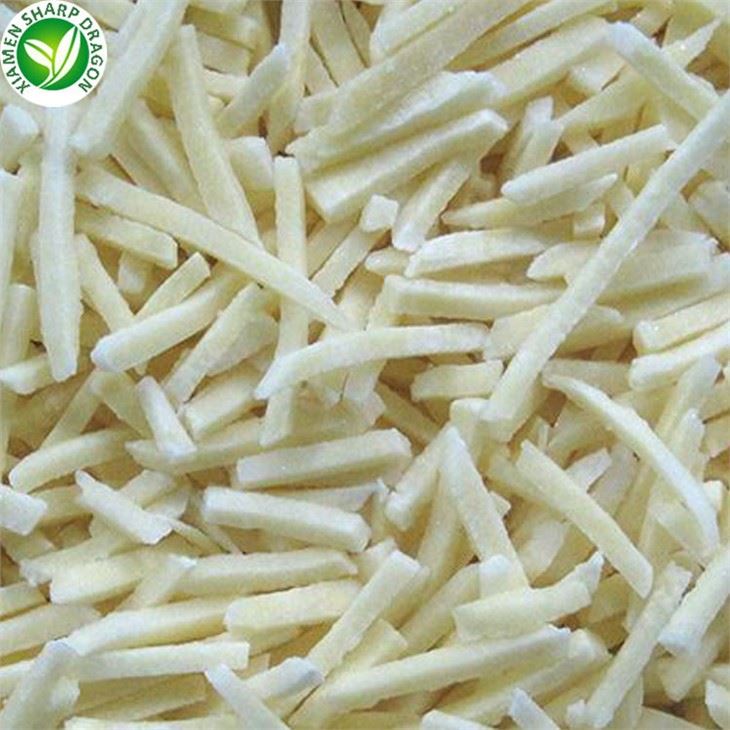


Frozen Pre-fried Potatoes
Frozen pre-fried potato strips for restaurant cut selection, with7mm and9mm cross-sections and documented commercial carton options.
Product Details
PRE-FRIED POTATO STRIPS · RESTAURANT SUPPLY
Frozen Pre-fried Potatoes for Restaurant Cut Selection
XMSD supplies frozen pre-fried potatoes in two defined cross-sections for restaurant and foodservice buyers. The product is a short potato-strip format for cooking and frozen distribution. Its useful purchasing role is cut selection:compare the thinner and fuller strip in the actual restaurant portion rather than treating every frozen fry as the same product.
Contact XMSDSupply Specifications
| Product form | Pre-fried IQF frozen potato strips |
| Cut sizes | 7 × 7 mm or 9 × 9 mm |
| Strip length | 3–5 cm length |
| Origin | China mainland |
| Minimum order | 12 metric tons |
| Shelf life | 24 months at −18°C |
| Bulk packing | 1 × 10 kg per carton |
| Retail packing | 20 × 400 g per carton |
| Delivery | Sea shipment |
Compare the Two Cuts in the Restaurant Portion
Cross-section is a useful starting point for restaurant selection because it describes the thickness of each strip. It does not describe the whole serving. A thinner and a fuller strip can give a different arrangement of pieces in a portion of the same weight. Assess the sample in the restaurant's actual side dish, meal tray or serving container so cut choice connects to the menu presentation.
Keep portion weight separate from piece count. Weigh the frozen input and the cooked serving during a controlled trial, and record plate coverage alongside the eating result. This helps a restaurant buyer decide whether the selected cut fits its side portion without assuming that a high number of pieces is always the strongest presentation.
Both cut options use the documented short length. A menu built around long fries needs to consider length separately even if the thickness appears familiar. A short strip can sit differently in a small side dish, and the relationship between portion weight and appearance should be judged in that dish. The buying decision therefore includes thickness, length and service presentation together.
Test the Cut in the Kitchen Cooking System
Restaurant equipment, batch loading and service pace affect the result of a cooking trial. Compare the cuts under the intended kitchen conditions and keep those conditions consistent between trials. The purchasing team can then assess surface texture, potato bite, color and breakage alongside the portion presentation. A favorable result from a small demonstration batch is only one part of a menu decision.
Record the preparation method and the time between cooking and tasting. Immediate service, a buffet hold and delivery in a closed container create different situations. Use the intended service route during evaluation. This makes the sample decision useful to the kitchen team and avoids treating an unspecified holding claim as proof of restaurant performance.
Cut size alone does not establish the recipe, coating or cooking instructions. Those characteristics need the information for the purchased product. The sample comparison addresses sensory and handling fit;ingredient and label decisions address a separate part of the purchasing file. Keeping those decisions distinct prevents a visual cut choice from becoming an unsupported recipe claim.
Select the Carton for the Route to the Kitchen
A foodservice distributor and a restaurant kitchen may handle the same product through different opening patterns. Bulk material can support repeated kitchen portions, while smaller units can support a different stock and resale pattern. Compare opening frequency, freezer space and the amount normally used in a service period when evaluating the carton configuration.
The two listed carton arrangements have different total net weights. The bulk carton contains ten kilograms;the smaller-unit carton contains eight kilograms. Purchasing teams should compare landed cost per net kilogram as well as price per carton. Unit count alone is not a reliable comparison when the carton weights differ.
Inspect bag and carton condition together at receiving. Retain product identification with material remaining after opening, and keep opened units protected within the kitchen's frozen storage system. That procedure gives the restaurant a useful link between received stock and material used across service periods. It also supports investigation of an unusual sample or delivery observation.
Connect Replenishment to Remaining Frozen Life
Frozen shelf life supports stock planning, but the age of the incoming material matters to a restaurant supply program. Compare the remaining life at receipt with expected sales and kitchen consumption. Production date and lot identification connect that inventory decision to the individual delivery rather than to a generic product description.
For a new cut, plan the transition from the previous product as part of procurement. Restaurant teams need to know which sample and menu portion correspond to the new stock. Keep the cut selection, trial result and purchasing description together so the delivery is not substituted solely because another potato strip looks similar.
Sea shipment also makes destination planning part of the order. Freezer capacity, unloading sequence and local frozen transport contribute to landed usability. A commercial price comparison should account for those receiving arrangements alongside product weight and expected turnover. This is especially useful when a distributor serves several kitchens from the same delivery.
Keep Repeat-Order Evaluation Consistent
A restaurant approval is easier to use when its method can be repeated. Retain the trial's cut, portion weight, cooking system and serving format as a practical internal reference. These details allow the kitchen to compare later material under similar conditions instead of relying on a memory of the first sample.
When an unexpected result occurs, separate the incoming product observation from the preparation conditions. Record the delivery lot, bag condition and trial method together. That gives purchasing and kitchen staff a shared basis for discussion and helps distinguish product differences from a change in batch loading or holding practice.
Pre-fried Potato Product Presentation


Product Video
Supplier Qualification
XMSD maintains a certification page for supplier document review. Match the certificate holder, scope and validity to the selected supply program and destination requirements. Product identity, commercial specification and shipment documentation belong together in the purchasing file.
Restaurant Cut Buyer FAQ
Are these fresh potato strips?
No. The product is pre-fried and IQF frozen for a commercial cooking program.
Does thickness define the full serving?
No. Length, portion weight, plate coverage and the cooked eating result all matter to menu fit.
What makes a useful cut comparison?
Test both cuts with the same portion basis and kitchen conditions, then evaluate the result in the intended serving container.
Select Frozen Potato Cuts for Your Restaurant Program
Send your quantity, preferred pack format and destination for an XMSD quotation.
Request a QuoteHot Tags: frozen pre-fried potatoes,7mm frozen fries,9mm frozen fries, restaurant potato supplier, freezing white potatoes, frozen homestyle potatoes, Frozen French Fries, thick frozen fries, frozen potatoes diced, southern style frozen potatoes
Send Inquiry
