

Types Of Shipping
Sep 08, 2020

Ocean, air, road and rail are different ways to move goods. For frozen foods, the best route is the one that meets the product condition, delivery window and complete cost requirement across every handover. Most shipments combine more than one mode.
Start with the whole route
The main freight modes are ocean, air, road and rail. A shipment often uses more than one: a truck may move a refrigerated container to a port, a vessel carries it across the sea, and another truck completes delivery. Choose the complete route, including transfers and storage, rather than comparing only the movement between two terminals.
The right choice depends on product state, quantity, delivery window, route access, equipment and total landed cost. Frozen food requires the agreed temperature controls throughout the route; fresh, chilled and ambient goods can have different needs. Ask the carrier and logistics providers which equipment and monitoring are actually available for the stated origin and destination.
A short flight does not automatically mean a short door-to-door journey, and an inexpensive ocean quotation does not automatically include inland transport or destination fees. Put the same collection point, delivery point, cargo requirements and service scope on each request for quotation. The result is a comparison of services that the buyer can actually use.

Illustrative transport photo: Prajna Prabhu, Wikimedia Commons, CC BY-SA 4.0; unmodified.

Ocean freight for planned international volumes
Ocean transport can carry containerized cargo between ports and is often considered for planned larger shipments. A refrigerated container may be suitable for frozen goods when the route, equipment and power arrangements support the product's requirements. Space, equipment availability, sailing arrangements and transfer time must be checked for the actual booking.
For containerized food, ask whether the offer includes inland collection, terminal handling, refrigerated equipment, power at handovers, documentation and destination delivery. A quoted ocean rate is one component of the journey. Charges for storage or delays can change the final result, so list inclusions and exclusions in writing rather than assuming all offers cover the same tasks.
The separate maritime transport guide covers the ocean execution question. Here, compare the proposed ocean route with air, road or rail using the same required arrival window and product condition. A vessel schedule is a planning input, not a guarantee that all connections will operate as expected.

Illustrative transport photo: Iswzo, Wikimedia Commons, CC BY-SA 4.0; unmodified.

Air freight for a time-sensitive requirement
Air freight can be considered when the required delivery window cannot be met by the other available routes. Its suitability depends on the actual flight, cargo acceptance, handling at both airports, onward transport and the amount of temperature-controlled space available. A booking needs confirmation for the product and packaging, not merely the existence of a passenger flight.
The chargeable weight or volume basis, security and terminal charges, and any special handling can matter for a light or bulky consignment. Compare the total service from collection through delivery, including cold storage before departure and after arrival. Ask how long the cargo may wait at each handover and what happens if a flight connection is missed.
Air transport can be an appropriate option for an urgent sample or a small approved replenishment, but it is not a substitute for a verified cold-chain plan. Confirm who provides the packaging, how its performance is supported, and when the receiver can take delivery. The needs of a frozen product cannot be inferred from a general air-freight timetable.

Illustrative transport photo: Trekphiler, Wikimedia Commons, CC BY-SA 4.0; unmodified.

Road freight for collection and delivery
Road transport can connect a factory, warehouse, port, airport, rail terminal and customer. It may also serve as the main mode when a suitable overland route exists. The equipment can range from a dedicated temperature-controlled vehicle to a shared service; what matters is whether the agreed conditions can be maintained for the actual load.
Ask for pickup and delivery windows, vehicle and temperature requirements, loading responsibilities, route constraints and a plan for delays. A direct truck may reduce transfers, but it still depends on access at both ends and the receiver's capacity to unload. Shared loads need a clear product-compatibility and handling plan.
For international movements within its applicable scope, UNECE's ATP agreement sets requirements for equipment and temperatures for specified perishable foods. Its applicability depends on the route, parties, goods and relevant law. It is not a universal rule for every domestic shipment or every mode; check the actual jurisdiction and contract.

Illustrative transport photo: MaedaAkihiko, Wikimedia Commons, CC BY-SA 4.0; unmodified.

Rail freight and multimodal transfers
Rail can form part of a longer inland route where service and terminals are available. A container may move by road to a rail terminal, travel by rail and then continue by road. Compare the whole chain, including terminal dwell time and the arrangements for equipment power and monitoring at each transfer.
For temperature-sensitive cargo, do not assume that every rail service accepts refrigerated equipment or provides power throughout the journey. Obtain the proposed service, transfer points, contingency process and the party responsible for responding to an alarm. If an unpowered gap is expected, the shipper needs evidence that the approved packaging and route can maintain the required condition.
Rail and road should be evaluated for the same pickup, delivery and cargo requirements. A rail segment can be useful for a consolidated route, while a direct road movement may fit a particular destination better. The decision follows the available service and handling plan, not a blanket claim that one mode is always faster or cheaper.

Illustrative packing and transport handling image: XMSD.
Temperature is a chain of responsibilities
The product specification, applicable rules and contract establish the required condition. Codex guidance on quick-frozen foods addresses temperature control through handling and distribution, with specified tolerances in context. It should not be converted into a blanket promise for every product, route or stage. Confirm the product temperature, equipment setting, monitoring points and response procedure with the parties involved.
Equipment setpoint and product temperature are different measurements. A refrigerated unit controls its air environment under defined conditions; it does not by itself prove that every carton stayed within the required product range. Agree where devices will be placed, which readings are recorded and who reviews the data. A powered container also needs suitable loading and air circulation.
At each handover, name the party controlling the goods and the place where monitoring, power or protective packaging changes. Confirm collection, terminal receipt, storage, departure, transfer, arrival and final delivery. If an alarm or delay occurs, specify who is contacted, how the lot is held and who can authorize a disposition.

Illustrative packing and transport handling image: XMSD.
Compare offers on the same basis
Begin with the same cargo description: product, net and gross weight, volume, packaging, temperature, pickup and delivery points, required date and document needs. Then ask each provider to state route, estimated transit, equipment, transfer points, included services and assumptions. A quotation for port-to-port carriage cannot be compared directly with a door-to-door quotation.
List costs by stage: collection, handling, main carriage, terminal or storage charges, destination clearance and final delivery. Include contingency items that could change the decision, such as an extended equipment rental or a missed appointment. Use the provider's current written offer for the actual shipment; this guide does not supply current freight rates.
Worked example: A hypothetical ocean route is quoted at $4,000 for the main carriage plus $1,200 for the stated inland and terminal services, for $5,200 total. An alternative is $4,500 plus $900 for the same listed services, or $5,400. The $200 difference answers only the listed-cost question. The buyer must also compare equipment, timing, temperature controls and excluded charges before choosing either offer.
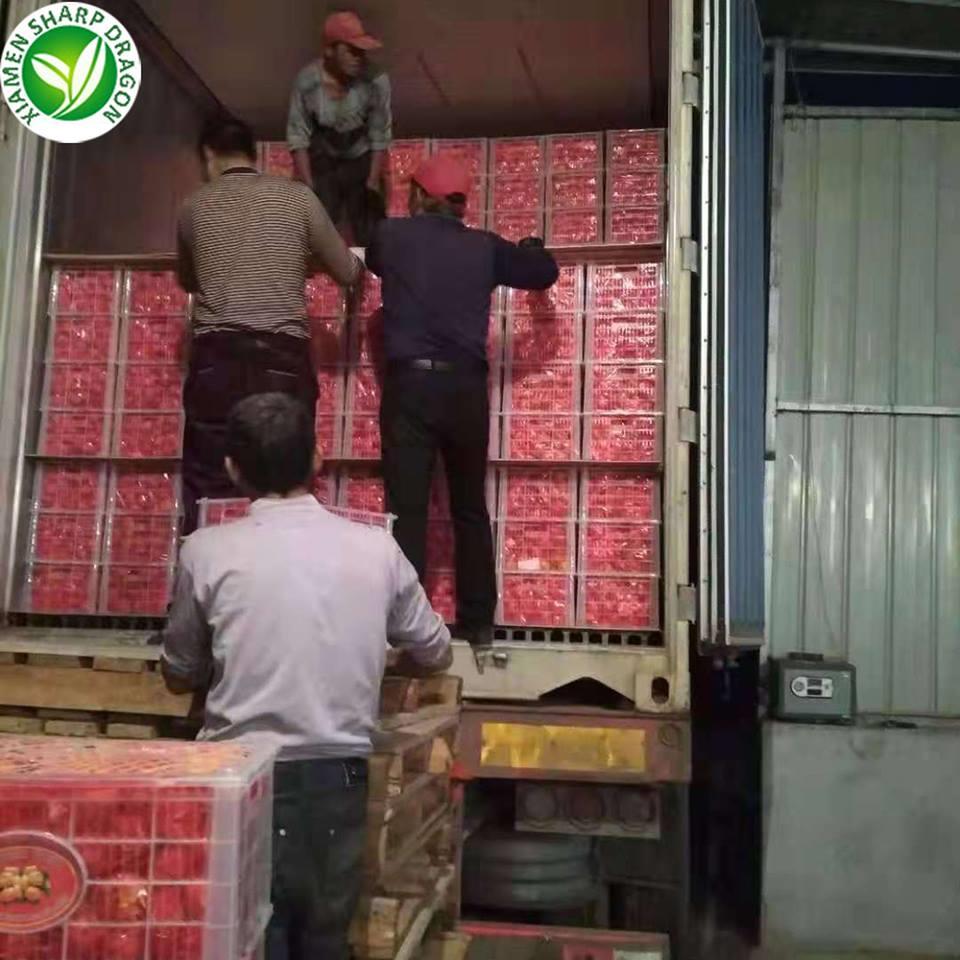
Illustrative packing and transport handling image: XMSD.
Agree the handover and documents
The sales contract and carriage contract perform different jobs. ICC explains that Incoterms rules allocate certain delivery, cost and risk obligations between seller and buyer; they do not automatically bind the carrier or describe every operational detail. Agree the named place and applicable rule with the parties, then make sure the carriage instructions fit the actual route.
Identify who books the carrier, prepares and checks the transport document, arranges export and import procedures, purchases any required insurance and communicates arrival information. The responsible party depends on the contract and service. Avoid assuming that a word such as "shipping included" covers customs, terminal storage, insurance and final unloading.
For a food shipment, align the invoice, packing list, product identification, lot records and any destination-specific certificates with the actual goods. Confirm document recipients and deadlines before pickup. A missing or inconsistent document can delay clearance even when the physical transport is proceeding as planned.
Plan a practical frozen-food shipment
Practical example: Consider a hypothetical buyer needing a scheduled frozen vegetable delivery to a distribution warehouse. The cargo fits a container, and the warehouse can receive on a specified day. The buyer asks for an ocean-plus-road offer and a direct overland alternative where available, giving both providers the same cargo and temperature specification.
The comparison includes collection, equipment, terminal transfers, expected arrival window, monitoring and final delivery. If the ocean option involves an additional terminal, the buyer asks how power and alarm response are handled there. If the overland option uses a shared vehicle, the buyer checks compatibility, loading order and the receiver's unloading appointment.
Neither option becomes approved solely because it has a favorable rate. The buyer selects the route that meets the required food condition and delivery plan at an acceptable total cost, then documents contingency contacts. The final booking also records the agreed pickup appointment, delivery address, equipment, monitoring service and the person responsible for responding to an exception. The frozen vegetable range illustrates why the product specification must accompany the transport request.
Samples and smaller deliveries need a plan too
A small consignment may lead a buyer to consider air or a consolidated road service. Before booking, define the amount, required arrival date, product state and whether the receiver can store it immediately. A small box can still spend time at collection, a terminal and delivery; each stage needs a suitable handling arrangement.
For an illustrative sample project, a buyer compares a direct road service with an air route involving two airport transfers. The flight is shorter than the long-distance road leg, but the full route includes collection and terminal waiting. The buyer checks the total planned duration and temperature protection before deciding which service meets the sample's condition and appointment.
The frozen fruit range is a starting point for defining the item. The packaging plan and carrier's acceptance must match the chosen item; no sample route should be represented as verified until the specific provider confirms it.
Prepare a useful request for quotation
Send the provider a compact brief: cargo description, quantities and dimensions, pickup and delivery addresses, desired collection and arrival windows, required temperature or ambient condition, packaging, documents and any restrictions. State whether the service should include customs, terminal fees, monitoring, insurance and final unloading.
Ask the provider to identify the route, equipment, estimated transit, transfer points, included and excluded charges, assumptions and validity of the offer. Request a contact for operational exceptions. When a shipment crosses several organizations, a written handover map is as important as the name of the main transport mode.
The frozen packaging overview provides context for discussing packs, while the processing overview helps identify the starting point. Neither page replaces the approved product specification or a carrier's written route offer.
Check transfers before approving the route
A transport plan is only as strong as its least clearly described handover. Draw the actual sequence from the loading dock to the receiving warehouse and name each organization that has custody of the cargo. Record the expected arrival and departure window for every terminal, the booking reference, the agreed storage conditions and the person who can resolve an exception.
For a refrigerated container, ask when the unit will be connected to power and how the connection is confirmed. During a road movement, identify the equipment operator and the reporting procedure if the unit alarms. At a terminal, confirm the service that includes monitoring and whether a delay outside the planned window changes the handling arrangement. A written answer is more useful than assuming every provider has the same service.
For air cargo, ask where the shipment waits before acceptance and after unloading, and how the final pickup is coordinated. If protective packaging is used, its performance needs to cover the planned route and a realistic contingency, not just the flight. For rail, verify terminal arrangements and any change of equipment rather than extrapolating from the road leg.
A contingency plan should identify contact details, the escalation order, the information required to assess an incident and the authority to hold or release the goods. It should also distinguish a missed appointment from a possible product-condition deviation. The first may require rescheduling; the second needs the product owner's quality process and relevant records.
Review the quote and capacity before committing
Compare the commercial offer at the same named points. One provider may quote from a factory to a destination terminal, while another includes delivery to a warehouse. A low figure can be accurate for its stated scope while omitting services the buyer still needs. Request a breakdown and make missing costs visible before ranking offers.
Identify the cargo assumptions used for each quote: gross weight, volume, package dimensions, temperature, collection date and any special equipment. If the real cargo differs, the provider may need to revise the service or charge. Ask what happens if the load is larger than planned, a container is not available or the receiving appointment must change.
Capacity is route-specific. A carrier may offer a refrigerated service on one connection but not on another, or accept a different product at another temperature. Obtain written acceptance for the actual cargo and packaging. Check whether the service provides monitoring, reporting and intervention, and whether a third party controls any of those tasks.
After selection, keep the approved route, quote, operating contacts and product instructions together. Before dispatch, reconcile the booked equipment and collection details with the packing list. At delivery, compare the goods and the available records with the agreed procedure. This closing step supports a useful post-shipment review and the next quotation.
Choose the route that can be executed
Ocean, air, road and rail each solve different logistics problems. A good choice connects the cargo's requirements to a real service, a credible handover plan and a complete cost comparison. Review availability for the actual route and date; do not rely on a generic transit time or a promise made for a different shipment.
For temperature-sensitive foods, define the condition and responsibility at every stage, then keep the documentation and monitoring records with the shipment. Review any deviation before releasing affected stock. The goal is a delivery that meets the product requirement and the buyer's operational schedule.
To discuss a shipment, provide the product, quantity, destination, required delivery window, package and cold-chain needs through the inquiry page. A route-specific quotation can then be checked against the actual product and destination requirements.